
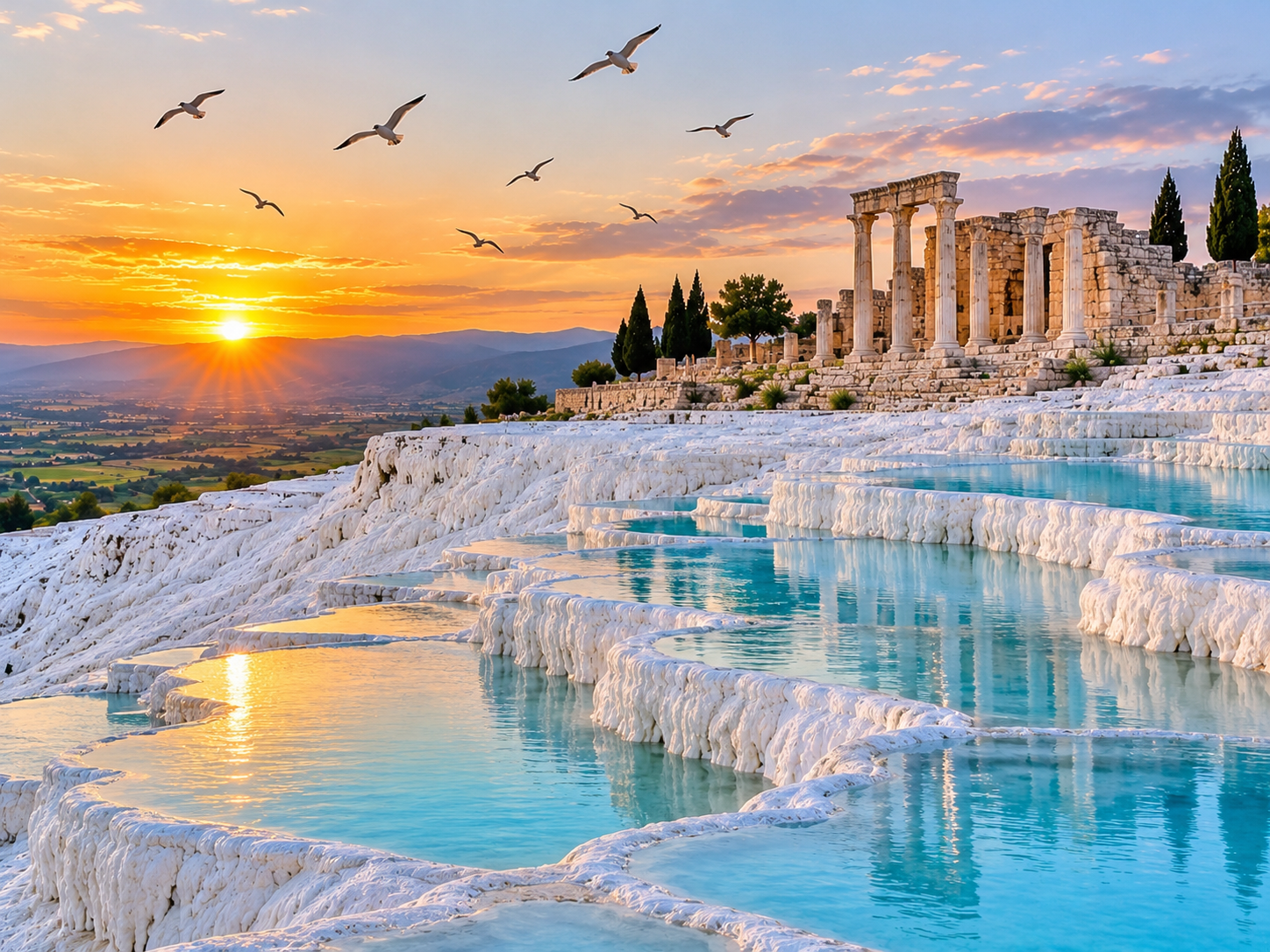
Pamukkale is one of those places in Turkey that looks almost unreal in photographs. White terraces spill down the hillside, filled with shallow pools of turquoise water, while the remains of an ancient Roman city stretch across the plateau above them. Yet the appeal of Pamukkale is not limited to its unusual landscape. It is also a place where nature, history and everyday Turkish life meet in a surprisingly small area.
Located in Denizli Province in southwestern Turkey, Pamukkale is usually visited alongside Hierapolis, the ancient city built above the terraces. You can walk across the white formations, explore a Roman theatre, visit an archaeological museum and, if you wish, swim in the famous Antique Pool.
I recommend giving the area more than a quick stop on a long bus journey. There is plenty to see, and the experience becomes much more enjoyable when you have time to explore at a comfortable pace.
The White Travertine Terraces of Pamukkale
The first thing most visitors notice is the extraordinary white hillside. Pamukkale means Cotton Castle in Turkish, a name that makes sense when you see the terraces from a distance. The formations look like layers of soft white stone, almost as though snow has settled across the slope.
These terraces were created by mineral-rich thermal water flowing down the hillside. As the water cools, calcium carbonate is deposited on the surface, gradually forming the pale travertine landscape. The process has continued for thousands of years, shaping the pools and natural steps that make Pamukkale so distinctive.
Walking barefoot across the terraces is part of the experience. Shoes are not allowed on the travertine walking route because the surface needs protection. Some sections feel smooth beneath your feet, while others can be uneven or slippery, so take your time rather than rushing down the slope.
Not every pool is filled with water throughout the year. Water flow is managed to protect the formations, and conditions can change. Even when some terraces are dry, the white surface against the surrounding green countryside remains beautiful, especially in the softer light of early morning or late afternoon.
I suggest bringing a small bag for your shoes, a towel if you plan to get your feet wet, and sun protection during the warmer months. There is little shade on the terraces, and the white surface can make the sunlight feel particularly strong.
Exploring the Ancient City of Hierapolis
Above the travertine terraces lies Hierapolis, an ancient city that adds a fascinating historical dimension to a visit to Pamukkale. The city developed around its thermal springs and became an important settlement during the Hellenistic and Roman periods.
Hierapolis was particularly known for its healing waters. People travelled here from different parts of the ancient world, hoping that the thermal springs would help with various health problems. The city eventually became an important religious and cultural centre as well.
Today, visitors can walk along its ancient streets and see the remains of temples, public buildings, baths and other structures. Much of the site is spread across an open area, so comfortable walking shoes are useful once you have finished exploring the barefoot travertine route.
One of the most interesting things about Hierapolis is how closely its history is connected to the natural environment. The thermal springs attracted visitors centuries ago, just as they continue to draw travellers today. The buildings may have changed, but the water remains at the heart of the area’s identity.
The Impressive Roman Theatre
The Roman Theatre is among the most striking structures in Hierapolis. Built into the hillside, it once provided seating for thousands of spectators who gathered to watch performances and public events.
The theatre is remarkably well preserved compared with many other ancient structures in the region. Its rows of stone seating rise above the stage area, and decorative details can still be seen in parts of the monument. Standing here, it is easy to appreciate the scale of Roman public architecture.
Take a little time to look at the carved details rather than simply walking up for a photograph. The theatre is one of the places where the craftsmanship of the ancient city becomes especially clear.
The elevated position also offers a broad view across the archaeological site and the surrounding landscape. On a clear day, the contrast between the ancient stone buildings and the green countryside is particularly memorable.
Cleopatra’s Antique Pool
Cleopatra’s Antique Pool is another well-known attraction within the Hierapolis site. It is a thermal pool where visitors can swim among submerged ancient columns and stone fragments. The warm water and historic surroundings make it quite different from an ordinary swimming pool.
The pool is associated with Cleopatra in local stories, although the connection is part of its traditional history rather than a confirmed account of her bathing here. Its appeal comes from the combination of warm mineral water and archaeological remains beneath the surface.
Swimming is optional, so you can still visit the surrounding area without getting into the water. If you do want to swim, remember that the pool has a separate admission fee. It is not included in the main Pamukkale–Hierapolis ticket, and the swimming charge is paid separately at the pool. The official Denizli visitor information currently lists a separate Antique Pool entrance fee; check the latest amount before your visit because prices can change.
There are facilities such as changing areas, showers and lockers, but it is still sensible to bring swimwear and a towel if you plan to use the pool. During busy periods, the area can become crowded, so an earlier visit may feel more comfortable.
Hierapolis Archaeology Museum
For a closer look at the history of the ancient city, make time for the Hierapolis Archaeology Museum. It is located inside the remains of a Roman bath complex, which makes the building itself part of the experience.
The museum displays archaeological finds discovered in Hierapolis and nearby ancient settlements. You can see sculptures, inscriptions, sarcophagi and smaller objects that help explain how people lived, worshipped and worked in this part of the Roman world.
I especially recommend visiting the museum if you enjoy understanding the stories behind the ruins. After seeing the theatre and walking through the ancient streets, the objects inside give you a better sense of the people who once called this place home.
The museum is not enormous, but it adds useful context to the archaeological site. Check its opening hours separately, as the museum may close earlier than the main gates.
The Necropolis of Hierapolis
The Necropolis is one of the largest ancient burial grounds in Turkey and an important part of the Hierapolis archaeological area. It extends beyond the main city and contains a remarkable variety of tombs and burial structures.
As you walk through the area, you will notice stone sarcophagi, family tombs and larger monumental structures. Their designs and sizes reflect different burial traditions and social positions in the ancient community.
The number of surviving tombs gives a sense of how important Hierapolis became as a destination for people seeking treatment from its thermal waters. Some visitors came from far away and spent their final days here, which helps explain the scale of the burial ground.
The Necropolis is spread across a wide area, so allow extra time if you want to explore it properly. It is also worth remembering that the site is exposed to the sun, particularly during summer.
Visit Karahayıt for Its Red Thermal Springs
A short distance from Pamukkale is Karahayıt, a small town known for its reddish thermal water and mineral-rich springs. It offers a different atmosphere from the white terraces and is often visited by people interested in thermal hotels and spa facilities.
The red colour comes from minerals in the water that leave deposits on the surrounding surfaces. Depending on the light and the amount of water flowing, the pools and nearby rocks can show shades of red, orange and brown.
Karahayıt is a useful place to consider if you want to stay in a thermal hotel rather than in Pamukkale village itself. Some accommodation options offer spa facilities and thermal pools, although services and access rules vary from one property to another.
You can visit Karahayıt as a short side trip from Pamukkale or use it as a base for exploring the area. It is close enough to combine with a visit to the terraces, but check local transport arrangements before setting off.
Laodicea: Another Ancient City Near Denizli
If you have additional time in Denizli Province, Laodicea is worth considering. This ancient city lies a short drive from Denizli and has important remains from the Hellenistic and Roman periods.
Laodicea was once a prosperous commercial centre, partly because of its position along major trade routes. Its ruins include a large stadium, theatres, colonnaded streets, churches and other public buildings.
The site is particularly interesting for visitors who enjoy archaeology and the history of early Christianity. Laodicea is also mentioned in the Book of Revelation, which gives it religious significance for many visitors.
Unlike the compact visitor areas around Pamukkale, Laodicea covers a broad archaeological landscape. You will need time to walk between its main remains, so it is better suited to travellers who have an extra half-day or a full day available.
What to Eat in Pamukkale
Food is another pleasant part of visiting the Pamukkale area. Around Pamukkale village, you will find small restaurants and cafés serving familiar Turkish dishes, including grilled meat, kebabs, pide, soups and fresh salads.
For a simple meal, try a traditional Turkish breakfast if you are staying nearby. It often includes cheese, olives, tomatoes, cucumber, eggs, bread, honey and jam. A leisurely breakfast can be a good way to start before spending several hours outdoors.
Denizli is also known for local dishes, including Denizli kebabı. If you are staying in the city, look for a restaurant that prepares it in the traditional style. Prices and menus vary, so checking a few local options before choosing is worthwhile.
During summer, carry drinking water with you. You can find cafés and places to buy refreshments around the visitor areas, but having water in your bag makes the walk more comfortable.
Best Time to Visit Pamukkale
Pamukkale can be visited throughout the year, but spring and autumn are generally the most comfortable seasons for walking around the terraces and exploring Hierapolis.
During April, May, September and October, daytime temperatures are often more pleasant than in the height of summer. These months are a good choice if you want to spend several hours outdoors without dealing with intense heat.
Summer brings longer days and plenty of sunshine, but temperatures can become high, especially around midday. If you visit in July or August, try to arrive early and carry enough water. The white terraces reflect sunlight, so a hat and sunscreen are useful.
Winter is quieter, and the surrounding landscape can look quite different under cooler skies. Some days are mild, while others can be cold or rainy. The thermal water remains part of the landscape, but you should check the seasonal opening hours before travelling.
For photography, early morning and late afternoon usually offer softer light. Midday can be bright and harsh, although the pools may appear especially vivid under a clear sky.
How to Get Around Pamukkale and Nearby Places
Pamukkale village is close to the terraces, and many visitors can reach the pedestrian entrance on foot if they are staying nearby. However, Hierapolis is spread across a large area, so expect to do a fair amount of walking.
If you are travelling between Pamukkale, Karahayıt and Denizli, local minibuses known as dolmuş are a practical option. Minibuses operate from Denizli Otogar and from parts of the city towards Pamukkale and Karahayıt. The journey from Denizli to Pamukkale generally takes around 25–30 minutes, although the exact time depends on traffic, stops and your departure point. Allow a similar planning window for Karahayıt, but check the route with the driver before boarding.
At Denizli Otogar, look for the local minibus area and ask for the vehicle going to Pamukkale or Karahayıt. If you are unsure where to get off, tell the driver your destination before the journey begins. It is also sensible to ask about the return service, particularly if you plan to travel late in the afternoon or evening.
Taxis are another option, especially if you are travelling with luggage or want to visit several places in one day. For a longer stay, renting a car can make it easier to explore Laodicea and other archaeological sites around Denizli.
How to Reach Pamukkale
The nearest major transport hub is Denizli, which is connected to several Turkish cities by intercity buses and trains. Most long-distance bus passengers arrive at Denizli Otogar and continue to Pamukkale by local minibus, taxi or private transfer.
From Istanbul, you can travel to Denizli by bus or take a flight to Denizli Çardak Airport, followed by a transfer into the city. Flights and bus schedules vary by season, so compare the options for your travel dates.
If you are coming from İzmir, you can travel by train or bus to Denizli. The train journey offers a different way to see the countryside, although you should check the timetable in advance and allow time for the onward connection.
Travellers coming from Antalya or the coastal resorts can also reach Denizli by bus. The journey takes several hours, depending on the departure point and service.
Once you arrive in Denizli, the local dolmuş connection makes the final part of the journey relatively straightforward. If you are carrying large bags or arriving late, arranging a transfer with your accommodation may be more convenient.
Pamukkale Opening Hours and Practical Information
Pamukkale and Hierapolis are visited as one main archaeological site. The standard foreign visitor ticket covers the travertine terraces, the ancient city and the Hierapolis Archaeology Museum. Cleopatra’s Antique Pool is separate, and swimming there requires an additional payment.
For the current winter season, the official Denizli Directorate of Culture and Tourism lists the Pamukkale–Hierapolis South and North Gates as opening at 8:00 AM, with daytime ticket sales ending at 6:00 PM. The pedestrian entrance from Pamukkale village is listed as open from 8:00 AM to 5:00 PM. The Hierapolis Archaeology Museum is listed as open from 8:00 AM to 5:00 PM, while the Antique Pool has its own hours.
The official information currently lists the Antique Pool entrance fee separately. For foreign visitors aged 12 and above, the listed fee is 600 Turkish lira. Fees and opening times can change, so check the official information close to your visit rather than relying on an old travel article.
Before travelling, check these official pages:
- Turkish Museums – Official Website
- Denizli Directorate of Culture and Tourism – Museum and Archaeological Site Hours
A few practical points can make the visit easier. Wear comfortable clothing, bring sun protection and carry water. You will need to remove your shoes on the travertine route, so a small bag for carrying them is useful. If you plan to swim in the Antique Pool, bring swimwear and a towel.
How Much Time Do You Need in Pamukkale?
A full day is usually enough to see the main travertine terraces, explore the highlights of Hierapolis and visit the Antique Pool if you want to swim. However, the experience can feel rushed if you arrive late or try to fit too many places into one visit.
If you enjoy ancient history, allow extra time for the theatre, Necropolis and museum. Laodicea is better treated as a separate visit, particularly if you want to explore more than its main monuments.
Staying overnight in Pamukkale village or Karahayıt gives you more flexibility. You can visit the terraces early, take a break during the hottest part of the day and explore another nearby attraction later.
Leaving Pamukkale with Lasting Memories
Pamukkale is much more than a hillside of white pools. Its natural terraces are extraordinary, but the ancient city of Hierapolis gives the destination a deeper sense of place. You can move from warm thermal water to Roman streets, from a hillside theatre to a quiet museum, all within the same archaeological landscape.
What makes the visit worthwhile is the contrast. The white travertine feels almost delicate, while the ruins above it speak of a city that once welcomed people from across the ancient world. Both are part of the same story.
If you are planning a trip through southwestern Turkey, I would certainly include Pamukkale in the itinerary. Give yourself enough time to walk slowly, look beyond the famous viewpoints and enjoy the history as well as the scenery.
About Zoey
Zoey is a passionate global traveler and travel content creator dedicated to helping explorers navigate international destinations with smart planning, accurate budgets, and practical guides. Through detailed itineraries and destination insights, Zoey aims to make world travel accessible and stress-free everyone.


🙏💖🙏💖🙏