
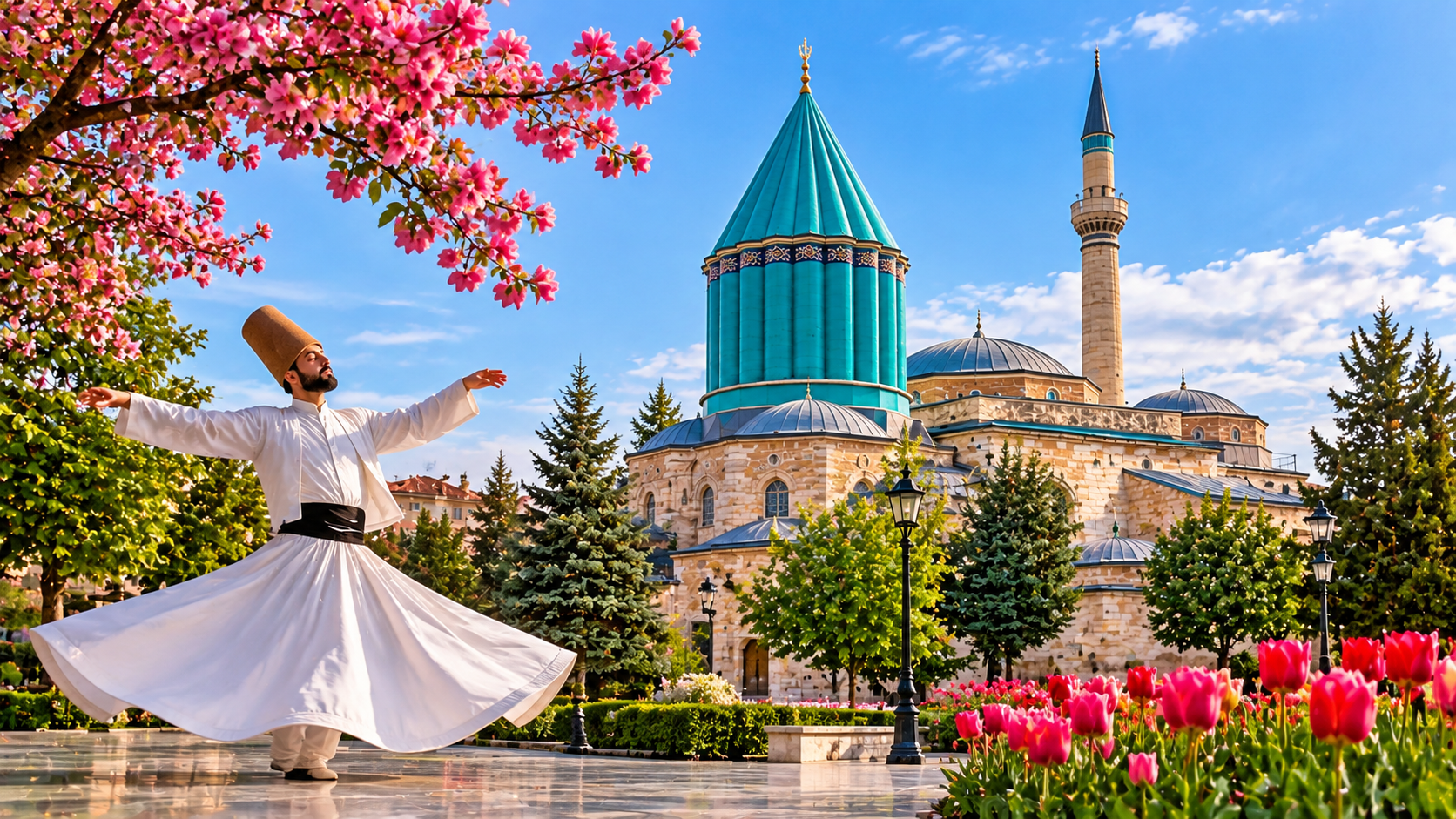
Some cities impress you with grand buildings and lively streets. Konya has those too, but its character feels a little different. It is a city where history sits quietly beside everyday life, where old Seljuk architecture shares space with modern cafés, and where the name of Rumi still carries meaning centuries after his time.
Located in central Anatolia, Konya is one of Turkey’s oldest continuously inhabited cities. It was once the capital of the Seljuk Sultanate of Rum, and that period left behind beautiful mosques, madrasas, stone gateways, and other architectural treasures. Yet Konya is not simply a place to look at old buildings. Its connection with Mevlana Jalaluddin Rumi and the Mevlevi tradition gives the city a cultural and spiritual identity that visitors notice almost immediately.
I would not describe Konya as a destination to rush through. Give it a little time. Walk through the older streets, stop for Turkish tea, and leave room in your schedule for places that may not appear on every postcard.
Mevlana Museum: The Heart of Konya
For many visitors, the first stop is the Mevlana Museum, one of the city’s most important landmarks. Its green-tiled dome is easy to recognise, but the atmosphere of the complex is quite different from the busy streets outside. The museum was once a Mevlevi lodge, and today it preserves objects connected with Rumi, his followers, and the history of the order.
Inside, visitors can see the tomb of Mevlana, traditional musical instruments, manuscripts, personal objects, and displays explaining the life of the dervishes. The building itself deserves attention. Its courtyards, tiled details, and historic rooms tell their own story, even before you begin reading the exhibition descriptions.
Practical information: The museum is open every day. Its usual winter hours are 9:00 AM to 5:00 PM, with the ticket office closing at 4:30 PM. In summer, visiting hours extend until 7:00 PM, and the ticket office closes at 6:30 PM. The museum’s official listing currently states that admission is free. On Mondays, the ticket office opens at 10:00 AM, so keep that detail in mind when planning an early visit. Allow around 60–90 minutes to explore without rushing. As this is also a place of religious and cultural importance, modest clothing and respectful behaviour are appropriate. Check the official Mevlana Museum page before setting out, especially if visiting during a seasonal change.
Alaeddin Hill and the Seljuk Heritage
Alaeddin Hill is another worthwhile stop, particularly if you want to understand Konya beyond its connection with Rumi. The hill sits in the city centre and is surrounded by busy roads, shops, and everyday neighbourhood life. At the top stands Alaeddin Mosque, an important example of Seljuk architecture.
The mosque dates back to the Seljuk period and has been altered and expanded over time. Its simple exterior does not reveal everything inside. Wooden details, historic columns, and the atmosphere of the prayer hall make it worth a visit for anyone interested in the city’s past.
The surrounding park offers a pleasant break from sightseeing. Families gather here, people sit beneath the trees, and the city carries on at its usual pace. It is a good place to pause before heading towards another historic quarter.
Sille Village: A Different Side of Konya
About eight kilometres from central Konya, Sille feels like a change of scenery. The village is known for its old stone houses, narrow lanes, churches, and the valley that runs through it. Its history reflects the different communities that lived here over many generations.
One of the best-known landmarks is the Aya Eleni Church, a historic building associated with the village’s former Greek Orthodox community. The stone houses and older streets are worth exploring too. Some lanes climb gently above the village, offering views across the rooftops and surrounding hills.
Sille is easy to visit without arranging a private tour. Municipal buses 64 and 65 connect the village with the city centre, departing from the Kültürpark/Alaeddin interchange area. The journey on bus 64 takes roughly 25 minutes, although traffic and the timetable can affect the trip. You can also take a taxi the drive is usually around 15–25 minutes.
Transport cost: Konya’s standard full KONYAKART fare is 35 TL per ride, following the fare change introduced on 1 November 2026. However, check the current route-specific fare before travelling, as some services may have different tariffs. A KONYAKART or an accepted contactless payment method can be used on city transport. For live routes and departure times, consult the municipality’s ATUS transport system. The village is small enough to explore on foot, but comfortable shoes are useful because some streets are uneven and uphill.
I would set aside at least half a day for Sille rather than treating it as a quick photo stop. There are small cafés and tea gardens where you can take a break, and the slower pace makes a welcome contrast with the city centre.
Watching the Whirling Dervishes
Konya and the Whirling Dervishes are closely connected. The Mevlevi Sema ceremony developed from the spiritual tradition associated with Rumi, and its movements have a deeper meaning than a performance designed simply to entertain. The ceremony combines music, prayer, and a carefully structured sequence of movements.
The Mevlana Cultural Center is one of the main places to look for an official Sema ceremony. Saturday evening performances are traditionally associated with the centre, while additional weekday programmes may also be arranged. Recent municipal announcements have included performances from Monday to Thursday, but schedules can change. It is best to check the current programme before choosing your date.
If you are visiting during the annual Şeb-i Arûs commemorations, there is another opportunity to attend. The official 2026 programme is scheduled for 7–17 December at the Sema Hall of the Mevlana Cultural Center. Tickets for the ceremonies are sold through the organiser’s announced ticketing platform, so book ahead rather than assuming you can find a seat on arrival.
During the ceremony, the dervishes move in a measured rhythm, accompanied by traditional music. The atmosphere is quiet and focused. Visitors should remain respectful, avoid unnecessary movement, and follow the venue’s photography rules. For current dates and ticket information, check the official Şeb-i Arûs programme.
Karatay Madrasa and the Beauty of Seljuk Tiles
Konya has more to offer than its best-known spiritual landmarks. Karatay Madrasa is a fine example of the city’s Seljuk heritage and is especially interesting for its decorative tilework. Built in the thirteenth century, the madrasa now serves as a museum displaying historic ceramics and tile art.
The entrance and interior details reveal the craftsmanship of the period. Blue, turquoise, and other rich shades appear across the decorative surfaces, giving the building a distinctive character. It is not a huge museum, so it can fit comfortably into a half-day walking route with other central attractions.
If you enjoy architecture, take time to look closely at the details rather than moving straight from one room to another. The patterns and inscriptions are part of what makes the building special.
What to Eat in Konya
Food is another reason to spend more than a few hours in the city. Konya is particularly famous for etli ekmek, a long, thin flatbread topped with finely prepared meat. It is often served freshly baked, sometimes with lemon and salad on the side. The bread is crisp, the topping is savoury, and it makes a satisfying meal after a morning of sightseeing.
Another local speciality is fırın kebabı, a slow-cooked lamb dish traditionally prepared in an oven. It is rich and filling, usually served with bread. You may also come across bamya çorbası, an okra-based soup that has a place in local food traditions.
For something lighter, stop at a café for Turkish tea or coffee. Konya has plenty of places where you can sit for a while and watch the streets. You do not need an elaborate dining plan for every meal sometimes a simple local restaurant is the best way to get a feel for the city.
The Best Time to Visit Konya
Spring and autumn are generally comfortable seasons for exploring Konya on foot. Days are often pleasant, and the temperatures are less demanding than during the height of summer. Summer can be hot, particularly in the afternoon, while winter brings cold weather and occasional snow.
December has a special place in Konya’s calendar because of the Şeb-i Arûs commemorations around 17 December. The city receives many visitors during this period, so accommodation and ceremony tickets should be arranged early. If you prefer a quieter visit, another month may suit you better.
Getting Around and Planning Your Visit
Konya’s central attractions are relatively easy to combine. The Mevlana Museum, Alaeddin Hill, and Karatay Madrasa can all be included in a city-centre itinerary. Trams and buses are useful for longer distances, while Sille makes a good separate half-day excursion.
For a first visit, two full days would provide a reasonable amount of time. Use one day for the main historic and cultural sites, then keep another for Sille and any museum or ceremony you do not want to miss. If you have an extra day, you can explore at a gentler pace and discover parts of the city beyond the usual visitor route.
Konya may not have the seaside atmosphere of Antalya or the lively streets of Istanbul, but it offers something quite different. Its old buildings, local food, and connection with Rumi give it a character that is difficult to reduce to a list of attractions. Spend time with the details, learn a little about its history, and let the city unfold at its own pace. It is a place that deserves more than a hurried stop on a journey through Turkey.

