
InThe Open Road Beckons: How Scenic America Road Trips Are Expanding as Global Travel GDP Hits a Record $11.6 Trillion
Introduction: The Renaissance of the Open Horizon
There is an enduring, almost sacred romance attached to the sound of tires humming against asphalt as a ribbon of highway stretches endlessly toward a golden horizon. For generations, the American road trip has served as a cultural archetype—a symbol of freedom, self-discovery, and untamed exploration. Today, this iconic pastime is undergoing a profound renaissance.
Against the macroeconomic backdrop of the global travel and tourism sector reaching a staggering, historic milestone of $11.6 trillion in global GDP contribution (accounting for nearly 9.8% of the world’s total economy), the way we explore the world is shifting. While international hubs buzz with activity and global travel registers 1.54 billion international overnight arrivals, travelers are increasingly seeking intimacy, depth, and personal connection over crowded itineraries. They are turning to the slow, deliberate, and awe-inspiring expanse of America’s scenic byways.
This comprehensive guide explores the intersection of booming global tourism economics and the vibrant expansion of America’s scenic road trips. We will examine the data driving this phenomenon, unpack the psychological shift toward experiential driving holidays, map out the premier routes defining this era, and offer expert insights into sustainable, unforgettable highway adventures.
Part I: The Macroeconomics of Wanderlust — Understanding the $11.6 Trillion Milestone
To truly appreciate why scenic road trips are experiencing an unprecedented boom, we must first look at the grand canvas of the global economy. According to the latest Economic Impact Research (EIR) released by the World Travel & Tourism Council (WTTC) in partnership with Chase Travel, the travel and tourism sector shattered previous records by contributing $11.6 trillion to the global economy.
Key Economic Indicators at a Glance:
- Outpacing Global Growth: The sector expanded at a rate of 4.1%, significantly outperforming the broader global economic growth rate of 2.8% by nearly 50%.
- Job Creation Engine: Travel and tourism supported 366 million jobs globally—accounting for roughly 10.9% of all jobs worldwide and driving 1 in every 3 new jobs created.
- Unprecedented Mobility: The world witnessed 1.54 billion international overnight arrivals, translating to an astonishing 4.2 million people crossing borders every single day.
While regions like Asia-Pacific experienced explosive post-pandemic rebounds (surging by 8.1% to reach $3.29 trillion), North America maintained a mature, steady $3.05 trillion footprint. Within this mature North American market, however, traveler behavior has pivoted dramatically. Rather than rushing through congested mega-cities, domestic and international visitors alike are pouring resources into localized, deeply experiential travel. Road trips have emerged as the premier vehicle for this consumer shift, combining economic resilience with a desire for autonomy, safety, and breathtaking natural beauty.
Part II: The Psychology of the Modern Road Tripper
Why are road trips experiencing such a massive surge in popularity? The answer lies deep within evolving human psychology. After years of digital saturation, supply chain disruptions in aviation, and the hyper-fast pace of modern life, travelers are suffering from “destination fatigue.”
1. The Quest for Autonomy and Control
In an era where flight cancellations, luggage loss, and rigid itinerary constraints can turn a dream vacation into a logistical nightmare, the automobile offers ultimate sovereignty. You are the captain of your vessel. If a roadside farmers’ market catches your eye, you pull over. If a misty mountain overlook calls your name, you linger until sunset.
2. Micro-Tourism and “Slow Travel”
The $11.6 trillion global travel boom isn’t just about volume; it’s about a shift in intent. Modern travelers—particularly Millennials and Gen Z—crave authenticity. Road trips naturally align with the “slow travel” movement, encouraging visitors to support small-town diners, family-run motels, indigenous artisan shops, and regional conservation parks. Every gallon of gas purchased and every local diner frequented directly injects vitality into rural economies that are often bypassed by mass tourism.
3. The Therapeutic Landscape
Psychologists have long championed the restorative benefits of “green space” and “blue space.” Cruising down a coastal highway with the windows down or winding through an alpine canyon provides a powerful neurological reset. It lowers cortisol levels, reduces cognitive overload, and fosters a profound sense of mindfulness.
Part III: Iconic Corridors — The Crown Jewels of Scenic America Road Trips
As federal, state, and private investments align to enhance byway infrastructure, viewing platforms, and EV charging networks across North America, several legendary routes are shining brighter than ever. Here are the premier road trips defining the current travel landscape:
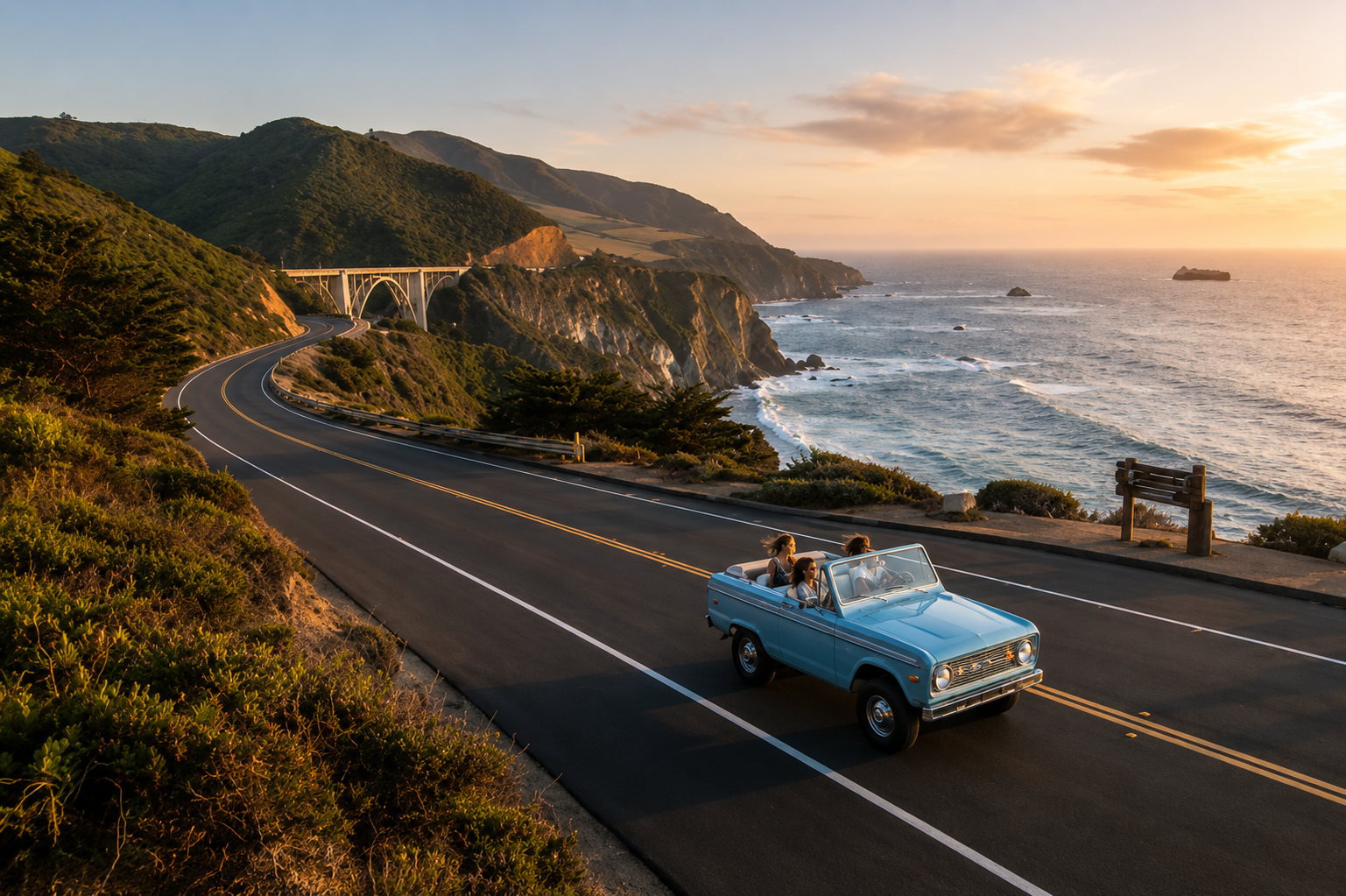
1. The Pacific Coast Highway (California State Route 1)
- The Route: Stretching over 600 miles from the misty cliffs of Mendocino down to the sun-drenched shores of San Diego, with the legendary Big Sur stretch serving as its beating heart.
- Why It’s Booming: Travelers seeking coastal majesty find solace here. The towering redwoods meeting the roaring Pacific, dramatic drop-offs at Bixby Creek Bridge, and world-class culinary stops in Monterey and Carmel make this a sensory masterpiece.
- Pro-Tip: Always drive from north to south (ocean side) to have uninterrupted, pull-out access to coastal viewpoints.
2. Route 66: The Main Street of America
- The Route: From Chicago, Illinois, all the way to the Santa Monica Pier in Los Angeles, spanning 2,440 miles across eight states.
- Why It’s Booming: International travelers returning to North America view Route 66 as the ultimate bucket-list Americana pilgrimage. Neon-lit motels, vintage diners, and quirky roadside oddities offer a nostalgic portal into mid-century history.
- Pro-Tip: Don’t try to rush it. Allocate at least two weeks to truly absorb the regional eccentricities of the American heartland and the Southwest desert.
3. The Blue Ridge Parkway (Virginia and North Carolina)
- The Route: 469 miles connecting Shenandoah National Park to the Great Smoky Mountains National Park along the crest of the Blue Ridge Mountains.
- Why It’s Booming: Known as America’s favorite drive, it boasts a strict speed limit (maximum 45 mph) and zero commercial traffic, making it an exercise in pure, unadulterated relaxation. Autumn brings world-famous foliage, while summer explodes with cascading rhododendrons.
- Pro-Tip: Check for seasonal elevation closures and experience sunrise at Rough Ridge or Linn Cove Viaduct.
4. The Grand Circle Road Trip (Utah and Arizona)
- The Route: A loop beginning and ending in Las Vegas or Salt Lake City, weaving through Zion, Bryce Canyon, Capitol Reef, Arches, Canyonlands, and the Grand Canyon.
- Why It’s Booming: Outdoor adventure tourism has skyrocketed. Red rock cathedrals, slot canyons, and starlit Dark Sky reserves offer transformative experiences that urban environments simply cannot replicate.
- Pro-Tip: Secure national park timed-entry reservations months in advance to ensure seamless passage through Zion and Arches.
Part IV: Sustainable Motoring — Traveling Responsibly in a $11.6 Trillion Industry
With the global travel economy soaring to unprecedented heights, tourism boards and travelers share a collective responsibility: ensuring that the magic we enjoy today remains pristine for generations to come. Road tripping, while intimate, leaves a distinct environmental footprint.
Embracing the Electric Vehicle (EV) Transition
Car rental agencies and scenic corridors are rapidly modernizing. Major byways now feature robust fast-charging networks, allowing travelers to trace routes like the Historic Columbia River Highway in Oregon or parts of Route 66 with zero tailpipe emissions. If renting a gas-powered vehicle, opt for high-fuel-economy hybrids to minimize resource consumption.
Practicing “Leave No Trace” on Wheels
- Stay on Designated Roads: Never venture off-road into fragile desert crusts or alpine meadows.
- Minimize Single-Use Plastics: Pack reusable water containers and grocery totes for local farm stand purchases.
- Support Indigenous & Rural Economies: Purchase souvenirs directly from local artisans, eat at independent diners, and stay in locally owned boutique inns or eco-lodges rather than standardized mega-chains.
Part V: Expert Planning Guide — Executing the Ultimate American Road Trip
Crafting an unforgettable journey requires a blend of rigorous preparation and radical spontaneity. Follow this step-by-step blueprint to design your next highway adventure:
Step 1: Define the Pacing Rule of Thirds
A common mistake is over-scheduling. Do not plan to drive eight hours every single day.
- Rule: Spend one-third of your trip driving, one-third exploring primary destinations (parks, cities), and one-third resting or discovering unexpected roadside gems.
Step 2: Secure Lodging and Permits Early
Because domestic and international travel demand is at an all-time high ($11.6 trillion ecosystem buoyancy), iconic stops book out months in advance. Secure national park passes, high-demand campsites, and boutique lodgings ahead of time, leaving your mid-day schedules flexible.
Step 3: Curate the Sensory Environment
A road trip is as much an auditory and culinary experience as it is a visual one.
- Build collaborative playlists that mirror the geographic transition of your route (e.g., folk and bluegrass through the Appalachians, blues and classic rock through the heartland, indie and acoustic along the Pacific coast).
- Map out regional culinary specialties ahead of time: authentic New Mexican green chile in Santa Fe, fresh Dungeness crab in Oregon, or authentic Carolina barbecue.
Conclusion: The Road Ahead
As the global travel and tourism sector stands triumphantly at $11.6 trillion, generating millions of livelihoods and connecting billions of souls across borders, the humble American road trip reminds us of the profound joy of stillness in motion. It strips away the friction of modern transit and replaces it with wind, wonder, and winding tarmac.
Whether you are charting a course through the towering pines of the Blue Ridge, carving through the sunburned monoliths of Utah, or tracing the edge where the continent meets the Pacific, the open road is waiting. Pack light, drive mindfully, and let the magnificent landscape of America unfold before you one mile at a time.
“When I first read about this update, it instantly reminded me of the absolute headache of wrestling with foreign transport apps on past trips—and honestly, this feature is a total game-changer.”
Have you ever pushed through travel anxieties or flight disruptions just to take a dream trip? Drop a comment and tell me about your most unforgettable travel adventure!
About the Author: Zoey
Zoey is a passionate travel writer and researcher at VentureWibe, dedicated to bringing readers the latest global travel news, inspiring destination guides, and tourism trends from around the world. With a keen eye for uncovering unique travel stories, Zoey helps explorers stay informed and prepared for their next adventures.
- Expertise: Global Tourism, Destination Research, and Travel Insights

Discover more from venture
Subscribe to get the latest posts sent to your email.


There are some interesting closing dates on this article however I don’t know if I see all of them center to heart. There is some validity however I will take maintain opinion till I look into it further. Good article , thanks and we would like more! Added to FeedBurner as properly