
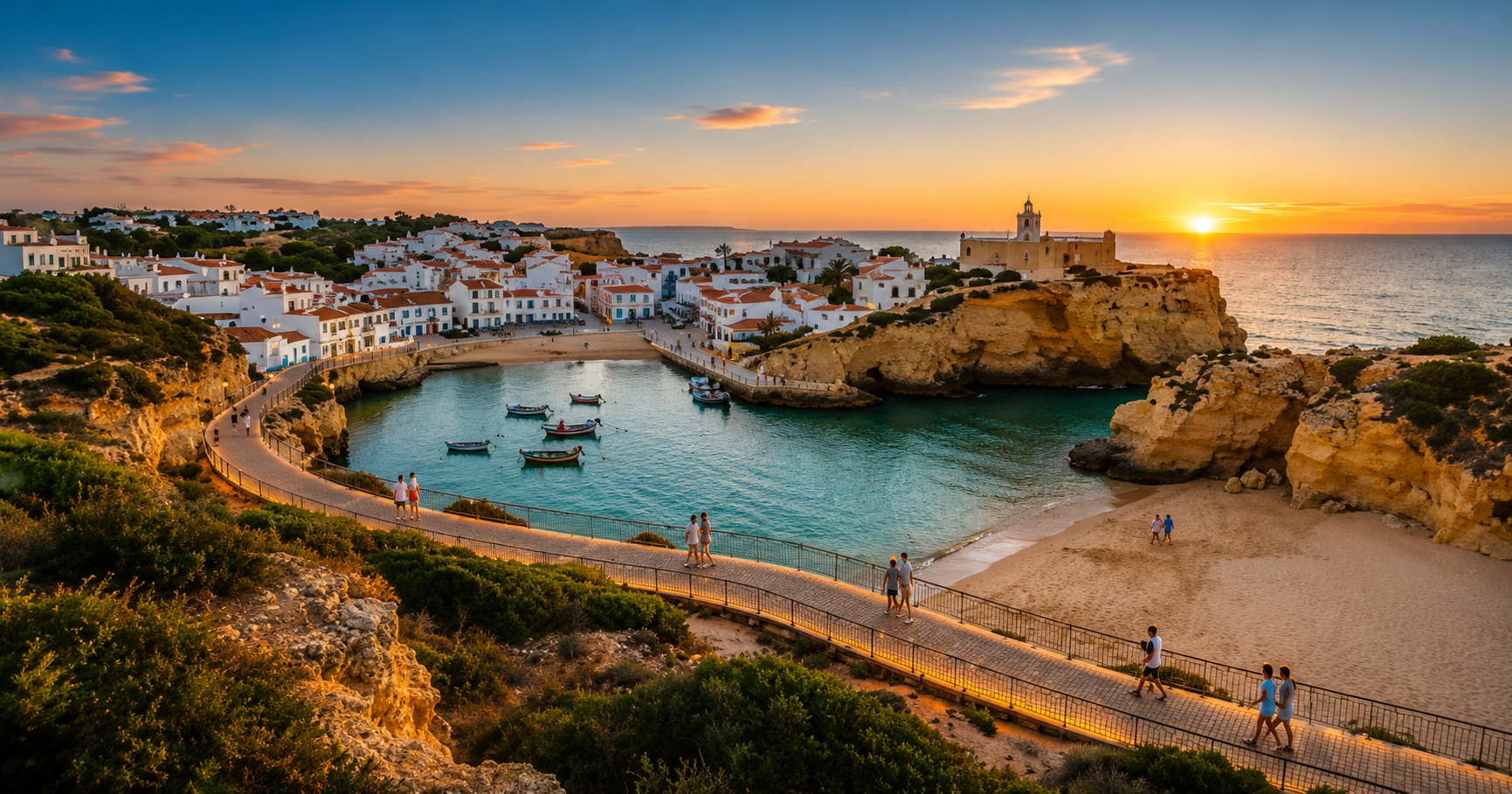
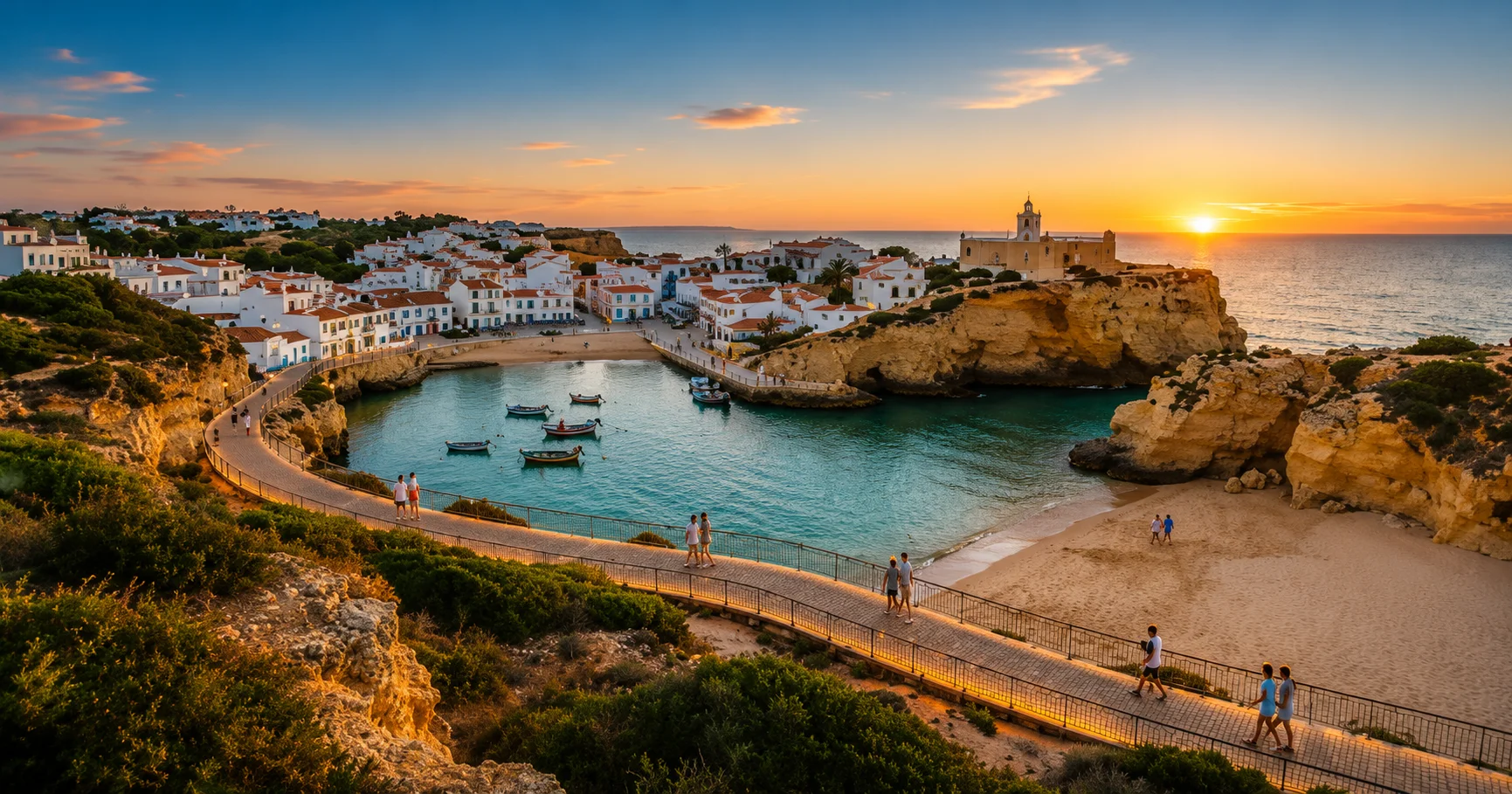
Portugal Emerges as a Safe-Haven Destination in Europe as Global Travel Patterns Shift
In an era defined by rapid geopolitical realignments, shifting global mobility, and an collective human exhaustion with the hyper-accelerated pace of modern life, the anatomy of travel is undergoing a profound transformation. Safety, once treated as a secondary checklist item behind flight prices and photo opportunities, has graduated to become the primary currency of modern tourism.
Across the globe, discerning travelers, families, digital nomads, and weary urbanites are looking at a world map and asking a new fundamental question: Where can we go to simply breathe, feel secure, and experience genuine human connection without background anxiety?
Increasingly, the compass points directly toward Europe’s westernmost edge. Portugal—long cherished for its sun-bleached coastlines, rich maritime history, and soulful fado music—has officially emerged as the ultimate safe-haven destination on the continent. As global travel patterns shift away from overcrowded, hyper-stressed traditional tourism hubs, Portugal stands out as a sanctuary of stability, deep-rooted cultural warmth, and sustainable elegance.
1. The Shifting Tides of Global Travel: Why Safety and Sanity Dictate the Modern Journey
For decades, international tourism grew on the back of sheer accessibility and bucket-list abundance. Travelers packed themselves into iconic city squares, rushed through synchronized itinerary checkpoints, and accepted overcrowding and friction as the price of admission to Europe.
However, a confluence of global pressures over recent years has recalibrated human psychology. In a climate marked by macroeconomic volatility, institutional unpredictability, and relentless digital burnout, travelers are no longer seeking mere entertainment; they are seeking restoration.
According to recent travel industry analytics and global mobility reports, travelers are systematically bypassing destinations plagued by over-tourism, social friction, and infrastructure strain. They are migrating toward places characterized by:
- Civic and Political Stability: Nations with low internal polarization and strong democratic frameworks.
- Low Crime Rates: Environments where solo travelers, families, and seniors can walk down city streets after dark with absolute peace of mind.
- A Restorative Pace of Life: Regions where local culture actively rejects the cult of constant busyness, favoring community, culinary tradition, and connection with nature.
Portugal fits this exact blueprint. Consistently securing a top-tier position on the Global Peace Index—regularly ranking among the top 10 safest countries globally and top 5 in Europe—Portugal has transformed from a well-kept secret into Europe’s most reliable, reassuring anchor.
2. Anatomy of a Safe Haven: Stability, Integration, and Peace of Mind
What makes a country truly a “safe haven” in the 21st century? It is more than just low rates of petty crime. True safety is structural, psychological, and systemic.
A Pillar of European Stability
As a stable parliamentary democracy, a founding member of NATO, and a committed member of the European Union, Portugal offers institutional predictability. For international travelers and long-term visitors alike, this integration provides an underlying layer of security. Healthcare infrastructure is robust, modern, and widely accessible; emergency services are efficient; and public institutions operate with transparency.
Social Cohesion and Radical Hospitality
The true magic of Portuguese safety, however, lies in its social fabric. Culturally moderate, deeply community-oriented, and historically shaped by centuries of global exploration and cross-cultural exchange, the Portuguese people exhibit a natural, unforced hospitality.
In Portugal, foreign visitors are rarely treated as transient cash cows; rather, they are welcomed into the slow rhythm of daily life. This social cohesion translates directly into low hostility, minimal street-level aggression, and an atmosphere where solo female travelers, multi-generational families, and retirees feel entirely enveloped by care.
3. Beyond the Metropolises: Exploring Portugal’s Diverse Safe-Haven Ecosystems
Portugal’s appeal as a shifting travel sanctuary lies in its remarkable geographic diversity. Within a remarkably compact territory, travelers can traverse everything from vibrant cultural capitals to mist-shrouded mountain palaces and untouched Atlantic archipelagos.
Lisbon: The Sunlit Capital of Soul
Anchored on the banks of the Tagus River, Lisbon balances the grandeur of a historic maritime empire with the breezy, laid-back ethos of a modern southern European capital. Its pastel-colored neighborhoods—Alfama, Chiado, and Bairro Alto—invite aimless wandering. Here, historic yellow trams clatter up steep cobblestone hills, and the melancholic, beautiful strains of fado spill from neighborhood taverns. Lisbon offers all the sophistication of a major European cultural hub—world-class gastronomy, contemporary art museums, and tech-forward infrastructure—without the suffocating claustrophobia found in other Western European capitals.
Porto and the Douro Valley: Liquid Gold and Timeless Tradition
Further north, Porto presents a more intimate, granite-hewn charm. Overlooking the Douro River, its historic center is a UNESCO World Heritage site defined by azulejo-tiled churches, bustling port wine cellars, and iron bridges designed in the school of Gustave Eiffel.
Just beyond the city limits lies the Douro Valley, one of the oldest and most breathtaking wine regions on earth. Terraced vineyards cascade down steep slopes toward winding river waters. For travelers seeking refuge from the digital noise, spending a few days floating down the Douro on a riverboat or tasting vintage ports at a historic quinta offers a masterclass in deceleration.
The Silver Coast and Sintra: Romantic Escapes and Wellness Sanctuaries
For those seeking a deeper dive into nature and holistic wellbeing, regions like the Silver Coast (Costa de Prata) and Sintra provide an idyllic counter-environment.
- Sintra enchants visitors with its misty microclimate, eccentric 19th-century palaces like the brightly colored Pena Palace, and lush, romantic gardens that feel pulled straight from a fairy tale.
- The Silver Coast, spanning towns like Caldas da Rainha, Óbidos, and Nazaré, is increasingly recognized as a capital for wellness travel. Featuring yoga retreats, coastal cliffs, pristine Atlantic beaches, and quiet farming communities, it represents an environment where the nervous system can finally downshift.
The Islands: Madeira and the Azores
For the ultimate geographic sanctuary, Portugal’s autonomous island regions offer pristine isolation without sacrificing safety or comfort.
- Madeira, floating off the northwest coast of Africa, is a subtropical paradise known for its dramatic volcanic cliffs, botanical gardens, and levada hiking trails.
- The Azores—an archipelago sitting in the mid-Atlantic—beckon eco-travelers with emerald-green volcanic crater lakes, thermal springs, and world-class whale-watching operations, remaining one of the most ecologically pure destinations left in Europe.
4. The Philosophy of Slowness: Why Portugal Heals Modern Burnout
To understand why travelers are flocking to Portugal amidst shifting global patterns, one must look at the psychological concept of environment design.
Modern life subjects us to an unyielding architecture of urgency. We are surrounded by systems that reward constant responsiveness, multi-tasking, and hyper-productivity. When individuals try to heal from burnout while remaining inside that high-stress environment, true recovery is nearly impossible.
Portugal offers a profound psychological counter-dose: a culture rooted in the art of taking one’s time.
- Meals are treated as sacred rituals of conversation rather than transactional fuel stops.
- Public spaces invite lingering—whether over an espresso at a sunlit sidewalk table or during an evening passeio (stroll) along the ocean boardwalk.
- The natural elements—the endless crash of the Atlantic waves, the warmth of the Mediterranean sun, and the cool shade of ancient cork forests—act as natural balms for frayed nerves.
In Portugal, slowing down is not viewed as a lazy indulgence or a productivity failure; it is understood as a fundamental prerequisite for a healthy, dignified human existence. Visitors quickly realize that the country does not demand adaptation to its speed; rather, it invites you to match its calm.
5. Seamless Connectivity and Infrastructure: Easy to Reach, Hard to Leave
While Portugal feels blissfully detached from the frantic anxieties of the modern world, it is logistically integrated into the global grid with seamless precision.
Accessibility is one of the nation’s strongest assets for international travelers. Major non-stop flight corridors connect Lisbon and Porto directly with key North American powerhouses—including New York, Boston, Miami, Chicago, San Francisco, Washington D.C., Toronto, and Montreal—alongside robust daily connections to South America and major European capitals.
Once on the ground, navigating the country is exceptionally intuitive. A modern network of high-speed trains, well-maintained highways, and reliable domestic air links to the islands make independent exploration effortless. Visitors do not need to wrestle with complex logistical hurdles; instead, they can transition smoothly from international transit into a state of deep relaxation from the moment they land.
Summary: Your Invitation to Europe’s Safest Harbor
Global travel patterns will continue to shift, driven by the changing tides of geopolitics, technology, and human consciousness. Yet, fundamental human needs remain unchanged: we seek beauty that inspires, food that nourishes, communities that welcome, and—above all—an environment where we can lay down our guard and simply be.
Portugal has earned its place as Europe’s premier safe-haven destination not through aggressive marketing, but through the quiet, consistent execution of values that matter most. It offers a rare window into a world where safety, culture, and nature coexist in perfect harmony.
If your soul is whispering the need for a reset—if you are searching for a corner of the globe where the air is sweet, the streets are secure, and time remembers how to walk rather than run—Portugal is waiting with open arms. Pack lightly, leave your digital armor at home, and discover the transformative power of Europe’s most welcoming sanctuary.
“When I first read about this update, it instantly reminded me of the absolute headache of wrestling with foreign transport apps on past trips—and honestly, this feature is a total game-changer.”
Have you ever pushed through travel anxieties or flight disruptions just to take a dream trip? Drop a comment and tell me about your most unforgettable travel adventure!
About the Author: Zoey
Zoey is a passionate travel writer and researcher at VentureWibe, dedicated to bringing readers the latest global travel news, inspiring destination guides, and tourism trends from around the world. With a keen eye for uncovering unique travel stories, Zoey helps explorers stay informed and prepared for their next adventures.
- Expertise: Global Tourism, Destination Research, and Travel Insights

Discover more from venture
Subscribe to get the latest posts sent to your email.


Way cool, some valid points! I appreciate you making this article available, the rest of the site is also high quality. Have a fun.