
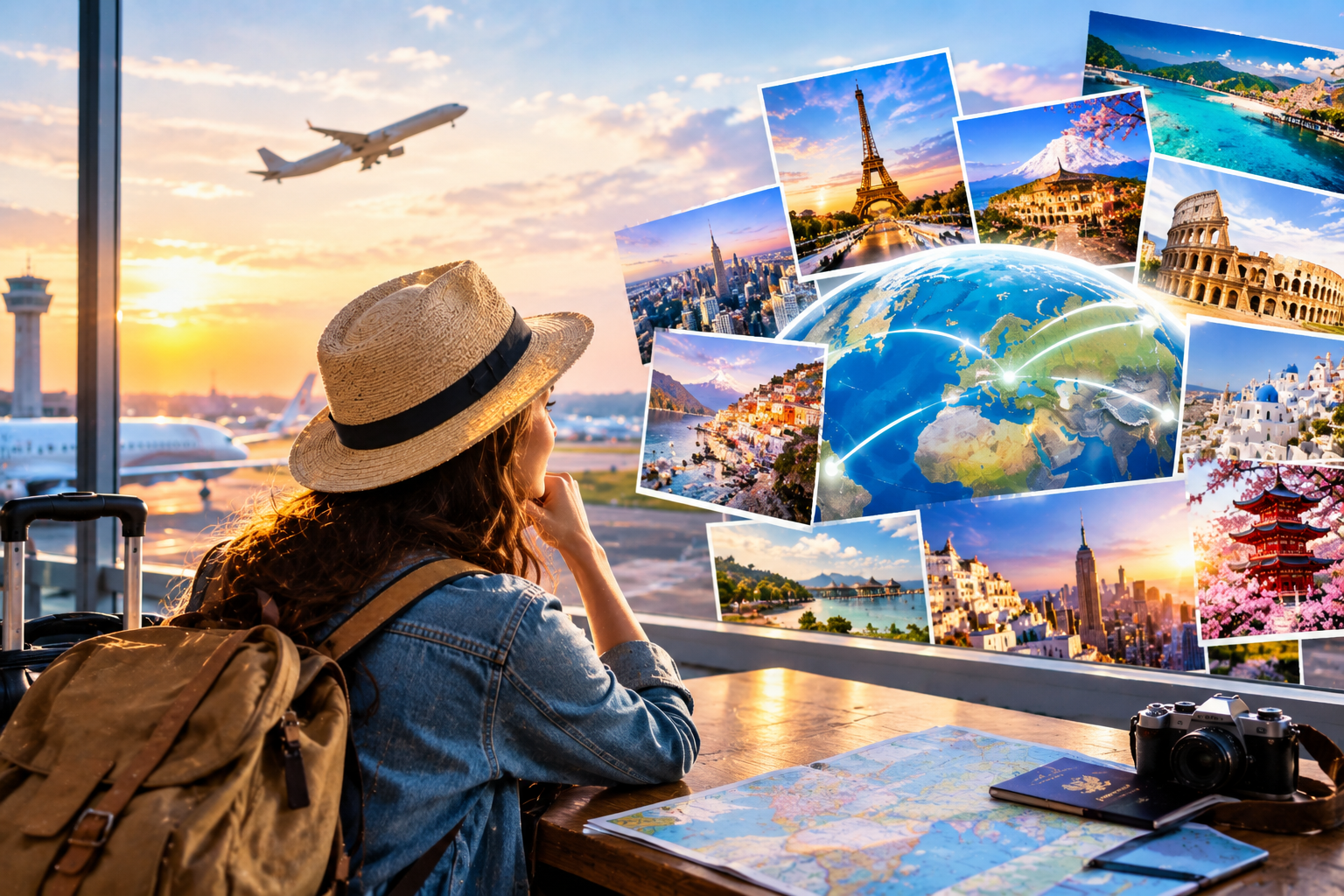

The Unstoppable Rebound: Why Global Tourism Always Outruns the Crisis
There is an fundamental truth built directly into human nature: we are hardwired to explore.
According to a landmark global report titled “Accelerating Travel & Tourism Recovery – Global Evidence from Four Decades of Crises,” released by the World Travel & Tourism Council (WTTC), the global travel industry has proven its structural resilience. Analyzing 40 years of global data and 100 major macroeconomic shocks—ranging from natural disasters and political upheavals to severe health emergencies—the comprehensive study delivers a definitive conclusion.
“Resilience is built into our DNA. Even after the most severe crises, people continue to travel, and destinations come back stronger. The question is not whether the sector will recover, but how quickly we choose to enable that recovery.”
— Gloria Guevara, President & CEO of WTTC
By the Numbers: The Global Economic Engine
The sheer economic footprint of global tourism highlights why its recovery is so vital to worldwide financial stability. The industry is expanding at a pace that significantly outstrips broader global economic metrics.The data proves that recovery is never a structural “if,” but rather a tactical “how fast.” For instance, following the unprecedented 72% absolute drop in international travel during the 2020 pandemic onset, global travel volumes completely rebounded back to 1.47 billion arrivals within a tight window—exceeding previous historic peaks.
The 4 Pillars of Modern Tourism Resilience
The WTTC, alongside data scientists at George Washington University, mapped out a structured, operational framework used by successful nations to accelerate their post-crisis bounceback.
1.Restore Traveler Confidence:Phase 1: Consumer Psychology.
Implementing transparent communication, predictable safety protocols, and eliminating contradictory travel requirements or panic-driven policy shifts.
2.Ensure Immediate Business Continuity:Phase 2: Economic Groundwork.
Deploying direct liquidity, fiscal relief, and operational support to protect Micro, Small, and Medium Enterprises (MSMEs), which comprise the foundational backbone of local visitor economies.
3.Execute Decisive Institutional Responses:Phase 3: Public-Private Alignment.
Establishing a unified command infrastructure where government ministers and private sector tourism CEOs coordinate capital deployment in real-time.
4.Drive Long-Term Structural Adaptation:Phase 4: Evolution.
Using the crisis window as a baseline to diversify assets, invest heavily in smart digital infrastructure, and transition toward sustainable destination management.
5 Countercyclical Strategies for Rapid Rebound
The report stresses that the destinations that emerge the fastest do not achieve results by accident. They adhere to five distinct evidence-based principles:
- Invest Countercyclically: Inject capital and market aggressively at the absolute trough of a crisis, rather than waiting for things to stabilize.
- Protect the SME Backbone: Guard local tour operators, boutique stays, and regional artisans who lack deep corporate safety nets.
- Defend Air Connectivity: Treat commercial flight routes as vital strategic infrastructure assets that must be maintained at all costs.
- Avoid Overreaction in Policy: Refrain from implementing overly restrictive travel bans or negative messaging that permanently damages consumer trust.
- Innovate and Diversify: Pivot toward new regional demographics, digital nomad infrastructure, or alternative eco-tourism models to minimize future single-source market vulnerabilities.
Let’s be completely honest—whenever global headlines get scary with conflicts, economic crashes, or health emergencies, the very first industry people write off is always travel. But if history has taught us anything over the last four decades, it’s that human wanderlust is practically bulletproof. No matter how deep the crisis, people always pack their bags again. What I love about this WTTC report is how it proves that tourism doesn’t just bounce back; it usually comes back stronger and smarter. The destinations that recover the fastest aren’t the ones hiding away, but the ones doubling down on smart strategies, supporting small local businesses, and keeping doors open when things get tough. It really shows how deeply travel is wired into our identity.
“When I first read about this update, it instantly reminded me of the absolute headache of wrestling with foreign transport apps on past trips—and honestly, this feature is a total game-changer.”
Have you ever pushed through travel anxieties or flight disruptions just to take a dream trip? Drop a comment and tell me about your most unforgettable travel adventure!
The Triumph of Human Curiosity: When Every Travel Headache Fades into Memory
We have all stood in that exact moment of doubt: staring at a delayed flight notification on a flickering airport screen, bags packed tight, wondering if taking the trip was a mistake. Whether it is navigating geopolitical tensions, unexpected weather disruptions, or simply the sheer exhaustion of international transit delays, travel has a funny way of testing our patience right before it rewards our courage.
Yet, millions of us do it anyway. Why? Because deep down, we know that the absolute best things in life live right outside our comfort zones.
Think back to your own most memorable journeys. They are rarely the moments when everything went according to plan. Instead, your mind instantly jumps to the glorious disasters—the time you got hopelessly lost in a labyrinthine medina before a kind stranger invited you in for tea, the missed train connection that led you to discover a breathtaking, hidden coastal village, or the sudden downpour that forced you into a tiny, local pub filled with laughing locals. Those raw, unscripted moments of human connection are the invisible ROI of travel. They are the reason human wanderlust remains completely bulletproof, no matter how chaotic the global news cycle gets.
When the WTTC talks about macroeconomic resilience and structural recovery, it can sometimes sound clinical. But behind those multi-trillion-dollar numbers are real people: small family business owners keeping doors open through tough seasons, tour guides sharing their ancestral heritage, and everyday travelers choosing curiosity over fear. Resilience isn’t just an economic metric; it is a shared human mindset. It is our collective refusal to let the complexities of the world lock us away from one another.
When you push past the anxieties, clear the hurdles of foreign transit apps, and finally step out into a bustling new city square or a quiet mountain trail, all the logistical headaches instantly melt away. You realize that every delayed flight, every confusing map, and every moment of travel friction was just a minor toll paid for an unforgettable story.
What about you? Have you ever pushed through major travel anxieties, flight nightmares, or last-minute disruptions just to chase a dream destination? Drop a comment below and share your unforgettable adventure!
About the Author: Zoey
Zoey is a passionate travel writer and researcher at VentureWibe, dedicated to bringing readers the latest global travel news, inspiring destination guides, and tourism trends from around the world. With a keen eye for uncovering unique travel stories, Zoey helps explorers stay informed and prepared for their next adventures.
- Expertise: Global Tourism, Destination Research, and Travel Insights

Discover more from venture
Subscribe to get the latest posts sent to your email.

