
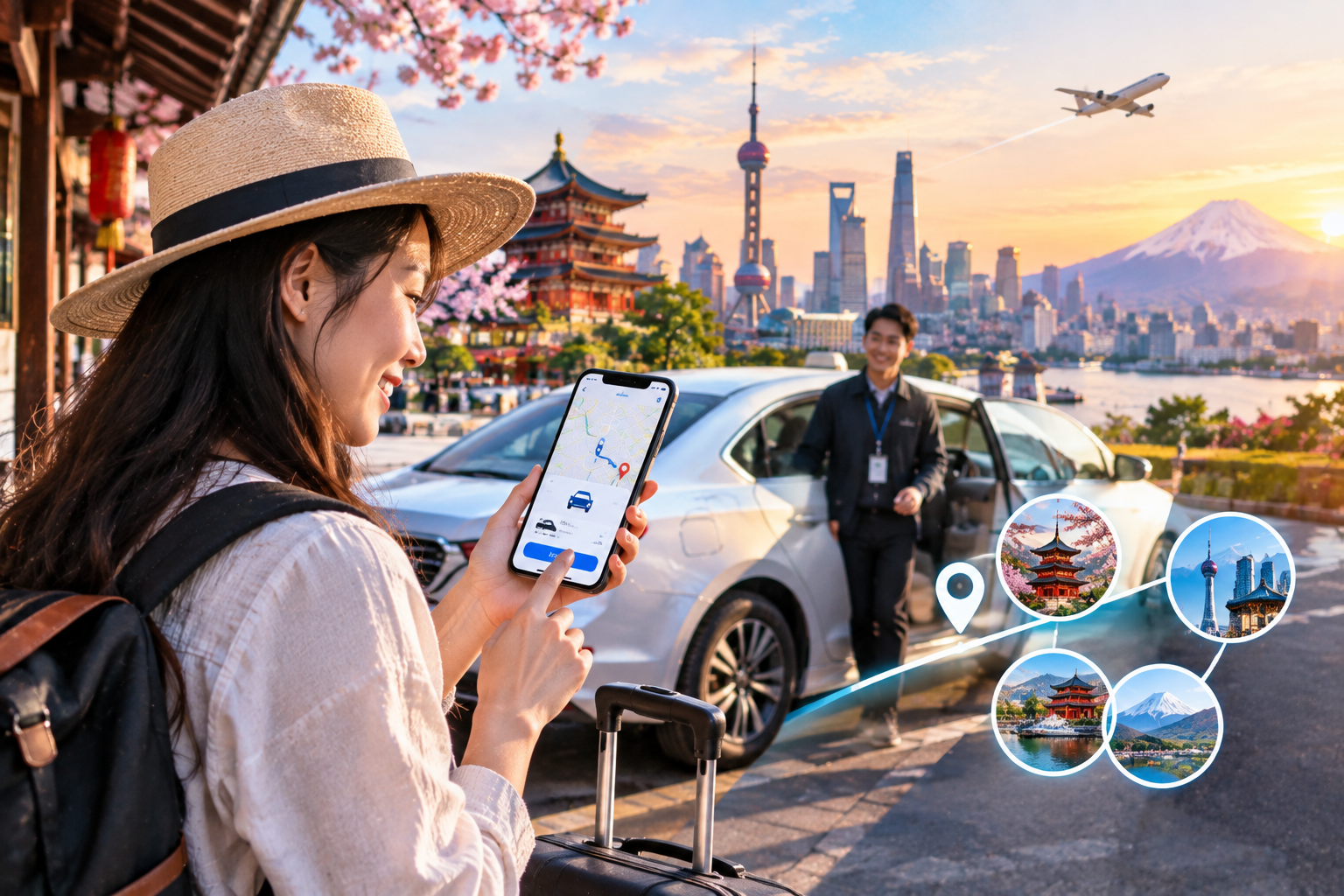

Amap Expands Chinese-Language Ride-Hailing Worldwide, Making International Travel Easier for Millions of Chinese Tourists
Meta Description: Amap is expanding its Chinese-language ride-hailing services through partnerships with overseas tourism authorities, helping Chinese travelers enjoy seamless transportation, easier navigation, and smarter travel experiences across popular international destinations.
Amap Expands Chinese-Language Ride-Hailing Worldwide, Transforming Overseas Travel for Chinese Tourists
International travel is becoming increasingly seamless for Chinese tourists as digital mapping and mobility platform Amap expands its Chinese-language ride-hailing services through partnerships with tourism authorities around the world.
The initiative reflects a growing shift toward localized travel technology that removes language barriers, simplifies transportation, and creates a more comfortable experience for millions of Chinese travelers exploring destinations across Asia, Europe, the Middle East, Oceania, and the Americas.
As outbound tourism continues to recover, travel technology is playing a critical role in helping visitors navigate unfamiliar cities with confidence.
Making International Transportation More Accessible
One of the biggest challenges international travelers often face is arranging reliable local transportation in a foreign language.
By offering ride-hailing services in Chinese, Amap aims to provide travelers with a familiar digital environment where they can:
- Book rides using an intuitive Chinese-language interface
- View destinations more easily
- Navigate unfamiliar cities with confidence
- Reduce communication barriers with drivers
- Access transportation more efficiently throughout their journey
This localized approach helps improve convenience while reducing stress for first-time international visitors.
Tourism Authorities Embrace Digital Partnerships
Many tourism organizations are increasingly collaborating with travel technology companies to improve the visitor experience.
Digital mobility services have become an important part of destination marketing because they help travelers move more easily between airports, hotels, attractions, shopping districts, restaurants, and entertainment venues.
These partnerships also encourage tourists to explore beyond major landmarks, benefiting local businesses and regional economies.
By integrating transportation with tourism promotion, destinations can deliver a smoother end-to-end travel experience.
Chinese Outbound Tourism Continues to Grow
China remains one of the world’s largest outbound tourism markets, with millions of travelers visiting international destinations every year.
Popular regions attracting Chinese visitors include:
- Southeast Asia
- Japan
- South Korea
- Europe
- Australia
- New Zealand
- The Middle East
- North America
As international travel demand continues to recover, destinations are increasingly investing in Chinese-language services to better accommodate visitors.
Technology Is Reshaping Global Tourism
Modern travelers expect digital convenience throughout every stage of their journey.
From booking flights and hotels to navigating cities and paying for transportation, mobile applications now play a central role in travel planning.
Localized ride-hailing services complement this digital ecosystem by providing:
Faster Urban Mobility
Travelers can quickly reach attractions, hotels, shopping centers, and business districts without relying solely on public transportation.
Greater Confidence
Using familiar language interfaces allows visitors to travel independently while minimizing misunderstandings.
Improved Safety
Digital ride booking provides transparent routes, estimated fares, and trip information, helping travelers feel more secure in unfamiliar destinations.
Better Destination Experiences
Easy transportation encourages tourists to visit neighborhoods, cultural attractions, and local businesses that might otherwise be overlooked.
Benefits for International Destinations
For tourism authorities, supporting Chinese-language mobility services offers several advantages.
Destinations can enhance visitor satisfaction while encouraging longer stays and increased spending across restaurants, retail, attractions, and accommodation providers.
Improved accessibility also strengthens a destination’s competitiveness as countries continue attracting international visitors in an increasingly digital tourism landscape.
Supporting Smart Tourism
The expansion reflects the broader rise of smart tourism, where technology connects transportation, navigation, payments, attractions, and visitor information into a single travel ecosystem.
Smart tourism initiatives are becoming increasingly important as destinations seek to improve efficiency while offering more personalized experiences.
Digital innovation helps reduce travel friction, enabling visitors to focus on exploring local culture rather than overcoming logistical challenges.
The Future of Cross-Border Travel Technology
As international tourism evolves, multilingual travel platforms are expected to become even more important.
Artificial intelligence, real-time translation, integrated mobility services, digital payments, and personalized recommendations are transforming how travelers experience destinations worldwide.
For Chinese tourists, localized services like Chinese-language ride-hailing reduce barriers and create a more familiar travel environment, making overseas trips more enjoyable and accessible.
Final Thoughts
Amap’s expansion of Chinese-language ride-hailing services marks another significant step toward creating a more connected global travel experience. By working with tourism authorities and embracing localized digital solutions, the platform is helping millions of Chinese travelers navigate international destinations with greater confidence and convenience.
As global tourism becomes increasingly technology-driven, multilingual mobility services are likely to play an even greater role in shaping the future of international travel, benefiting both travelers and destinations around the world.
“When I first read about this update, it instantly reminded me of the absolute headache of wrestling with foreign transport apps on past trips—and honestly, this feature is a total game-changer.”
Breaking Through the Language Barrier: Why Smart Mobility Is the Ultimate Travel Upgrade
We have all felt that helpless sinking feeling: standing on a bustling foreign street corner, phone in hand, trying desperately to type a destination into a ride-hailing app written entirely in a script you cannot read. When you cannot recognize the street names, understand the interface, or communicate with your driver, a simple cross-town trip can quickly turn into a stressful ordeal.
For years, language barriers and unfamiliar digital ecosystems were among the most exhausting hurdles of international travel. Even the most seasoned globetrotters have experienced the frustration of watching a taxi drive past because of a miscommunicated pickup point, or struggling to explain a hotel address through a clumsy translation app with a dying internet connection.
That is precisely why the expansion of localized, native-language mobility platforms feels like such a massive leap forward. Imagine stepping out of an airport in a completely unfamiliar hemisphere, opening a familiar app interface in your native language, and effortlessly booking a ride with clear pricing, pre-translated pickup instructions, and a route map you can actually read. It instantly replaces travel anxiety with total peace of mind.
Ultimately, technology at its best does not just move us from point A to point B—it bridges cultures. By eliminating the administrative and communicative friction of getting around, these smart platforms allow travelers to venture deeper into local neighborhoods, explore hidden cultural spots, and embrace the true spirit of adventure without constantly worrying about how they will get back home.
What about you? Have you ever found yourself completely lost or stranded due to a confusing transit app or language barrier on a trip? Drop a comment below and share your story!
About the Author: Zoey
Zoey is a passionate travel writer and researcher at VentureWibe, dedicated to bringing readers the latest global travel news, inspiring destination guides, and tourism trends from around the world. With a keen eye for uncovering unique travel stories, Zoey helps explorers stay informed and prepared for their next adventures.
- Expertise: Global Tourism, Destination Research, and Travel Insights

Discover more from venture
Subscribe to get the latest posts sent to your email.

