
A New Golden Age: Why Travel & Tourism is Set to Outpace the Global Economy by 1.5X Over the Next Decade
Introduction: The Great Reimagining of Global Mobility
The world is packing its bags, and the economic fallout is nothing short of historic. For decades, traditional macroeconomic indicators have looked to heavy manufacturing, sprawling tech conglomerates, and traditional energy sectors as the primary barometers of global wealth creation. However, a profound structural shift is underway. According to the latest comprehensive Economic Impact Research (EIR) from the World Travel & Tourism Council (WTTC), in partnership with Chase Travel, the global travel and tourism sector has emerged from its historical disruptions not just as a recovering industry, but as the premier engine of modern economic vitality.
The headline figure is striking: the global travel and tourism sector is forecasted to grow 1.5 times faster than the wider global economy over the next ten years.
Far from merely returning to pre-pandemic baselines, the sector is charting an aggressive upward trajectory. It is redefining how nations generate income, how communities build resilience, and how millions of individuals across the planet secure meaningful employment. This is not just a story about vacations, flights, and hotel bookings; it is a sweeping narrative of global interconnection, cultural exchange, and an economic juggernaut that generates trillions of dollars while supporting hundreds of millions of livelihoods.
As we examine the next decade, this comprehensive analysis explores the staggering numbers behind the boom, regional case studies of extraordinary resilience, the technological and cultural catalysts fueling the surge, the imperative of sustainable destination stewardship, and what this golden age means for investors, travelers, and global citizens alike.
Part I: The Numbers Behind the Boom — Deconstructing the $12 Trillion Milestone
To understand the sheer magnitude of the travel and tourism sector’s upcoming decade, one must look closely at the macroeconomic data compiled by the WTTC. The figures paint a picture of an industry operating at peak velocity, setting records that dwarf previous historical benchmarks.
1. The Trillion-Dollar Contribution to Global GDP
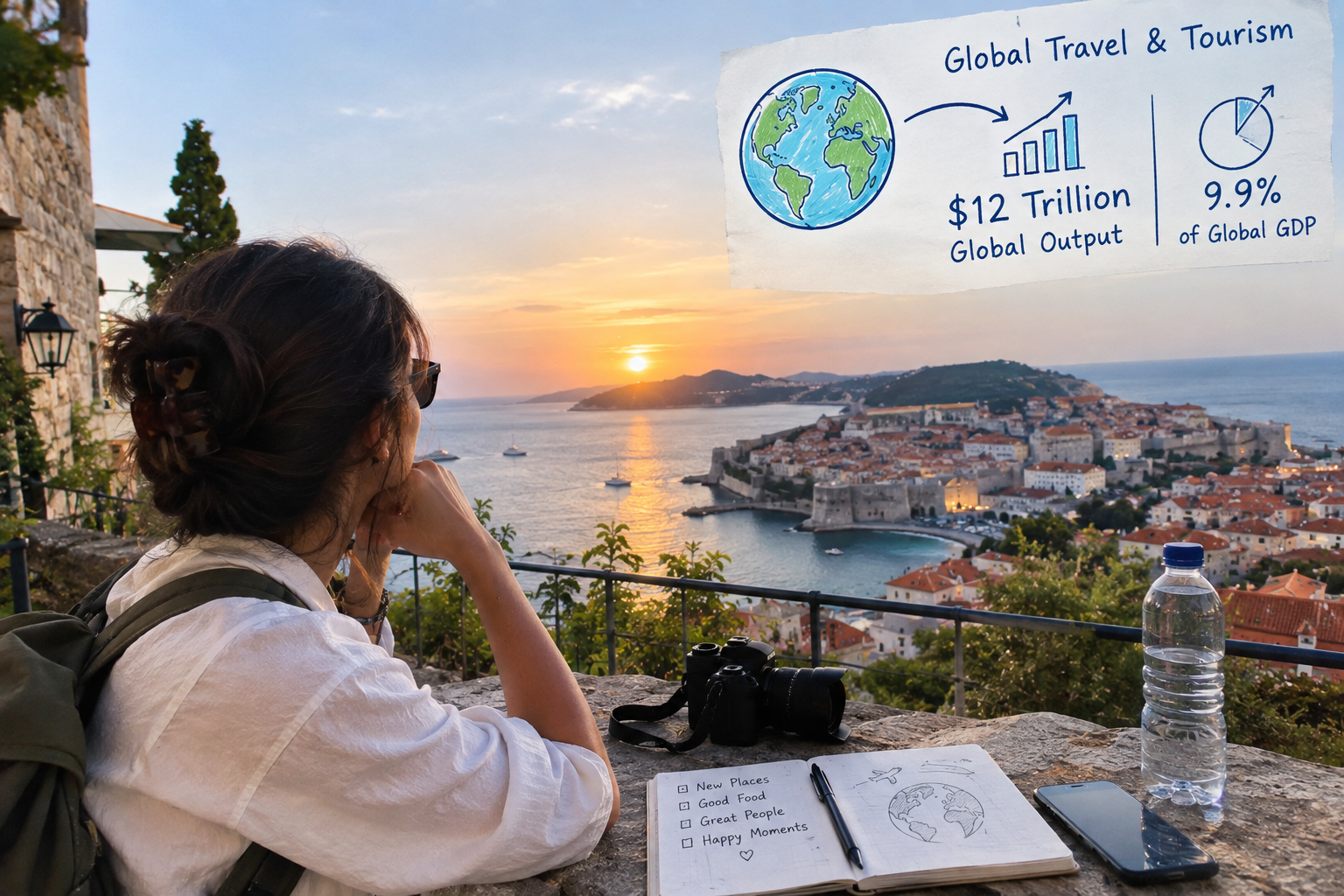
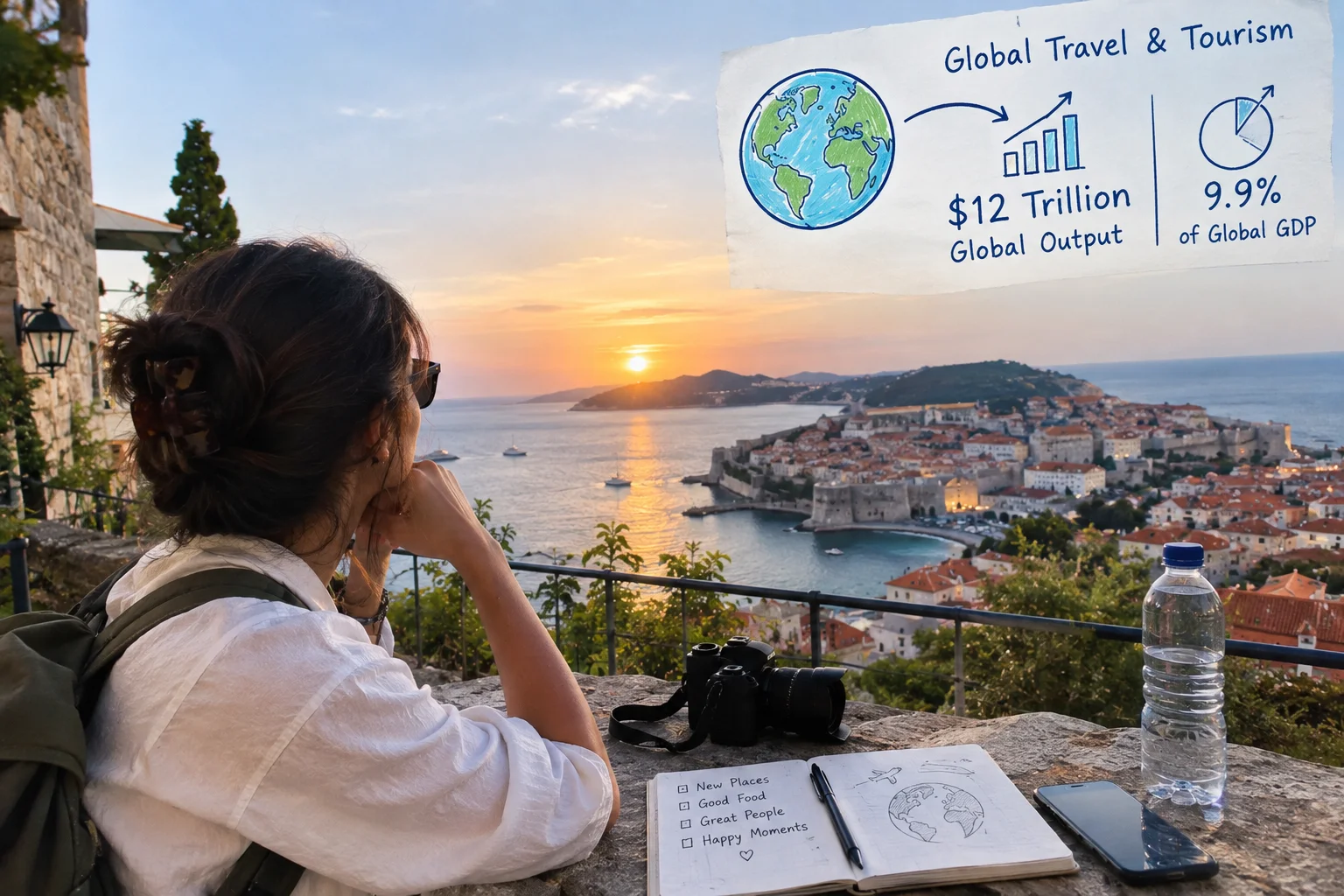
The travel and tourism sector is projected to contribute a colossal $12 trillion to the world economy over the coming decade. To put this into perspective, a $12 trillion economic output places the sector’s collective economic footprint ahead of the individual GDPs of all but a tiny handful of the world’s largest sovereign nations. This economic contribution will account for approximately 9.9% of total global GDP, cementing travel as an indispensable pillar of international trade and commerce.
2. Outpacing Macroeconomic Growth
While wider global economic growth is projected at a modest and often volatile 2.4%, the travel sector is surging ahead with an expected global growth rate of 3.2%, locked in for a robust long-term annual growth rate of 3.6% over the decade. This 1.5X outperformance ratio is a testament to the insatiable human desire for exploration, cultural immersion, and connection. In an era where many traditional sectors face headwinds from inflation, supply chain reconfigurations, and tightening monetary policies, travel demand remains remarkably elastic and resilient.
3. A Monumental Job Creation Engine
Numbers on a balance sheet mean little if they do not translate to human prosperity. Fortunately, the travel and tourism industry remains one of the world’s most prolific job creators. It currently supports 376 million jobs worldwide, which equates to an astonishing 1 in every 9 jobs globally.
Looking toward the horizon, the sector is expected to generate nearly 89 million new jobs over the next decade. To grasp the weight of this statistic, consider that travel and tourism will account for roughly 33% of all new jobs created across the entire global economy. From hospitality management and aviation engineering to culinary arts, digital marketing, and conservation tourism, the ecosystem offers diverse pathways for economic mobility across all skill levels.
Part II: Regional Spotlights — Where Growth is Breaking Records
While the expansion of travel and tourism is a global phenomenon, the velocity and character of this growth vary distinctively by region. Certain geographies are experiencing unprecedented booms, often serving as critical economic cushions for local economies facing broader macroeconomic sluggishness.
Europe: The Economic Shield
In Europe, where broader economic growth frequently faces structural hurdles, regulatory complexities, and inflation hovering around the 1% to 1.5% mark, travel and tourism is acting as a powerful economic shield. European travel GDP is projected to soar by 3.6%—nearly four times faster than the wider regional economy.
Driven by an insatiable domestic appetite for regional getaways, structural investments in rail networks, and a relentless influx of international long-haul visitors, major destinations like Spain, Italy, France, and Greece continue to shatter historical tourism records. This exceptional surge proves that travelers are prioritizing experiences over material accumulation, funneling disposable income directly into European hospitality, artisan retail, and local transportation networks.
Asia-Pacific: The Reawakening Giant
The Asia-Pacific region is experiencing a historic reawakening. Following years of delayed reopening timelines, the return of outbound and inbound travel across China, Japan, Southeast Asia, and the Pacific Islands has unleashed a tidal wave of economic activity. The burgeoning middle class in emerging Asian economies, coupled with expanding low-cost carrier networks and modernized airport infrastructure, has turned the region into the world’s most dynamic travel frontier. The sheer volume of intra-regional travel within Asia is redefining global aviation corridors and hotel development pipelines.
The Americas and the Middle East: Innovation and Luxury Hubs
In the Americas, robust consumer spending and a strong corporate travel recovery continue to drive steady growth, anchored by major urban hubs and expanding leisure destinations. Meanwhile, the Middle East has positioned itself as a global nexus of aviation and luxury tourism. Through visionary national strategies centered on diversifying away from oil economies, countries in the region are pouring billions into mega-projects, world-class entertainment, and cultural institutions, resulting in some of the highest year-over-year tourism growth rates on the planet.
Part III: What is Fueling the Next Decade of Travel?
This explosive growth is not occurring in a vacuum. It is the result of a structural evolution in how the world moves, connects, and operates. Several key catalysts are driving this 1.5X outperformance over the wider economy.
1. The Rise of Smart Infrastructure and Seamless Travel
For decades, friction was the silent killer of tourism potential. Long immigration queues, complex visa application processes, and fragmented booking systems discouraged spontaneous or extended travel. Today, governments and industry leaders are realizing that seamless mobility equals economic prosperity.
Investments in biometric digital identities, touchless airport processing, and streamlined visa frameworks are fundamentally transforming the passenger journey. By reducing transit friction, nations are enticing higher-spending international travelers who are increasingly inclined to stay longer, explore secondary cities, and spend more deeply within local communities.
2. Artificial Intelligence and Digital Innovation
Technology is no longer a back-office utility in the travel sector; it is the primary driver of operational efficiency and personalized engagement. From hyper-personalized itinerary planning powered by generative AI to optimized airline revenue management and predictive hotel operations, digital innovation is everywhere.
These tools are effectively mitigating ongoing workforce pressures by automating routine administrative tasks, allowing hospitality staff to focus on what matters most: human connection and personalized guest service. Furthermore, advanced data analytics allow destinations to better manage visitor flows, preventing overcrowding and enhancing the overall visitor experience.
3. The Shift Toward Purposeful, Value-Driven Consumption
Modern travelers are fundamentally altering their consumption patterns. The era of the superficial, rushed sightseeing trip is giving way to a more intentional philosophy. Data shows consumers are moving away from ad-hoc budgeting toward structured, value-added planning. Travelers are actively seeking complete, immersive packages that blend comfort, high-speed connectivity, and authentic local experiences. They want to connect with the culture, support local artisans, and understand the heritage of the places they visit.
Part IV: Overcoming Challenges — The Path to Sustainable Stewardship
As travel cements its role as a cornerstone of international prosperity, scaling toward a $12 trillion colossus brings profound responsibilities. Unchecked growth can lead to environmental degradation, community displacement, and infrastructure strain. Therefore, the next decade will require an unprecedented commitment to sustainable destination management.
Balancing Volume with Preservation
Popular historic centers, delicate island ecosystems, and fragile natural wonders face the dual challenge of high demand and environmental vulnerability. Forward-thinking destinations are implementing innovative management tools, including:
- Dynamic pricing models and timed-entry ticketing to regulate visitor density.
- Geotargeting and marketing diversification to steer travelers away from congested hotspots toward emerging, equally stunning secondary and tertiary destinations.
- Strict carrying-capacity limits for sensitive ecological zones to preserve flora, fauna, and local marine life.
Decarbonizing the Journey
The aviation and hospitality sectors are under legitimate pressure to achieve net-zero carbon targets. The next ten years will see monumental investments in Sustainable Aviation Fuels (SAFs), fleet modernization with fuel-efficient aircraft, and comprehensive green building standards for hotels and resorts. Travelers are increasingly voting with their wallets, favoring airlines and properties that transparently demonstrate robust environmental credentials and community-first operating models.
Part V: The Human Element — Careers, Communities, and Cultural Exchange
Beyond GDP contributions and technological advancements, the heart of travel and tourism remains deeply human. The projected creation of nearly 89 million new jobs over the next decade represents a massive wave of upward socioeconomic mobility.
Elevating Industry Standards
To attract and retain top talent in a competitive global labor market, the travel and tourism sector is actively modernizing its employment practices. This includes offering competitive compensation, transparent career progression pathways, comprehensive professional development, and flexible working arrangements. WTTC research emphasizes that nurturing a skilled, diverse workforce is the single most important prerequisite for realizing the industry’s full economic potential.
Fostering Global Understanding
In an increasingly fractured geopolitical landscape, travel serves as the ultimate bridge between cultures. Direct person-to-person diplomacy—the simple act of sharing a meal, navigating a foreign city, or learning a new language—breaks down prejudices and fosters empathy on a scale that digital screens can never replicate. When travel grows, global understanding expands alongside it.
Conclusion: A Vision for the Next Ten Years
The World Travel & Tourism Council’s latest research delivers a clear, unambiguous message: we are standing at the threshold of a new golden age of travel. Growing at 1.5 times the pace of the wider global economy, travel and tourism is no longer just a leisure activity; it is a vital pillar of international stability, a massive creator of human dignity through employment, and a catalyst for cross-cultural harmony.
For entrepreneurs launching tech-driven hospitality startups, destination marketers promoting hidden cultural gems, aviation pioneers engineering the future of green flight, and everyday wanderers dreaming of their next great adventure, the message is unequivocal. The next ten years belong to travel. As the sector scales toward its historic $12 trillion milestone, it carries not only the hopes of millions of workers worldwide, but the vital momentum of the entire global economy.
“When I first read about this update, it instantly reminded me of the absolute headache of wrestling with foreign transport apps on past trips—and honestly, this feature is a total game-changer.”
Have you ever pushed through travel anxieties or flight disruptions just to take a dream trip? Drop a comment and tell me about your most unforgettable travel adventure!
About the Author: Zoey
Zoey is a passionate travel writer and researcher at VentureWibe, dedicated to bringing readers the latest global travel news, inspiring destination guides, and tourism trends from around the world. With a keen eye for uncovering unique travel stories, Zoey helps explorers stay informed and prepared for their next adventures.
- Expertise: Global Tourism, Destination Research, and Travel Insights

Discover more from venture
Subscribe to get the latest posts sent to your email.


http://aikenuskhe.wordpress.com
Good 👍🏼
An interesting perspective on how travel is becoming an increasingly important part of the global economy and how the industry may evolve in the coming years.
Nice read
Appealing
Informative 🙂 well shared 💐
I wonder if the sharp uptick in travel, especially in the West, can be attributed to younger Millennials and Zoomers not having access to markets the way their predecessors did, and thus they’ve decided to forget the notion of homeownership and children, and instead they’re hitting the road.