
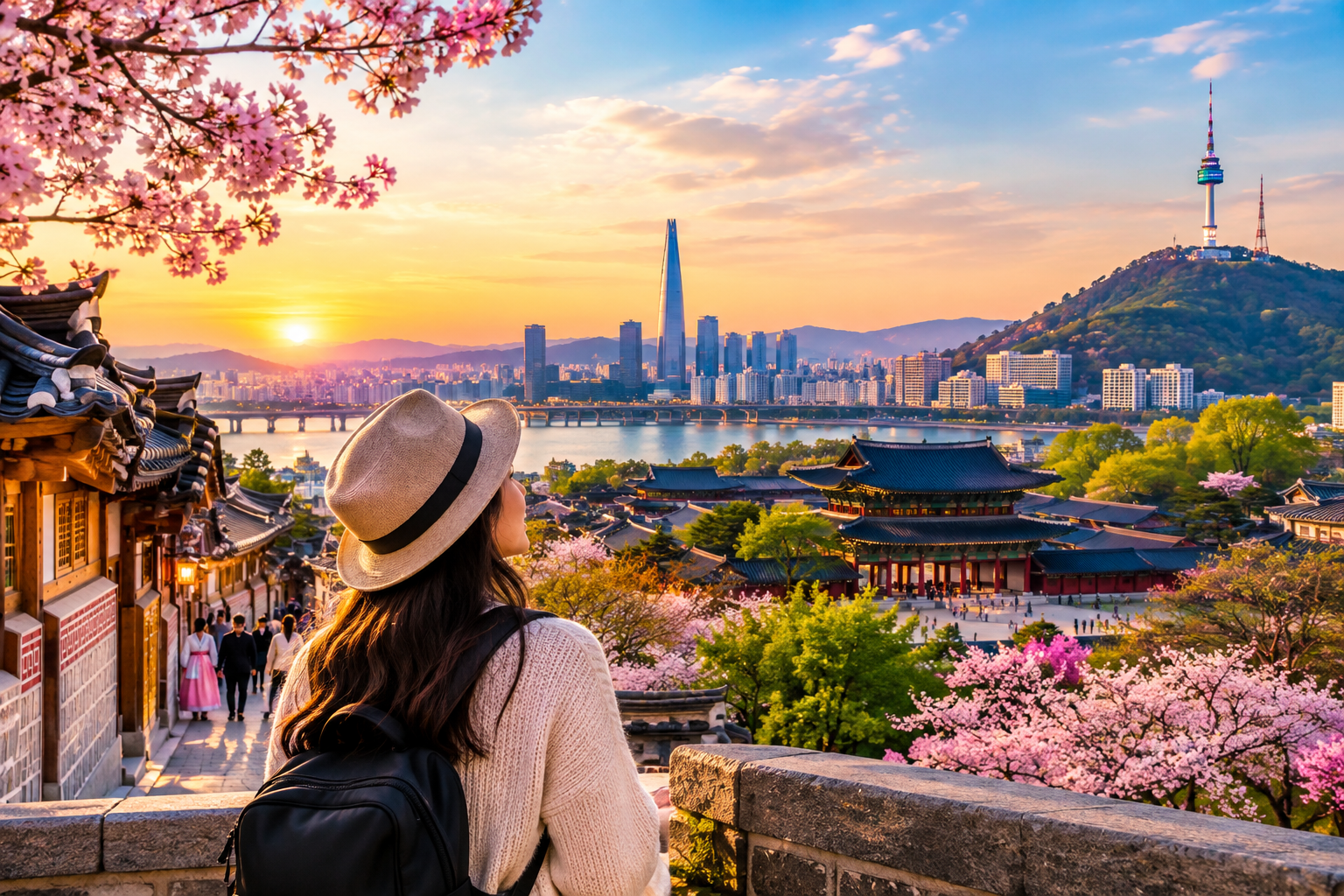

The Great East Asian Migration: How South Korea’s Tourism Boom Decisively Shattered Pre-Pandemic Benchmarks
Key Takeaways & Market Highlights:
- Unprecedented Milestone: Inbound tourist arrivals to South Korea surpassed the 10 million mark in the first half of 2026—crossing the threshold a full month faster than the previous record pace set in 2025.
- Historical Record: Single-month arrivals reached 1.99 million in June 2026, marking a 23.1% year-over-year surge and standing 35% above the pre-pandemic baseline of June 2019.
- Economic Windfall: Foreign visitor credit card spending breached the 2 trillion won ($1.53 billion) threshold in a single month for the first time in recorded history.
- Structural Shift: Long-haul Western travel (U.S. arrivals up 68.6% over 2019) and regional Asian expansion (Taiwan up 88.4%) have transformed South Korea from a seasonal stopover into a permanent global travel titan.
Nearly seven years after global transit grounded to a sudden halt, South Korea’s inbound travel sector has not merely recovered—it has fundamentally reshaped the landscape of international travel. Data released by the Korea Tourism Organization (KTO) and the Ministry of Culture, Sports and Tourism reveals that the nation’s inbound tourism market has expanded past its historical benchmarks.
In June 2026 alone, South Korea welcomed 1.99 million international visitors. This represents a 23.1% increase compared to the same period in 2025 and a 35% increase over the pre-pandemic benchmark of June 2019. Cumulative arrivals for the first half of 2026 reached 10.7 million travelers, pushing the country into uncharted territory and confirming that South Korea’s international appeal has evolved from a temporary post-pandemic rebound into sustained structural expansion.
1. Breakdown of the Numbers: Who is Visiting Korea?
The growth propelling South Korea’s tourism sector is built on a diverse audience. Historically reliant on localized regional corridors, South Korea’s visitor base now spans multiple continents, income brackets, and travel motivations.
The Asian Powerhouses: Volume and Velocity
Neighbouring Asian nations remain the core bedrock of total visitor volume, though the internal dynamics of these markets have shifted significantly:
- Mainland China: China continues to serve as South Korea’s largest single source market, generating nearly 650,000 arrivals in June 2026—accounting for approximately one in every three foreign visitors. This reflects a 36.8% expansion over June 2019 figures, driven by a return of group tours, expanded visa processing capacity, and a surge in independent Gen Z travelers.
- Taiwan: Taiwan has emerged as one of the fastest-growing source markets in East Asia. Delivering 223,000 visitors in June 2026, Taiwanese arrival numbers expanded by a 88.4% leap over pre-pandemic levels, supported by increased budget carrier connectivity between Taipei, Kaohsiung, Busan, and Jeju Island.
- Japan: Long a primary driver of Korean tourism, Japan contributed 348,000 arrivals in June 2026. Japanese travel to Korea has evolved from traditional wellness and shopping trips into deep cultural immersion, heavily influenced by serialized K-dramas, regional culinary circuits, and cosmetics.
The Long-Haul Western Surge
Perhaps the most notable structural development in South Korea’s tourism economy is the sustained surge in long-haul Western travelers. United States arrivals reached 178,000 in June 2026, up 68.6% compared to 2019 benchmarks. European arrivals have demonstrated a similar trajectory, registering a 20% to 40% increase over pre-pandemic levels across major gateways like London, Paris, Frankfurt, and Amsterdam.
Western visitors are also exhibiting longer average lengths of stay. Rather than treating Seoul as a quick two-day stopover on a wider East Asian itinerary, American and European travelers now spend an average of 10.5 to 14 days within South Korea, allocating significant budget to regional transit, high-end gastronomy, and authentic cultural masterclasses.
2. Macroeconomic Drivers: Currency Dynamics and Financial Impact
While global cultural resonance provides the emotional impetus for travel, macroeconomic conditions have provided the practical catalyst.
The Exchange Rate Advantage
A key financial driver behind the influx of international travelers is the competitive position of the Korean Won (KRW). Driven by broader macroeconomic shifts, the local currency has traded at attractive exchange rates relative to the U.S. Dollar, Euro, and major Southeast Asian currencies.
For foreign tourists holding Western or middle-eastern currencies, South Korea has transformed from an aspirational, premium destination into an accessible high-value itinerary. Premium accommodations, fine dining, domestic high-speed rail, and luxury goods shopping are available at effective discounts compared to historical averages, inducing travelers to extend their stays and spend more freely across all categories.
Shattering Spending Records
This currency-driven purchasing power has translated into historical financial metrics for South Korea’s retail, hospitality, and service sectors.
- Record Credit Card Spend: In May 2026, foreign credit card expenditures (including online transactions) reached 2.12 trillion won ($1.53 billion). This marked the first time since state tracking began in January 2018 that monthly foreign tourist card spending crossed the 2 trillion won mark, representing a 67.1% year-over-year increase.
- Shift in Expenditure Profile: While legacy travel models relied heavily on duty-free group shopping, modern spending is far more decentralized. In-person retail chains like Olive Young (cosmetics), convenience store networks, boutique design studios in Seongsu-dong, and regional culinary venues have captured the majority of this capital outflow.
3. From Screen to Street: The Evolution of Hallyu Tourism
The global fascination with Korean culture (Hallyu) has undergone a fundamental maturation. Where early waves of the Korean Cultural Wave generated passive consumerism—listening to K-pop tracks or watching K-dramas on streaming platforms—the current era is defined by active, participatory tourism.
The “Micro-Neighborhood” Phenomenon
Modern international visitors to Seoul are increasingly skipping standardized tour buses in favor of neighborhood exploration. Districts that once catered primarily to local residents have transformed into global tourism hubs:
- Seongsu-dong (The Brooklyn of Seoul): Famous for converted red-brick shoe factories, flagship conceptual boutiques, and artisanal coffee roasteries, Seongsu-dong has become a primary destination for trend-conscious travelers seeking contemporary design and fashion.
- Hannam-dong and Itaewon: Attracting visitors through high-end streetwear flagships, independent art galleries, and international gastronomy.
- Yeonnam-dong and Hongdae: Serving as centers for indie fashion, custom lifestyle workshops, photo-booth culture, and street performance.
“Travelers no longer want to just see South Korea through a bus window,” explains Choi Seung-hyun, a senior tourism strategist in Seoul. “They want to live like a Seoulite for two weeks. They want the specific coffee order, the exact skincare routine recommended by local estheticians, and the evening walk along the Han River with delivery fried chicken.”
Beauty & Wellness Pilgrimages
K-Beauty has transitioned from an export commodity into an experiential travel anchor. Foreign visitors routinely allocate dedicated days of their itineraries to medical aesthetics, customized personal color analysis, dermatological treatments, and scalp-care spa rituals.
Medical tourism clinics in Gangnam and Hongdae report record numbers of international patients, with translation services expanding rapidly to accommodate Mandarin, Japanese, English, Vietnamese, and Spanish speakers.
4. Regional Expansion: Unlocking Beyond-Seoul Tourism
A long-standing challenge for South Korea’s tourism policy was the intense concentration of visitors within the Seoul Capital Area. Historical data indicated that upwards of 80% of foreign tourists never ventured outside the capital’s borders. In 2026, this centralization is yielding to a broad regional distribution.
The Rise of Secondary Gateways
International arrivals through regional airports outside the Seoul metropolitan area reached 360,000 in May 2026 alone, representing a 32% jump year-over-year. This shift is supported by targeted government policy, expanded point-to-point flight routes, and high-speed rail integration.
1. Busan: The Maritime & Film Metropolis
Busan, South Korea’s second city, has established itself as an international resort destination. Visitors are drawn to the coastal aesthetics of Haeundae and Gwangalli, the historic alleyways of Gamcheon Culture Village, and world-class infrastructure like the Busan Cinema Center. High-speed KTX rail connects Seoul to Busan in under 2.5 hours, allowing seamless multi-city itineraries.
2. Gyeongju: The Living Museum
As the ancient capital of the Silla Kingdom, Gyeongju has seen a massive surge in travelers seeking deep heritage, burial mounds (Tumuli), UNESCO-listed temples, and restored historical districts like Hwangnidan-gil, where traditional hanok architecture houses modern cafes and craft shops.
3. Gangwon-do & The East Coast
Stretching from Sokcho to Gangneung, the eastern coastline has leveraged its natural scenery, surf culture, and K-pop filming connections (such as the famous BTS bus stop in Jumunjin) to attract younger international road-trippers and wellness seekers.
5. Accommodation Crisis: Hotel Shortages and Infrastructure Pressures
The rapid influx of international visitors has pushed South Korea’s hospitality infrastructure to its operational limits, creating structural challenges alongside commercial success.
Unprecedented Occupancy Rates
Hotels across major urban centers are experiencing occupancy levels not seen in decades. Average hotel occupancy across Seoul reached approximately 79%, a metric considered by hospitality analysts to represent practical full capacity due to room turnover cycles and maintenance requirements.
- Stalled Room Supply: Between 2016 and 2019, Seoul’s hotel room supply grew at an average rate of 7.3% annually to meet rising demand. However, construction delays during the pandemic slowed development to just 3.7% total over five years.
- RevPAR Escalation: Revenue per Available Room (RevPAR)—the core metric of hotel profitability—has jumped by roughly 67% compared to 2019 levels, driven by high room rates and reduced weekday vacancy.
This supply-demand bottleneck has led to rising hotel prices in core districts like Myeongdong, Gangnam, and Yeouido. In response, international tourists are increasingly booking non-traditional accommodations, boutique hanok stays, and urban short-term rentals, dispersing economic benefits further into residential neighborhoods.
6. Strategic Government Reforms and Policy Push
South Korea’s tourism performance is supported by aggressive, coordinated policy interventions from the Ministry of Culture, Sports and Tourism, the Ministry of Justice, and local municipal governments.
Visa Simplification and Fee Waivers
To eliminate friction for incoming travelers, the South Korean government implemented key policy adjustments:
- Group Visa Fee Waivers: Extending group tourist visa fee exemptions for key Southeast Asian and regional markets.
- K-ETA Adjustments: Temporarily waiving or simplifying the Electronic Travel Authorization requirement for citizens of dozens of countries to encourage spontaneous booking.
- Specialized Visas: The introduction of the “Workation Visa” (Digital Nomad Visa) and the proposed “K-Culture Training Visa,” allowing long-term stays for foreign nationals pursuing professional, remote work, or cultural studies in Korea.
Digital Infrastructure Modernization
Historically, foreign visitors faced navigation and payment challenges due to South Korea’s unique digital ecosystem (e.g., localized mapping services and domestic payment gateways). The government, alongside tech platforms, has introduced targeted fixes:
- Multilingual Transit & Map Services: Updates to Naver Maps and KakaoMap featuring real-time English, Chinese, and Japanese navigation, transit booking, and review translations.
- Global Payment Integration: Expansion of international credit card acceptance across local transit networks, taxis, and small retail merchants, alongside mobile wallet integrations (such as WeChat Pay, Alipay, and Apple Pay).
- Smart Tourism Cities: Deployment of augmented reality (AR) translation tools and digital concierge services at historic sites like Gyeongbokgung Palace and ancient UNESCO heritage zones.
7. Strategic Travel Advice for Visitors in 2026
For international travelers planning an itinerary to South Korea during this unprecedented boom, strategic planning is essential to ensure a smooth trip.
Key Tips for the Modern Traveler
- Book Accommodations Well in Advance: With hotel occupancy near 80%, securing accommodations 3 to 4 months prior to departure is critical to avoid inflated rates or displaced locations.
- Explore Regional Hubs: Allocate time to visit secondary destinations like Busan, Gyeongju, Jeonju, or Gangneung. High-speed KTX trains make intercity transit efficient and accessible.
- Leverage Local Apps: Download essential local applications prior to arrival:
- Naver Map / KakaoMap: For turn-by-turn navigation (Google Maps has limited walking navigation capabilities in South Korea due to national security map data regulations).
- Papago: The leading AI translation app optimized for natural Korean phrasing and visual sign translation.
- T-Money / WOWPASS: Combined prepaid payment and transit cards that streamline purchases at convenience stores, subway turnstiles, and cafes.
- Travel Off-Peak: To avoid heavy crowds at top attractions like Gyeongbokgung Palace or N Seoul Tower, schedule visits during weekday mornings.
8. Looking Ahead: The Future of Korean Tourism
South Korea’s arrival metrics for the first half of 2026 demonstrate that the nation has moved far beyond post-pandemic recovery into a new era of global tourism prominence. Driven by a unique combination of global soft power, favorable macroeconomic conditions, expanding infrastructure, and rich cultural offerings, South Korea has firmly established itself as a top-tier destination.
As government authorities and private industry work together to expand hotel capacity, decentralize tourism into rural provinces, and streamline digital infrastructure, South Korea is setting a template for how a nation can leverage its culture to build a sustainable, modern tourism economy. For global travelers, the message is clear: South Korea is no longer just a trend—it is a mandatory entry on the global travel map.
“When I first read about this update, it instantly reminded me of the absolute headache of wrestling with foreign transport apps on past trips—and honestly, this feature is a total game-changer.”
Have you ever pushed through travel anxieties or flight disruptions just to take a dream trip? Drop a comment and tell me about your most unforgettable travel adventure!
About the Author: Zoey
Zoey is a passionate travel writer and researcher at VentureWibe, dedicated to bringing readers the latest global travel news, inspiring destination guides, and tourism trends from around the world. With a keen eye for uncovering unique travel stories, Zoey helps explorers stay informed and prepared for their next adventures.
- Expertise: Global Tourism, Destination Research, and Travel Insights

Discover more from venture
Subscribe to get the latest posts sent to your email.


Great information for traveling!
Thank you so much
If some one desires to be updated with most up-to-date
technologies therefore he must be pay a visit this web page and be up to date
daily.