
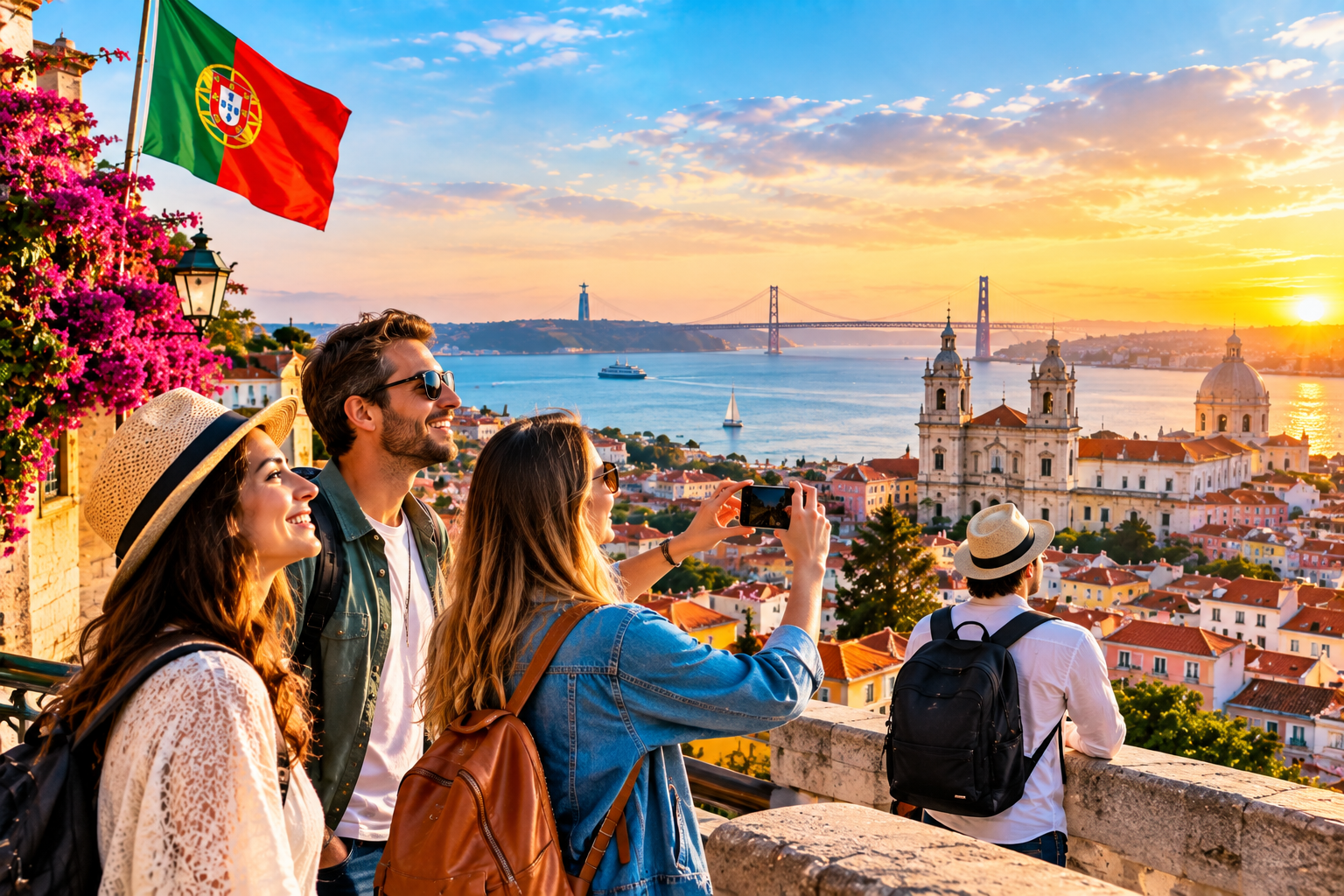

Portugal Crushes Spain, France, and Greece in Europe’s New Tourism Race as Global Travel Exodus Sparks Explosive Visitor Boom Across Algarve, Porto, and Alentejo
The tectonic plates of European tourism have fundamentally shifted. In what industry analysts are calling one of the most remarkable realignments in modern travel history, Portugal has surged past traditional Mediterranean powerhouses—including Spain, France, and Greece—to claim the top spot in Southern Europe’s 2026 travel expansion. Driven by a combination of global travel redirecting away from volatile regions, mounting overtourism fatigue across major Southern European destinations, and an influx of international travelers seeking authentic, high-value, and secure experiences, Portugal’s tourism economy is shattering historical records across every metric.
According to comprehensive performance metrics compiled by Turismo de Portugal and global management consultancies like McKinsey & Company, Portugal welcomed an astounding 34 million total visitors during just the first four months of 2026. Revenue numbers tell an even more dramatic story: cumulative international tourism revenue topped €10.32 billion between January and May 2026—a 4.5% year-over-year surge building directly upon 2025’s historic baseline of €29 billion.
Far from being localized to iconic urban centers like Lisbon, this tourism boom is cascading across the entire nation. The golden cliffs of the Algarve, the terraced wine valleys of Porto and the North, and the sun-baked, serene plains of the Alentejo are recording staggering gains in occupancy rates, average revenue per available room (RevPAR), and international flight bookings.
1. Executive Summary: The Great Mediterranean Pivot of 2026
For decades, the standard itinerary for summer travel in Europe was virtually fixed: sunbathing on Spain’s Costa del Sol, island-hopping across Greece’s Cyclades, or exploring the crowded coastal resorts of the French Riviera. However, 2026 has marked a tipping point.
Rising visitor taxes, intense anti-overtourism protests in traditional hubs, housing pressures, and soaring accommodation costs have forced millions of international travelers to re-evaluate their vacation plans. Portugal has stepped into this void, offering a rare combination of exceptional safety, world-class infrastructure, high-value luxury accommodations, and preserved cultural authenticity.
Key Drivers Fueling Portugal’s Victory
- The Overtourism Backlash: Mass overcrowding, strict tourist levies, and localized protests in cities like Barcelona, Palma de Mallorca, Athens, and Venice have redirected millions of transatlantic and European travelers toward Portugal’s more welcoming shores.
- Unrivaled Value Proposition: Despite rapid upgrades in luxury hospitality, Portugal consistently delivers higher purchasing power for international visitors compared to France, Italy, or Spain.
- Diversified Regional Appeal: Rather than funneling all arrivals into Lisbon, strategic marketing and expanded flight paths have turned the Algarve, Porto, the Douro Valley, Alentejo, the Azores, and Madeira into independent, top-tier global destinations.
- Massive Aviation & Infrastructure Expansion: Direct long-haul flights connecting North America, Latin America, and Asia with regional Portuguese airports have bypassed traditional European hub chokepoints.
- Explosive Domestic Growth: A record-setting 81% year-on-year increase in Portuguese residents traveling domestically has created a resilient economic foundation, insulating the hospitality market against global seasonality shifts.
2. Statistical Deep-Dive: Comparing Europe’s Tourism Contenders
To understand how Portugal is outperforming traditional heavyweights, one must look at the early-season performance data and macroeconomic indicators defining Southern Europe’s 2026 travel landscape.
Comparative Performance Matrix: Portugal vs. Competitors (2026)
Data sources compiled from Turismo de Portugal, Bank of Portugal, INE, and European Travel Commission 2026 updates.
Market Insight: “Portugal’s performance in early 2026 represents a structural shift rather than a temporary spike. While total volume matters, Portugal’s ability to drive higher spend per visitor through cultural, culinary, and boutique offerings is allowing it to generate unprecedented economic yield while maintaining visitor satisfaction,” notes industry performance analysis from Turismo de Portugal.
3. Why Traditional Giants Are Faltering: The Overtourism Shift
The explosive demand for Portuguese destinations is directly tied to a growing exhaustion with mass tourism across the central and eastern Mediterranean.
The Friction Points in Spain, France, and Greece
- Escalating Visitor Taxes & Municipal Fees: In response to severe housing strains and urban saturation, cities across Spain and Greece have doubled municipal tourist surcharges. In contrast, Portugal’s municipal fees remain modest, transparent, and directly reinvested into local heritage preservation and transit improvements.
- Infrastructure Saturated Beyond Capacity: Island hubs like Santorini and Mallorca have been forced to implement daily cruise ship passenger caps, vehicle entry quotas, and restricted access hours. Travelers seeking freedom of movement are increasingly choosing Portugal’s expansive, open coastal stretches and accessible rural highways.
- Changing Climate Preferences: Extreme mid-summer heatwaves across mainland Greece, Southern Italy, and inland Spain have altered vacation preferences. Portugal’s Atlantic climate—tempered by coastal breezes along the Algarve, Alentejo, and Northern coastlines—offers a far more comfortable microclimate for active outdoor exploration.
4. Regional Deep Dive: The Engines of Portugal’s Boom
Portugal’s success relies on a well-balanced distribution of visitors across its diverse regions. By developing unique regional identities, Portugal has avoided concentrating demand in a single urban core.
The Algarve: Beyond Beaches into Year-Round Luxury & Quality
Long famous for its golden limestone cliffs and turquoise waters, the Algarve in 2026 is undergoing a profound transformation. Rather than competing purely on visitor volume, the region has shifted toward quality, wellness, and high-yield hospitality.
Key Algarve Performance Metrics for 2026:
- Hotel Occupancy Surge: Jumped by +5.7 percentage points during early 2026, marking the single largest improvement among Portugal’s major travel hubs.
- Revenue Expansion: Total tourist accommodation revenues in the Algarve jumped +10.5% in May 2026 alone, reaching €179 million.
- Average Daily Rate (ADR) Growth: Revenue per available room (RevPAR) climbed to an average of €78.40, proving that the region is generating significantly higher value per visitor.
Modern travelers in the Algarve are heading beyond traditional resort strips to explore hidden coastal coves, traditional fishing villages like Olhão and Tavira, inland hiking paths along the Via Algarviana, and Michelin-recognized seafood restaurants.
Traveler Tip for Algarve 2026: Avoid the central summer rush by visiting in May, June, or September. Take advantage of the expanding network of eco-cruises along the Ria Formosa Natural Park or indulge in wine-tasting tours in the inland Lagoa region.
Porto and the North: Wine Heritage, Urban Charm, and Aviation Expansion
Porto and the Northern Region (Norte) recorded a impressive +7.0% increase in overnight stays in early 2026. The driver behind this growth is a seamless integration of city-break culture, global wine tourism, and strategic airport expansion at Francisco Sá Carneiro Airport (OPO).
What’s Driving Northern Portugal’s Travel Surge:
- The Douro Valley Synergy: Porto serves as the primary gateway to the UNESCO-listed Douro Valley—the world’s oldest demarcated wine region. In 2026, demand for multi-day river cruises, private estate (quinta) stays, and high-end wine tastings reached record highs.
- Cultural Immersive Tourism: Visitors are flocking to Vila Nova de Gaia’s modernized port wine district, exploring contemporary art spaces like the Serralves Museum, and taking scenic rail trips along the historic Douro railway line.
- Enhanced Long-Haul Connectivity: Expanded direct flight schedules connecting Porto to key gateways in North America (New York, Boston, Toronto) and South America (São Paulo, Rio de Janeiro) have boosted international arrivals year-round.
Alentejo: The Capital of Europe’s “Slow Travel” Movement
If the Algarve represents sun-drenched coastlines and Porto represents cultural dynamism, the Alentejo region represents tranquility, authenticity, and understated luxury. Stretching from the south of Lisbon down to the Algarve border, this vast landscape of rolling plains, cork oak forests, whitewashed medieval towns, and golden coastlines has emerged as one of the fastest-growing regions in Southern Europe.
Alentejo’s Record-Breaking Numbers:
- Overnight Stay Growth: Recorded an astonishing +9.3% year-over-year increase in overnight stays in early 2026—the highest growth rate of any geographic region in Portugal.
- Emergence of Ultra-Boutique Hospitality: Converting historic farm estates (herdades) and monasteries into eco-conscious luxury hotels has attracted affluent travelers looking for privacy, wellness, and stargazing in dark-sky reserves.
5. Macroeconomic Analysis: Investments, Hospitality, and Domestic Resilience
Portugal’s ability to outpace its European neighbors is supported by solid economic fundamentals, targeted capital investments, and a resilient domestic travel base.
1. Luxury Hospitality Boom & Capital Inflow
According to market data from IMARC Group and Portuguese real estate intelligence, hospitality investment in Portugal reached €331 million during the first half of 2025 alone (+33% YoY), fueling a wave of high-end hotel openings throughout 2026. Global hospitality groups like Hyatt, Marriott, and IHG are expanding branded boutique properties, including Andaz Lisbon and luxury wellness retreats in the Algarve and Azores.
2. The Power of Domestic Tourism (+81% Spike)
One of the most remarkable figures from the 2026 travel season is the 81% year-on-year increase in domestic travel among Portuguese residents. Portuguese travelers are choosing to holiday within their own country, attracted by diverse regional offerings, upgraded infrastructure, and regional promotional campaigns. This strong domestic demand provides local hospitality businesses with a steady baseline, reducing reliance on volatile international travel cycles.
3. Divergent Source Markets: Long-Haul Spikes
Data from Turismo de Portugal reveals a noticeable shift in international visitor demographics for 2026:
- The United Kingdom: Holds the single largest foreign market share at 12.8%.
- The United States: Ranks a close second at 11.6%, driven by strong currency value and direct long-haul flights.
- Surging Growth Markets: Overnight stays from Poland (+10.2%), Brazil (+9.0%), and Germany (+8.7%) recorded the highest year-over-year monthly increases.
6. Strategic Travel Advice: Planning the Ultimate Portugal Trip in 2026
For international travelers planning a trip to Portugal in 2026, navigating this surge requires a strategic, insider approach.
Essential Insider Tips for 2026 Visitors
- Book Timed Entries for Key Landmarks: High-demand cultural attractions like Sintra’s Pena Palace, Lisbon’s Jerónimos Monastery, and Porto’s Livraria Lello enforce strict daily visitor quotas. Purchase tickets online at least 3 to 4 weeks in advance.
- Utilize Portugal’s Integrated Rail Network: Alfa Pendular high-speed trains seamlessly connect Lisbon to Porto in under 3 hours and Lisbon to Faro in under 3.5 hours, providing a smooth alternative to regional car rentals.
- Explore Secondary Destinations: To experience authentic local culture without high-season crowds, visit lesser-known gems like Guimarães (the birthplace of Portugal), Viana do Castelo, Elvas, or the volcanic islands of the Azores.
- Indulge in Regional Culinary Traditions: Each region features unique culinary specialties—from Porto’s famous Francesinha sandwich and Douro’s port wine, to Alentejo’s acorn-fed black pork (porco preto) and the Algarve’s fresh seafood cataplana.
7. The Road Ahead: How Portugal Is Shaping the Future of European Travel
Portugal’s remarkable rise in 2026 offers a blueprint for sustainable, high-yield tourism management across Europe. By focusing on visitor diversification, investments in luxury infrastructure, heritage preservation, and welcoming community initiatives, Portugal has proven that destinations can grow economically without sacrificing quality of life for local residents.
As Spain, France, and Greece work to restructure their tourism strategies and address overtourism challenges, Portugal stands firm as Europe’s premier success story. Whether you’re drawn by the majestic cliffs of the Algarve, the dramatic terraced slopes of the Douro, or the peaceful countryside of the Alentejo, Portugal offers an unforgettable, world-class journey.
If you are deciding between top European countries for your upcoming trip, this detailed video comparison breaks down why travelers are increasingly selecting Portugal over traditional destinations:
Portugal vs Spain Travel Comparison Guide
This video provides a practical, side-by-side comparison of budget, logistics, culture, and travel styles to help you choose the ideal European vacation destination.
Have you ever pushed through travel anxieties or flight disruptions just to take a dream trip? Drop a comment and tell me about your most unforgettable travel adventure!
Have you ever pushed through travel anxieties or flight disruptions just to take a dream trip? Drop a comment and tell me about your most unforgettable travel adventure!
About the Author: Zoey
Zoey is a passionate travel writer and researcher at VentureWibe, dedicated to bringing readers the latest global travel news, inspiring destination guides, and tourism trends from around the world. With a keen eye for uncovering unique travel stories, Zoey helps explorers stay informed and prepared for their next adventures.
- Expertise: Global Tourism, Destination Research, and Travel Insights

Discover more from venture
Subscribe to get the latest posts sent to your email.


This web page can be a walk-by means of for all of the data you wished about this and didn’t know who to ask. Glimpse right here, and you’ll definitely discover it.