
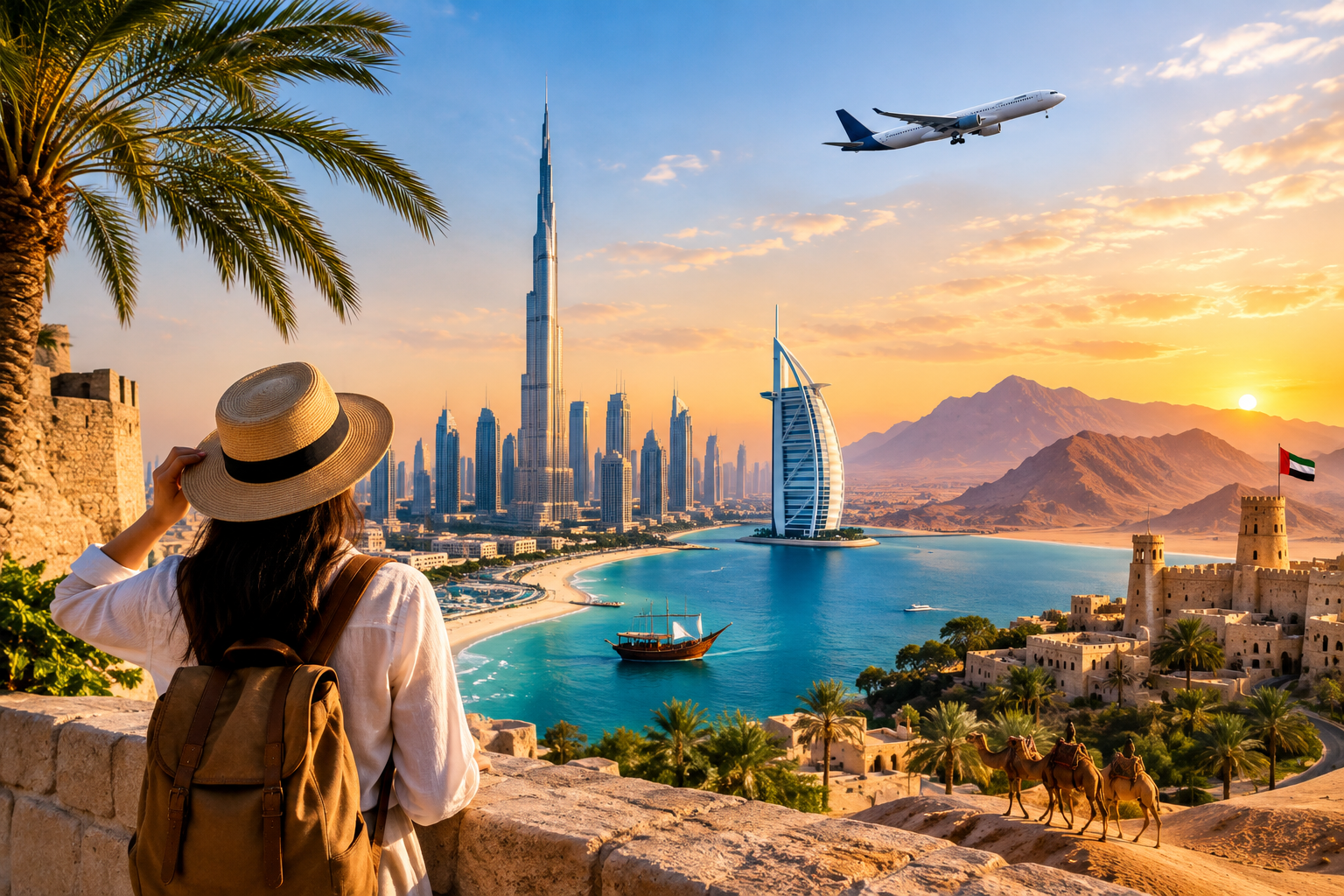
Horizons of Resilience: Why Middle East Travel & Tourism Remains the World’s Strongest Long-Term Growth Story
In the dynamic arena of global economics, few sectors possess the transformative power, cultural multiplier effect, and financial velocity of Travel and Tourism. Yet, like any vast ecosystem, it is sensitive to the atmospheric pressures of geopolitics, shifting trade corridors, and regional friction.
According to the latest Economic Impact Research (EIR) Global Trends Report released by the World Travel & Tourism Council (WTTC), sponsored by Chase Travel, the Middle East travel and tourism sector stands at a fascinating crossroads.It is navigating immediate, acute headwinds while simultaneously cementing its position as the world’s most robust long-term growth narrative.
For travelers, macro-economists, industry leaders, and strategic investors alike, understanding this dual reality is crucial. The Middle East is writing a masterclass in modern economic resilience—proving that temporary turbulence cannot derail a visionary, deeply funded destiny.
1. The 2026 Landscape: Mapping Short-Term Disruption
To fully appreciate the magnitude of the region’s long-term trajectory, one must look honestly at the current operational environment.
In the immediate term, the Middle East faces unique pressures. WTTC data indicates that the region is projected to experience a temporary contraction in its Travel and Tourism Gross Domestic Product (GDP), moving from $386 billion in 2025 down to $330 billion in 2026—representing a 14.5% adjustment.Notably, the WTTC notes that the Middle East is the only global region forecasted to register a localized decline for this specific window.
The Anatomy of the Headwind: Airspace and Interconnectivity
Why is this temporary dip localized here? The answer lies in the region’s unique success: its supreme dominance as the world’s ultimate aviation superhighway.
The Middle East handles approximately 14% of all international air passengers globally—meaning roughly one in every seven international travelers transits through its ultra-modern hubs.Because the region functions as the vital physical bridge connecting the East to the West, North to South, any ongoing geopolitical friction impacting regional airspace and travel corridors directly reverberates through its tourism inflows.
Flight path adjustments, localized airspace management, and cautious short-term consumer sentiment naturally create temporary ripples in visitor volume. However, historical precedent across global tourism markets consistently demonstrates a fundamental truth: aviation and travel demand do not vanish; they defer, adapt, and ultimately surge back with heightened velocity.
2. The 2026–2036 Horizon: The World’s Fastest-Growing Region
While 2026 presents a testing ground, the narrative shifts dramatically when zooming out to the decade ahead. Far from stalling out, the Middle East is projected to outpace every other region on Earth over the next ten years.
Between 2026 and 2036, the Middle East Travel and Tourism sector is forecast to expand at an astonishing average annual rate of 6.3%.By the end of this decade-long arc, the region’s tourism GDP is expected to skyrocket to an unprecedented $605 billion.
To put this in perspective, this growth rate eclipses traditional and emerging tourism powerhouses alike, solidifying the Gulf and its neighbors not merely as stopover destinations, but as the premier destination capitals of the 21st century.
3. The GCC Growth Engines: Saudi Arabia, UAE, Oman, and Qatar
The architecture of this phenomenal expansion rests on the shoulders of four core Gulf Cooperation Council (GCC) markets: Saudi Arabia, the United Arab Emirates (UAE), Oman, and Qatar.
These four nations are living proof of what happens when visionary national leadership aligns policy, capital, and infrastructure toward a singular economic diversification goal. Together, these tourism powerhouses generated $272 billion in Travel & Tourism GDP in 2025, and their collective footprint is projected to reach an astounding $435 billion by 2036—injecting more than $163 billion of fresh value into their combined economies.
Saudi Arabia: The Vision 2030 Transformation
No nation on earth has rewritten its tourism DNA as rapidly or comprehensively as the Kingdom of Saudi Arabia. Under the umbrella of Vision 2030, the Kingdom has treated tourism not as a secondary sector, but as a core pillar of its post-oil economic identity.
- GDP Contribution:Travel and tourism accounts for an impressive 14.1% of Saudi Arabia’s national GDP.
- Investment Surge:Proving unwavering confidence from global and domestic stakeholders, Saudi Arabia recorded a remarkable 19.4% growth in tourism investment in 2025 alone.
- Mega-Projects:From the pristine turquoise waters of the Red Sea Project and the historical whispers of AlUla to futuristic urban marvels like NEOM and THE LINE, the Kingdom is building entirely new tourism archetypes focused on regenerative and luxury travel.International visitor spending is forecast to more than double over the coming decade.
The United Arab Emirates: The Mature Global Super-Hub
The UAE remains the gold standard for mature, resilient, and flawlessly executed tourism infrastructure. Combining the cosmopolitan luxury of Dubai with the cultural and capital depth of Abu Dhabi and the northern emirates, the UAE continues to break records.
- Economic Footprint:Tourism contributes 11.9% to the UAE’s GDP while supporting 13.6% of total national employment.
- Visitor Spend:The country commands nearly $57 billion in annual international visitor spending, anchored by unshakeable global airline connectivity, world-class hospitality brands, and a calendar packed with global business, tech, and sporting events.
Oman: Authentic Heritage and Sustainable Growth
Oman offers a masterclass in balancing high-end tourism development with cultural authenticity and environmental preservation.
- Steady Expansion:Oman’s travel and tourism economy is projected to grow from $7.9 billion in 2025 to $12 billion by 2036.
- The Appeal: By focusing on dramatic landscapes—from the rugged peaks of Jebel Akhdar to the pristine coastlines of Salalah—Oman attracts discerning travelers looking for immersive, nature-led luxury, ensuring high-yield, low-impact economic returns.
Qatar: Global Events and Export Concentration
Ever since successfully hosting the historic FIFA World Cup, Qatar has maintained a relentless momentum in positioning itself as a cultural and sporting capital of the Middle East.
- Service Exports:Visitor spending in Qatar represents a staggering 94.1% of all total services exports, demonstrating one of the highest concentrations of tourism-driven economic reliance and success anywhere in the world.
- Infrastructure Synergy: Bolstered by expanded flag-carrier connectivity and world-class museums, Qatar continues to attract long-haul travelers seeking seamless urban sophistication.
4. The Foundations of Resilience: Why the Middle East Always Bounces Back
In her commentary on the global trends research, Gloria Guevara, President & CEO of the WTTC, captured the essence of the region’s unyielding spirit:
“The Middle East is facing a challenging period, and Travel & Tourism is often among the first sectors to feel the impact of geopolitical disruption. But history repeatedly shows that our sector is remarkably resilient, and few regions have demonstrated that resilience more clearly than the Middle East. The governments across this region have made long-term commitments to Travel & Tourism through investment, connectivity, infrastructure, and economic diversification. Those foundations remain firmly in place.”
What specific pillars explain this deep-rooted resilience?
- Unprecedented State-Level Commitment: Unlike regions where tourism policy shifts with political election cycles, Middle Eastern nations operate on multi-decade strategic master plans. Tourism is treated as national infrastructure, backed by sovereign wealth funds and uncompromised long-term capital allocation.
- State-of-the-Art Aviation Ecosystems: Mega-carriers like Emirates, Qatar Airways, Etihad Airways, and Saudia provide unrivaled global connectivity. Their modern fleets and expansive route networks ensure that the moment airspace constraints ease, the pipeline of global travelers can be re-engaged instantly.
- Agile Public-Private Collaboration: Governments across the GCC work hand-in-hand with private sector hotel groups, cruise lines, and tour operators to rapidly adjust marketing strategies, streamline visa processes (such as unified regional visas), and deploy data-driven responses to shifting global markets.
- Diversified Source Markets: Middle Eastern tourism boards have successfully diversified their visitor demographics. While traditionally reliant on European and regional travelers, destinations have aggressively expanded marketing footprints across Asia-Pacific, the Americas, and emerging economies, creating a balanced and shock-resistant visitor portfolio.
5. What This Means for Travelers and Investors
For the global traveler, the Middle East in 2026 and beyond offers a paradox of timeless wonder and cutting-edge modernity.
- For the Explorer: Temporary localized headwinds often translate into less crowded heritage sites, exclusive hospitality offers, and an even higher standard of personalized service as destinations roll out the red carpet to welcome international guests. Whether you are stargazing in the dunes of Rub’ al Khali, diving in the untouched reefs of the Red Sea, or experiencing the architectural marvels of Dubai, the visitor experience has never been more refined.
- For the Investor: The numbers speak for themselves. A projected surge to $605 billion by 2036 coupled with double-digit investment growth in key markets signals that the region’s tourism transformation is structurally sound. Capital allocated here is backed by political stability, robust regulatory reforms, and a clear vision for the future of human mobility.
Conclusion: A Temporary Cloud, a Permanent Horizon
Weather patterns shift, and temporary headwinds test the strength of even the sturdiest vessels. Yet, as the WTTC’s comprehensive data underscores, the temporary dip projected for 2026 is merely a brief footnote in a much grander, historic economic epic.
The Middle East has built its tourism renaissance not on quick fixes, but on stone, steel, vision, and an unshakeable belief in the power of human connection. By safeguarding its foundational investments, expanding its world-class air corridors, and continuously reinventing the boundaries of hospitality, the region is poised to emerge from current challenges stronger, faster, and more inspiring than ever before.
The headwinds of today will clear. The horizon of tomorrow belongs to the Middle East—unquestionably the world’s strongest long-term growth story in travel and tourism.
“When I first read about this update, it instantly reminded me of the absolute headache of wrestling with foreign transport apps on past trips—and honestly, this feature is a total game-changer.”
Have you ever pushed through travel anxieties or flight disruptions just to take a dream trip? Drop a comment and tell me about your most unforgettable travel adventure!
About the Author: Zoey
Zoey is a passionate travel writer and researcher at VentureWibe, dedicated to bringing readers the latest global travel news, inspiring destination guides, and tourism trends from around the world. With a keen eye for uncovering unique travel stories, Zoey helps explorers stay informed and prepared for their next adventures.
- Expertise: Global Tourism, Destination Research, and Travel Insights

Discover more from venture
Subscribe to get the latest posts sent to your email.


This is all good information, as far as it goes. What of the other countries in the region, particularly Jordan? More similar information about Egypt and Syria would be helpful as well. Lebanon, perhaps?