

Global Tourism Economy Forum Returns to Macao: Why the 2026 Gathering Matters for the Future of Travel
The global tourism industry is entering a new chapter, and Macao is preparing to become one of the places where that future is discussed.
From October 15 to 17, 2026, the 12th Global Tourism Economy Forum (GTEF) will return to Macao, the city where the international tourism forum was first established. This year’s gathering comes at a particularly important moment for the travel industry, as destinations around the world continue to deal with geopolitical uncertainty, climate pressures, changing traveller expectations, economic challenges and the rapid arrival of artificial intelligence.
The theme for the 2026 forum is “Crisis · Resilience · Evolution – Building a Tourism Economy for a Shared Future.” It is a theme that reflects the reality facing tourism today. Travel is growing again, but the industry is also being asked to become smarter, more sustainable and more adaptable.
The forum will bring together government officials, tourism leaders, business executives, academics and representatives from international organisations. Discussions will focus on how destinations can respond to disruption while creating tourism economies that deliver wider benefits for communities, businesses and travellers.
Spain has been selected as the Partner Country, while Hainan Province will be the Featured Province. Their participation gives the event an additional international and regional dimension, connecting experiences from Europe and Asia at a time when tourism cooperation is becoming increasingly important.
But this is not simply another tourism conference.
The return of GTEF to Macao offers a bigger story about where global tourism is heading — and why destinations can no longer depend only on visitor numbers.
Macao Welcomes the Forum Back Home
There is something meaningful about GTEF returning to Macao in 2026.
The forum was established in Macao in 2012 and has spent more than a decade creating connections between governments, businesses, tourism organisations and academic institutions. According to the organisers, GTEF has attracted more than 15,500 participants from 88 countries and regions since its creation.
That history gives the 2026 event a sense of coming home.
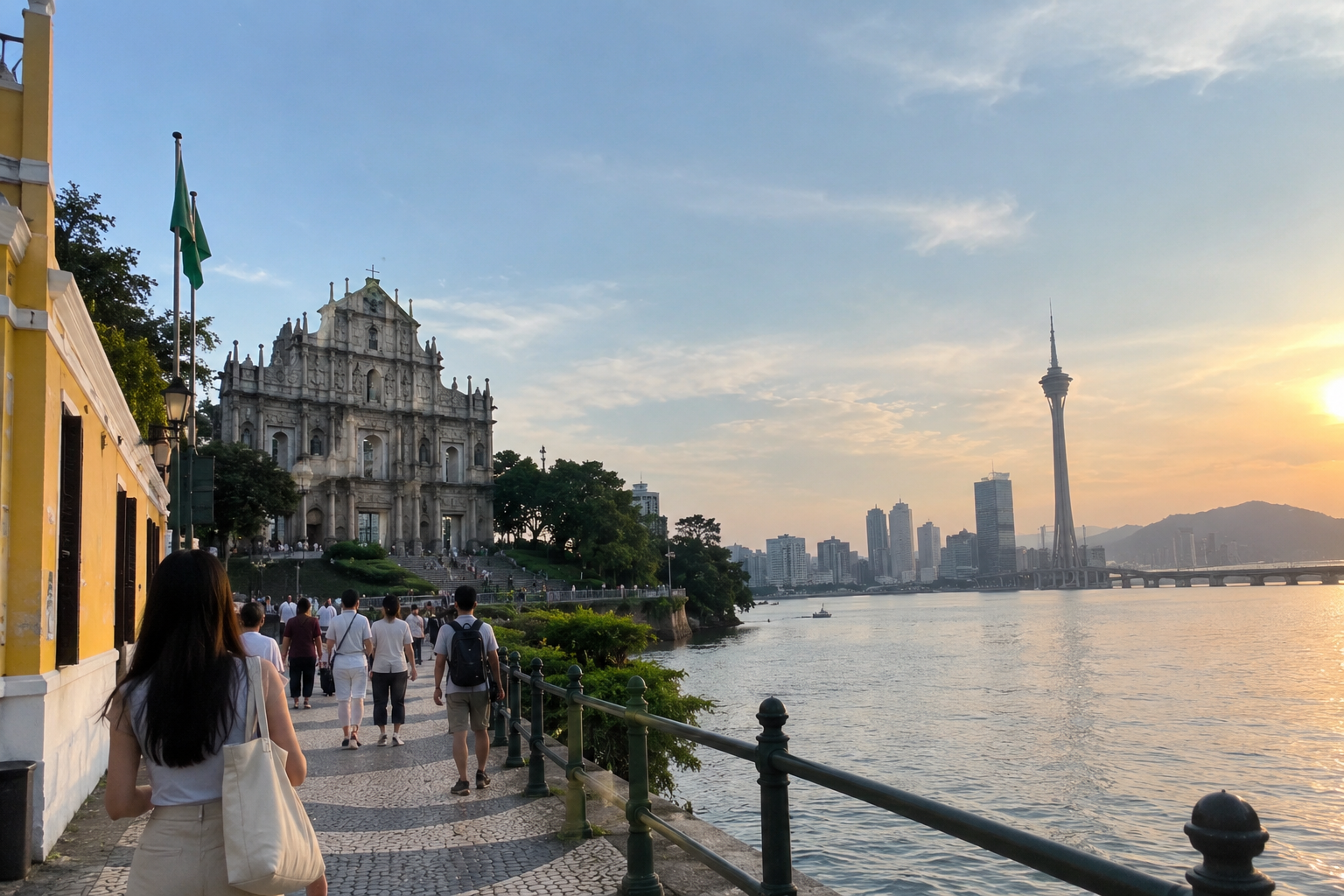
Macao itself provides an interesting backdrop for conversations about tourism transformation. The city has long been recognised for its combination of Chinese and Portuguese cultural influences, heritage, entertainment, hospitality and gastronomy.
Its tourism identity is also changing.
Instead of relying on a single tourism model, Macao has been working toward broader economic diversification. Its “1+4” strategy seeks to strengthen tourism while developing other industries and creating a more balanced economic structure.
That makes Macao a particularly relevant host for a forum discussing resilience and evolution.
A destination that is trying to broaden its economic base is naturally part of the conversation about how tourism can create greater long-term value.
The official GTEF platform describes Macao as a city that has been moving from concentration toward diversification and from volume toward value. The city welcomed more than 40 million visitors in 2025, according to the forum’s official website, surpassing both its previous record and 2019 levels.
The numbers are impressive, but the more important question is what happens after visitors arrive.
How long do they stay?
How much do they spend outside traditional tourism businesses?
How many local companies benefit?
How much culture do visitors experience?
And how can tourism growth improve the quality of life for residents?
These are increasingly important questions for destinations around the world.
Why the Theme “Crisis, Resilience, Evolution” Matters
Tourism has always been vulnerable to external events.
A political crisis can affect flights.
A financial downturn can change travel budgets.
A health emergency can bring international travel to a standstill.
Extreme weather can disrupt destinations.
Climate change can threaten beaches, mountains, historic sites and other attractions.
Technology can transform the way people search, book and experience travel almost overnight.
The tourism industry has therefore learned that recovery is not enough.
Destinations need resilience.
The 2026 GTEF theme captures this shift in thinking.
Crisis represents the challenges facing tourism.
Resilience represents the ability to absorb shocks and continue moving forward.
Evolution represents the need to change the tourism model itself.
This is an important distinction.
A destination that simply waits for a crisis to pass may recover, but it may not become stronger.
A resilient destination learns from disruption.
An evolving destination uses those lessons to build something better.
That is the conversation GTEF wants to encourage in Macao.
The official forum programme is built around five connected areas: resilient governance, technology and innovation, the new traveller, culture and identity, and cross-sector growth and sustainable development.
Together, these topics reflect the biggest changes happening in modern tourism.
Tourism Is No Longer Just About Bringing More Visitors
For decades, tourism success was often measured by one simple figure: visitor arrivals.
More tourists were considered better.
Today, that approach is becoming less convincing.
A destination can attract millions of visitors and still face problems such as congestion, environmental pressure, rising housing costs, cultural erosion or uneven economic benefits.
The new tourism conversation is much broader.
It asks whether tourism creates meaningful value.
That can mean encouraging longer stays instead of quick visits.
It can mean promoting local businesses.
It can mean spreading visitors beyond overcrowded attractions.
It can mean investing in public transport.
It can mean protecting heritage.
It can mean giving communities a greater role in tourism development.
And it can mean creating experiences that travellers remember because they feel authentic rather than manufactured.
This is one reason the GTEF discussions are relevant beyond Macao.
Destinations across Asia, Europe, the Middle East and the Americas are facing similar questions.
Tourism is recovering and expanding, but the industry now has to decide what kind of growth it wants.
Artificial Intelligence Is Changing the Travel Experience
One of the most important subjects at the 2026 forum will be artificial intelligence.
AI has moved rapidly from an experimental technology to something travellers and tourism businesses increasingly encounter every day.
People can now use AI tools to research destinations, compare travel options, build itineraries and translate information.
Hotels can use technology to personalise guest experiences.
Airlines can use data to improve operations.
Tourism boards can analyse traveller behaviour.
Attractions can use digital systems to manage crowds and provide personalised information.
The possibilities are enormous.
But the tourism industry also has to ask difficult questions.
What happens to human interaction when more travel decisions are automated?
How should destinations protect traveller data?
How can small tourism businesses access advanced technology?
How can AI improve travel without making the experience feel impersonal?
These questions matter because tourism is ultimately a human activity.
People travel to meet other people, experience different cultures, taste unfamiliar food, see beautiful places and create memories.
Technology should enhance those experiences rather than replace the human connection that makes travel special.
The official GTEF programme places technology and innovation alongside culture, identity and the new traveller, suggesting that the forum sees digital transformation as part of a much larger tourism ecosystem rather than a standalone trend.
That is an important perspective.
The future of travel will not simply be digital.
It will be human plus digital.
The New Traveller Is Changing the Tourism Industry
Another major focus of GTEF 2026 will be changing traveller behaviour.
The modern traveller is different from the traditional tourist of previous decades.
People are increasingly interested in experiences rather than simply ticking destinations off a list.
Food has become a major reason for travel.
Wellness is growing.
Sports tourism is attracting new audiences.
Educational travel is creating new opportunities.
Cultural tourism is becoming more immersive.
Travellers are also increasingly looking for destinations that feel authentic.
They want to understand how people live.
They want to taste local food.
They want to explore neighbourhoods.
They want stories behind historic buildings.
They want experiences that cannot simply be copied and pasted from one destination to another.
This change creates an opportunity for smaller destinations and local businesses.
A destination does not necessarily need the world’s biggest theme park or tallest building to compete.
It needs something meaningful.
A local tradition.
A distinctive landscape.
A special cuisine.
A fascinating history.
A strong creative community.
Or simply an experience that visitors cannot find somewhere else.
Spain Brings a European Tourism Perspective
Spain’s role as Partner Country adds another important dimension to the forum.
Spain is one of the world’s best-known tourism destinations, with a powerful combination of cities, beaches, cultural heritage, cuisine, architecture and regional identities.
But Spain’s tourism story also includes lessons about managing tourism at scale.
Popular destinations have had to think about visitor pressure, regional development, sustainability and how tourism benefits local communities.
At GTEF 2026, Spain is expected to share experience related to destination management, regional development and sustainable tourism.
This makes the country’s participation particularly relevant.
Tourism does not happen in a vacuum.
A successful destination must balance visitors with residents.
It must balance economic growth with environmental protection.
It must balance global branding with local identity.
And it must make sure that tourism development does not destroy the very qualities that attracted visitors in the first place.
Spain’s experience can contribute to this wider conversation.
For Asian destinations, meanwhile, there are opportunities to learn from European tourism markets while also developing models suited to their own cultures and economies.
Hainan Takes the Spotlight as Featured Province
If Spain represents an important European tourism perspective, Hainan brings a major Asian development story to the table.
Hainan has been developing its tourism sector alongside the broader development of the Hainan Free Trade Port.
The province has strong natural attractions, resort tourism, shopping, cultural experiences and growing international ambitions.
At GTEF 2026, Hainan will be the Featured Province, with discussions expected to cover tourism cooperation, visitor flows, multi-destination itineraries and business events.
This is particularly interesting because the future of Asian tourism is increasingly about connecting destinations rather than treating each place as an isolated market.
A traveller might visit Macao, Guangdong, Hainan and other destinations during the same journey.
That creates opportunities for airlines, hotels, cruise operators, attractions, restaurants, travel agencies and local businesses.
It also encourages destinations to cooperate instead of competing for every visitor.
That shift could become one of the defining characteristics of tourism in the next decade.
China-Europe and Asia-Pacific Connectivity Takes Centre Stage
Connectivity will be another important subject at the forum.
Tourism depends on connections.
Air routes connect travellers to destinations.
Railways connect cities.
Digital platforms connect businesses with customers.
Trade relationships connect tourism companies across borders.
Visa policies can either encourage or discourage international movement.
As global tourism becomes more interconnected, the quality of these connections becomes increasingly important.
GTEF 2026 will examine China-Europe and Asia-Pacific connectivity, as well as tourism investment and investment facilitation.
This is significant because tourism is closely linked with broader economic relationships.
When people travel, they do not simply spend money on hotels.
They use transportation.
They eat in restaurants.
Visit attractions.
Shop.
Attend events.
Hire guides.
Use digital services.
And often return home with stronger awareness of another country or culture.
Tourism can therefore act as an economic bridge.
It can also become a bridge between people.
The Greater Bay Area Adds Another Layer
The 2026 forum will also connect with the wider development of the Guangdong-Hong Kong-Macao Greater Bay Area.
Participants will have opportunities to explore Macao and the Guangdong-Macao In-Depth Cooperation Zone in Hengqin.
This is more than a sightseeing exercise.
The organisers are using the programme to show how tourism, business, wellness, culture and investment can work together across neighbouring destinations.
Hengqin is particularly interesting because it demonstrates how tourism development can extend beyond traditional city boundaries.
Instead of asking travellers to choose between destinations, regional tourism planning can encourage them to explore several connected areas.
That can increase visitor spending, extend stays and distribute economic activity.
For travellers, it can also create richer itineraries.
A single trip can include heritage, food, entertainment, wellness, shopping and nature.
That is increasingly what modern travellers want.
Heritage Is Becoming More Valuable, Not Less
In a world dominated by technology, cultural heritage might seem old-fashioned.
The opposite may be true.
As digital experiences become more common, authentic physical experiences can become more valuable.
A historic street cannot be completely replaced by a virtual reality simulation.
A traditional meal prepared by local people has a human story behind it.
A centuries-old building carries memories that no new attraction can easily reproduce.
Macao understands this combination particularly well.
The city’s Historic Centre of Macao is UNESCO-listed, while Macao is also recognised as a UNESCO Creative City of Gastronomy.
That combination of history and food gives the destination an identity that is difficult to copy.
GTEF 2026 will include opportunities for delegates to experience Macao’s heritage and culinary offerings.
The programme includes a UNESCO heritage journey and a gastronomy journey, allowing participants to experience the destination rather than discussing tourism only inside conference rooms.
This approach makes sense.
You understand a tourism destination best when you experience it.
Gastronomy Is Now a Major Tourism Driver
Food has become one of the strongest reasons people travel.
A destination’s cuisine can influence where travellers go, how long they stay and what they remember.
For Macao, gastronomy is especially important.
Chinese and Portuguese influences have combined over generations to create a distinctive culinary identity.
Local food is therefore not simply something visitors consume.
It is part of the destination’s story.
Around the world, tourism boards are increasingly using food to attract travellers.
Cooking classes, food markets, local restaurants, culinary festivals and farm-to-table experiences are becoming part of destination strategies.
This can also help smaller businesses.
A large hotel may attract visitors, but local restaurants, food producers, chefs and markets can capture spending across the wider community.
That is what sustainable tourism should aim to achieve: not simply more visitors, but wider participation in the tourism economy.
Wellness Tourism Is Expanding
Another growing tourism trend is wellness.
Travellers increasingly want trips that help them slow down, recover, exercise, eat better or simply disconnect from busy routines.
This is creating opportunities for destinations with natural landscapes, health facilities, traditional medicine, spas, fitness experiences and peaceful environments.
The GTEF programme includes wellness-related visits in the Guangdong-Macao In-Depth Cooperation Zone in Hengqin.
Wellness tourism also demonstrates how tourism is becoming more closely connected with other industries.
Travel is no longer limited to hotels, airlines and sightseeing.
It intersects with healthcare, fitness, food, sports, education and technology.
That is why the idea of a wider tourism economy is becoming increasingly important.
Sports and Educational Travel Are Creating New Markets
GTEF 2026 will also look at areas such as sports tourism and educational travel.
Both have strong potential.
Sports can bring thousands of visitors to a destination for competitions, tournaments and major events.
Those visitors need hotels, restaurants, transport and entertainment.
But sports tourism can also encourage longer-term travel.
A fan may visit a destination because of a sporting event and then return later with family.
Educational tourism works in a similar way.
Students travel for language programmes, cultural exchanges, academic experiences and specialised learning.
These visitors often stay longer than conventional tourists.
That makes them economically valuable to destinations.
More importantly, these forms of tourism create deeper relationships between people and places.
Mountain Tourism Is Finding a New Audience
One particularly interesting subject on the GTEF agenda is mountain tourism.
For many years, tourism development focused heavily on beaches and major cities.
Today, travellers are increasingly looking for nature, quiet spaces and outdoor experiences.
Mountain destinations can benefit from this shift.
Hiking, wellness retreats, adventure tourism, cultural villages and nature-based experiences can create new tourism opportunities.
But mountain tourism also has challenges.
Fragile ecosystems can be damaged by uncontrolled development.
Local communities need to benefit.
Infrastructure must be carefully planned.
And visitor numbers may need to be managed.
The GTEF agenda includes a dedicated session on mountain residential tourism and cooperation with the International Mountain Tourism Alliance.
This shows how the tourism conversation is expanding beyond traditional destinations.
Sustainable Tourism Must Move Beyond a Slogan
Sustainability has become one of the most frequently used words in tourism.
But travellers and communities increasingly want to know what it actually means.
A sustainable destination must consider water.
Energy.
Waste.
Transport.
Biodiversity.
Local employment.
Cultural preservation.
Community participation.
And long-term economic stability.
Sustainability also means thinking about resilience.
A destination that depends too heavily on one market can be vulnerable.
A destination that depends entirely on one attraction can also be vulnerable.
A more resilient tourism economy has multiple markets, multiple experiences and multiple sources of value.
This is one of the strongest ideas behind the GTEF 2026 theme.
The goal is not simply to survive the next crisis.
It is to build a tourism economy capable of adapting to many different futures.
Tourism Investment Will Be Another Major Conversation
Tourism cannot grow without investment.
Airports need investment.
Hotels need investment.
Rail networks need investment.
Attractions need investment.
Digital infrastructure needs investment.
Local communities also need investment in skills and services.
GTEF 2026 will therefore discuss global tourism investment and investment facilitation.
This is important because investment decisions made today can shape destinations for decades.
A poorly planned resort can create environmental and social problems.
A well-planned tourism district can create jobs and long-term economic opportunities.
The difference often comes down to planning, governance and cooperation.
That is why governments, investors and tourism businesses need to sit at the same table.
Business Matching Could Turn Ideas Into Deals
One of the strengths of GTEF is that it is not designed simply as a talking event.
The programme includes business matching, destination promotion and networking activities.
This matters.
Tourism conferences can produce excellent speeches and interesting discussions, but their real value is often measured by what happens afterward.
Does a new partnership form?
Does an airline explore a new route?
Does an investor discover a new destination?
Does a tourism company enter another market?
Does a hotel group find a new development opportunity?
Does a government agency establish cooperation with another destination?
Business matching can help turn those possibilities into real conversations.
In that sense, GTEF is positioned not only as a conference but as a meeting place for the wider tourism economy.
Macao as a Bridge Between East and West
Macao’s location and history give it a natural role in international tourism dialogue.
For centuries, it has been influenced by both Chinese and Portuguese cultures.
That history is visible in its architecture, food, languages and traditions.
Today, Macao is also positioned as a gateway within the Greater Bay Area and as a bridge connecting China with Portuguese-speaking markets.
This gives the city an unusual advantage.
It can host conversations between different tourism systems and cultures.
That role is especially valuable at a time when international cooperation is being tested.
Tourism cannot solve every geopolitical problem.
But it can create opportunities for people to meet.
It can encourage cultural understanding.
It can create business relationships.
And it can remind people that international connections are not simply economic transactions.
They are human relationships.
A Tourism Industry Learning From Crisis
The travel industry has experienced some of its most difficult years in recent history.
The pandemic showed how quickly international tourism can disappear.
Airlines grounded aircraft.
Hotels closed rooms.
Tour guides lost their livelihoods.
Small tourism businesses faced enormous pressure.
Destinations that had depended heavily on international visitors suddenly had to rethink their strategies.
The recovery taught another lesson.
Tourism can return quickly when demand comes back, but the structure of the industry may be different.
Travellers may behave differently.
Businesses may adopt new technology.
Destinations may diversify their markets.
Governments may place greater emphasis on resilience.
That is why the word “crisis” appears at the beginning of GTEF’s 2026 theme.
The industry has learned that crises are not unusual exceptions.
They are part of the environment in which modern tourism operates.
Resilience Means Preparing Before the Crisis
A resilient destination does not wait until something goes wrong.
It prepares in advance.
That preparation can include diversified visitor markets.
Strong domestic tourism.
Flexible business models.
Reliable transport systems.
Emergency planning.
Digital infrastructure.
Skilled workers.
Strong cooperation between government and industry.
And clear communication with travellers.
Climate resilience is becoming equally important.
Extreme heat, floods, storms and other climate-related events can affect tourism infrastructure and visitor safety.
Destinations therefore need to think about resilience when planning hotels, attractions, transport systems and coastal developments.
The future tourism economy will need to be more prepared than the tourism economy of the past.
Culture and Identity Will Remain at the Heart of Travel
Technology may change how people book trips.
AI may change how they plan itineraries.
Digital platforms may change how destinations market themselves.
But culture will remain one of the strongest reasons people travel.
People want to see places that are different from home.
They want stories.
They want traditions.
They want music, food, architecture and art.
They want experiences that make them feel connected to a destination.
This is why GTEF has placed culture and identity among its central pillars.
The challenge is to make tourism support culture rather than consume it.
Communities should have a voice.
Heritage should be protected.
Traditional practices should be respected.
And tourism development should not turn every local culture into a generic commercial product.
The most successful destinations of the future may be those that understand the value of being genuinely themselves.
The Rise of Experiential Retail
Shopping has always been an important part of tourism.
But retail itself is changing.
Travellers increasingly want experiences rather than simply products.
They might want to watch a craftsperson create something.
They might want to learn how a local product is made.
They might want to taste food before buying it.
They might want to visit a creative district rather than a conventional shopping centre.
This is why experiential retail is among the subjects being examined at GTEF 2026.
The idea fits naturally with the broader evolution of tourism.
Travel is becoming less about collecting things and more about collecting memories.
Why the Forum Matters Beyond Macao
It would be easy to view GTEF 2026 as another industry event taking place in Asia.
That would miss the bigger picture.
The issues being discussed in Macao are global.
How should destinations respond to climate change?
How can AI be used responsibly?
How can tourism create better jobs?
How can communities benefit from visitor growth?
How can cultural heritage be protected?
How can destinations cooperate across borders?
How can investment support sustainable tourism?
These are questions facing virtually every major tourism market.
That is why the forum has relevance for countries far beyond the Asia-Pacific region.
A More Connected Tourism Future
One of the most important ideas emerging from modern tourism is that destinations do not always have to compete.
They can cooperate.
Macao and Hainan can promote multi-destination journeys.
European and Asian tourism organisations can share expertise.
Cities can cooperate on cultural routes.
Airlines can connect multiple destinations.
Hotels can promote regional itineraries.
Travel platforms can make cross-border journeys easier.
The result can be a more connected tourism economy.
This approach could become increasingly important as travellers look for longer, richer journeys.
Instead of asking, “Which destination wins?”
The industry can ask:
“How can several destinations create a better journey together?”
That is a much more sustainable question.
The Human Side of Global Tourism
Behind all the statistics, investment figures and technology discussions are people.
A hotel employee welcoming a guest.
A chef preparing a traditional dish.
A guide explaining the history of a neighbourhood.
A small shop owner selling handmade products.
A family running a guesthouse.
A young person finding a first job in tourism.
A traveller discovering a culture for the first time.
This human side is easy to lose when tourism is discussed only in terms of economic growth.
But it is precisely why resilience matters.
A resilient tourism economy should not only protect businesses.
It should protect livelihoods.
It should create opportunities.
It should help communities participate.
And it should allow future generations to inherit destinations that remain worth visiting.
What Visitors Can Expect From the Macao Forum
For industry participants, GTEF 2026 will offer a mixture of high-level discussions, business networking, destination promotion and cultural experiences.
The programme includes plenary sessions, thematic discussions, business matching and networking opportunities. Delegates will also have opportunities to explore Macao’s heritage and gastronomy, while selected participants can visit tourism and wellness developments in Hengqin.
This combination is important.
Tourism is not an industry that can be fully understood inside a conference hall.
The destination itself is part of the lesson.
By experiencing Macao’s food, heritage and visitor infrastructure, delegates can see some of the issues discussed during the forum in real life.
A Forum Backed by Major Tourism Organisations
GTEF has developed an international network over the years.
The forum is supported by China’s Ministry of Culture and Tourism and the All-China Federation of Industry and Commerce.
It also maintains cooperation with major international organisations including UN Tourism and the World Travel & Tourism Council (WTTC), while working with organisations such as the Pacific Asia Travel Association (PATA) and the European Travel Commission (ETC).
That network gives the event greater reach.
It also reflects the increasingly international nature of tourism policy.
No single country can solve every tourism challenge alone.
Destinations need to learn from one another.
Businesses need cross-border partnerships.
Governments need shared experience.
And international organisations can help create common frameworks.
What Could Come From GTEF 2026?
The most interesting question may not be what happens during the three days.
It is what happens afterward.
If discussions about AI lead to new tourism technology partnerships, the impact could last years.
If Spain and Asian destinations exchange successful sustainability practices, the benefits could extend beyond the forum.
If Hainan and Macao strengthen multi-destination tourism cooperation, travellers could eventually see new itineraries.
If investors discover new opportunities, new tourism infrastructure could emerge.
If policymakers develop better approaches to resilience, destinations could be better prepared for future crises.
That is the real test of any international forum.
Not how impressive the event looks.
But whether the conversations continue after everyone goes home.
Macao’s Tourism Story Is Still Being Written
Macao has already built a remarkable tourism identity.
But the city’s next chapter may be even more interesting.
The challenge now is to turn strong visitor numbers into broader and more sustainable economic value.
That means developing new tourism products.
Strengthening cultural experiences.
Expanding wellness and business events.
Working with neighbouring destinations.
Encouraging investment.
Supporting local businesses.
And continuing to diversify the economy.
The Global Tourism Economy Forum gives Macao an opportunity to present that journey to the world.
At the same time, the city can learn from other destinations.
That two-way exchange may be one of the most valuable parts of hosting an international tourism forum.
The Bigger Message for Global Tourism
The return of GTEF to Macao comes at a moment when tourism is changing faster than many industry observers expected.
Travellers are becoming more demanding.
Technology is moving faster.
Climate risks are becoming harder to ignore.
Competition between destinations remains intense.
At the same time, people continue to love travelling.
They still want to see the world.
They still want to meet new people.
They still want to taste different foods.
They still want to experience history and nature.
That creates an extraordinary opportunity.
The tourism industry does not need to choose between growth and responsibility.
The real challenge is learning how to combine them.
Growth can support sustainability when investment is planned carefully.
Technology can support human experiences when used responsibly.
International tourism can support local communities when economic benefits are distributed fairly.
And global connectivity can strengthen cultural understanding when travel encourages genuine interaction.
That is the kind of future the 2026 GTEF conversation is trying to explore.
Looking Ahead to October 2026
When delegates arrive in Macao for the 12th Global Tourism Economy Forum, they will be discussing far more than hotel occupancy or visitor arrival numbers.
They will be discussing the future shape of tourism itself.
The event’s theme — Crisis · Resilience · Evolution — captures the journey the industry has already experienced and the challenges still ahead.
Crisis has shown tourism how vulnerable it can be.
Resilience has shown how quickly the industry can recover.
Evolution now asks what comes next.
The answer will not come from one government, one company or one destination.
It will come from cooperation.
That is why events such as GTEF remain important.
Tourism is one of the world’s most international industries. Its future depends on countries, cities, businesses and communities finding ways to work together.
Macao is once again opening its doors to that conversation.
And with Spain bringing its European experience, Hainan highlighting its fast-changing tourism economy, and international organisations contributing to the wider discussion, the 2026 edition has the potential to become an important meeting point for the next generation of global tourism.
The most successful destinations of tomorrow may not necessarily be those that attract the largest number of people.
They may be the destinations that create the best balance between visitors, residents, businesses, culture, technology and the environment.
That is the real meaning of a resilient tourism economy.
And as the Global Tourism Economy Forum returns to the city where its story began, Macao will once again place itself at the centre of that global conversation.
“When I first read about this update, it instantly reminded me of the absolute headache of wrestling with foreign transport apps on past trips—and honestly, this feature is a total game-changer.”
Have you ever pushed through travel anxieties or flight disruptions just to take a dream trip? Drop a comment and tell me about your most unforgettable travel adventure!
About the Author: Zoey
Zoey is a passionate travel writer and researcher at VentureWibe, dedicated to bringing readers the latest global travel news, inspiring destination guides, and tourism trends from around the world. With a keen eye for uncovering unique travel stories, Zoey helps explorers stay informed and prepared for their next adventures.
Expertise: Global Tourism, Destination Research, and Travel Insights

Discover more from venture
Subscribe to get the latest posts sent to your email.

