
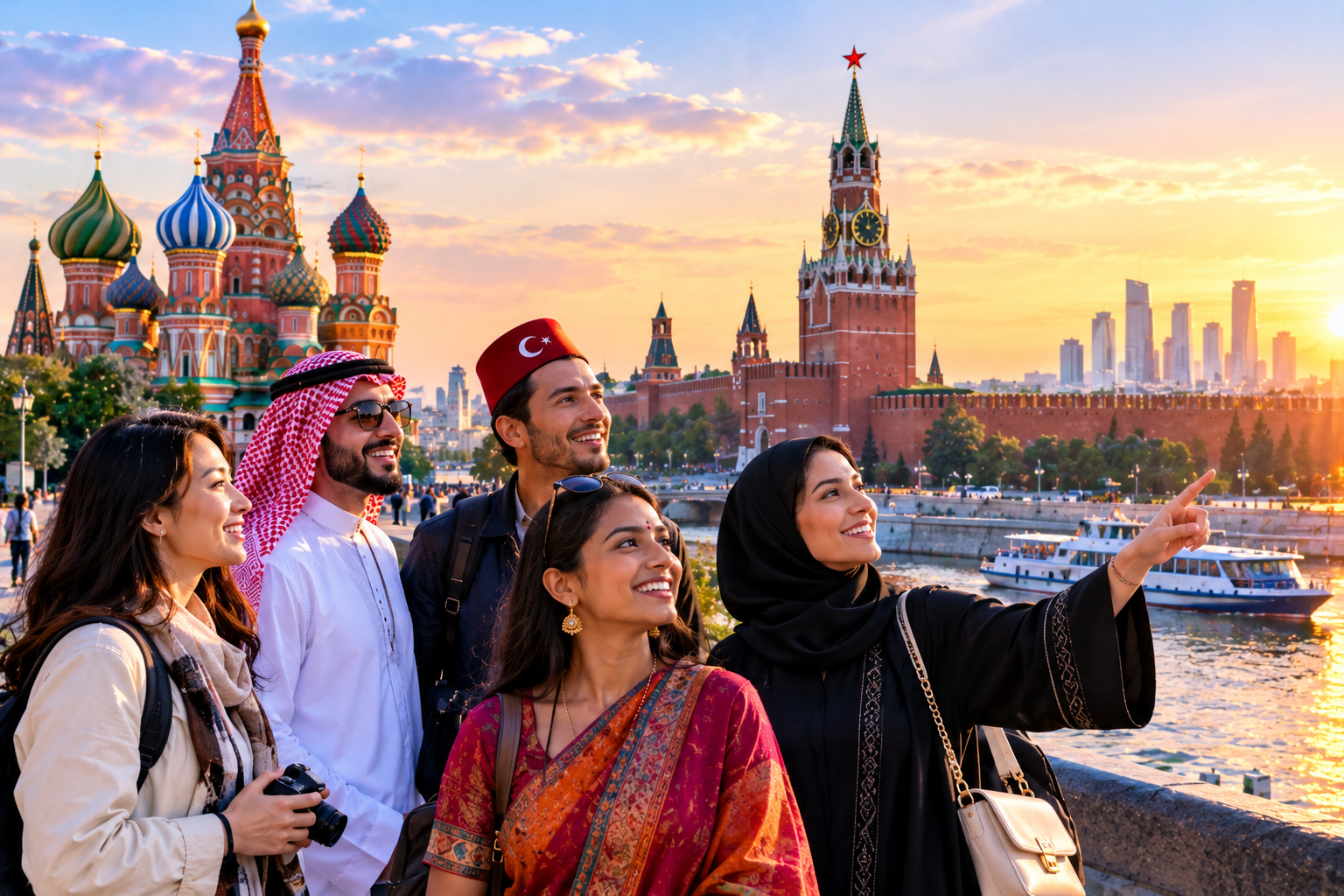

Global Travel Pivot: How China, Saudi Arabia, Türkiye, India, and the UAE Are Redefining Russia’s Tourism Landscape
A monumental structural realignment is unfolding across global tourism. For decades, European vacationers from Germany, France, the United Kingdom, Italy, and Finland formed the financial foundation of Russia’s foreign travel ecosystem. Their seasonal journeys to Moscow, St. Petersburg, and the historical towns of the Golden Ring drove long-haul aviation, sustained high-end urban hospitality, and supported luxury retail corridors.
However, political friction, air corridor closures, sanctions, and mutual visa barriers have virtually eliminated traditional Western European visitor flows. In their place, a new travel alignment has emerged. Fueled by diplomatic cooperation, relaxed visa regulations, dedicated flight capacity expansion, and targeted destination marketing, visitors from across Asia, Eurasia, and the Gulf Corporation Council (GCC) nations are reshaping Russia’s international tourism sector.
At the center of this transformation is China, whose outbound travelers now account for more than half of all foreign leisure visits to Russia. Flanking China’s dominant position are fast-growing growth engines in Saudi Arabia, Türkiye, India, and the United Arab Emirates (UAE), alongside regional partners in Central Asia and Eastern Europe. This geographical pivot offers a compelling case study for destination strategists, hospitality executives, and aviation planners worldwide.
1. Executive Overview: The Great Eurasian Tourism Realignment
According to official border service data from Russia’s Federal Security Service (FSB), Russia recorded approximately 1.64 million tourism-purpose international arrivals during 2025. Across all travel categories—including business, family connections, transit, and personal visits—total inbound arrivals reached roughly 4.8 million. While overall volumes remain below pre-2020 peaks, the geographical profile of inbound visitors has completely shifted.
Key Highlights of the Strategic Shift
- Dominance of the Chinese Market: Chinese travelers generated 834,460 tourist visits in 2025, accounting for over 50% of total international leisure travel to Russia.
- The Gulf & Middle East Expansion: Rapid double-digit arrival growth from Saudi Arabia (+35.8%) and steady luxury traffic from the UAE have turned Gulf capitals into key source markets and transit hubs.
- The Indian Outbound Surge: Supported by direct flight routes and electronic visas, arrivals from India surged by +66.0% in 2025, reaching 38,480 tourist visits.
- Regional Eurasian Anchor: Neighboring states such as Turkmenistan (+29.0%) and Belarus (+80.9%) recorded significant increases, underpinning regional mobility.
- Disappearance of European Volume: Western Europe has largely faded as an active leisure source market; residual German traffic (66,000 arrivals, +0.4%) consists primarily of diaspora family visits and essential travel rather than traditional packaged holidays.
2. Statistical Breakdown: Russia’s Top Inbound Source Markets
The table below outlines Russia’s top foreign tourism markets based on official 2025 border entry figures, highlighting the contrast between expanding Asian/Middle Eastern corridors and stagnant European demand.
Data Source: Federal Security Service Border Service statistics & Travel And Tour World analysis.
3. The Chinese Engine: Over 50% of All International Arrivals
China’s role in Russia’s tourism recovery goes beyond being a primary source market—it serves as the structural foundation of the nation’s foreign leisure sector. With 834,460 tourist trips generated in 2025, Chinese vacationers represent the single largest international visitor group in the country.
Policy Unlocks: Group Visa-Free Travel Extended to 2027
A key driver of this traffic is the extended bilateral visa-free group travel agreement. Originally introduced as a temporary trial, Russian authorities extended the 30-day visa-free allowance for organized Chinese tour groups and individual travelers through the end of 2027.
This policy extension provides long-term clarity for tour operators, airlines, and hotel chains in both countries. By removing standard administrative delays and visa processing fees, the barrier to entry for Chinese travelers has dropped significantly.
Visitor Itineraries and Spending Behaviors
Most Chinese travelers select 7- to 9-day combined itineraries centered on Moscow and St. Petersburg. Popular activities include:
- Heritage & Imperial Architecture: Visits to the Moscow Kremlin, Red Square, Hermitage Museum, Catherine Palace in Tsarskoye Selo, and Peterhof Grand Palace.
- Seasonal & Winter Tourism: Chasing the Northern Lights in Murmansk and ice-trekking along Lake Baikal.
- Luxury Retail Shopping: Buying Swiss timepieces, European fashion brands, local jewelry, and amber products at favorable exchange rates caused by ruble fluctuations.
Industry Note: To better serve this market, major hospitality groups across Moscow, St. Petersburg, and Kazan have introduced the “China Friendly” certification standard. Participating properties offer Mandarin-speaking staff, hot water kettles in rooms, traditional Chinese breakfast items, and payment terminals supporting UnionPay and WeChat Pay.
4. Operational Challenges: Revenue Capture and the Foreign Agency Paradox
While the surge in Chinese arrivals has boosted visitor counts, tourism economists and local business leaders point to an ongoing operational challenge: economic value leakage.
The Closed-Loop Travel Ecosystem
Much of China’s outbound group market functions through a integrated, closed-loop network:
- Integrated Booking Channels: Tours are bought in China through domestic agencies offering all-inclusive packages covering flights, hotels, meals, and excursions.
- Foreign-Owned Local Logistics: On arrival, groups are often met by tour leaders, bus fleets, and guides linked directly to parent companies based outside Russia.
- Dedicated Retail and Dining Networks: Meals and shopping trips are frequently directed to Chinese-owned restaurants and specialized retail shops using non-Russian digital payment gateways.
Consequently, while headline visitor figures are high, domestic hoteliers, independent tour operators, and local merchants often capture a limited portion of total traveler spending. Russian tourism authorities are working to adjust this balance by requiring local licensing for tour guides and encouraging foreign travelers to use local prepaid banking cards upon arrival.
5. The Middle Eastern Surge: High-Spend Travel from Saudi Arabia, Türkiye, and the UAE
Beyond East Asia, the Middle East has emerged as an active growth market for high-value travel to Russia. Strong economic links, direct flight connections, and simplified visa systems have helped build this travel corridor.
1. Saudi Arabia: High Growth in Family and Luxury Travel (+35.8%)
Saudi Arabia represents Russia’s fastest-growing Middle Eastern source market. The 35.8% increase in 2025 brought total arrivals to 74,900.
- Summer Climate Appeal: Wealthy travelers from Riyadh and Jeddah often seek out milder summer climates. Destinations like Moscow, St. Petersburg, and Sochi offer a green, temperate environment during peak Gulf heatwaves.
- Family Travel Dynamics: Saudi visitors frequently travel in larger family groups, staying longer and spending more per day than average tour groups.
- Hospitality Adaptations: Luxury five-star properties in Moscow have introduced halal-certified dining options, prayer facilities, multi-bedroom suites, and specialized private concierge services to cater to this high-yielding market.
2. Türkiye: Strategic Transit and Commercial Travel Hub
With 68,720 arrivals in 2025, Türkiye remains a key bridge connecting Western Europe, North America, and Russia. Istanbul Airport functions as a major international transit node for visitors traveling to Moscow, St. Petersburg, and regional Russian hubs. Beyond transit, trade ties, construction partnerships, and dual-national business travel maintain steady Turkish entry numbers year-round.
3. The UAE: A Corridor for Business and Premium Travel
Travelers from the United Arab Emirates generated 59,000 visits in 2025. Supported by direct flights on carriers like Emirates, Flydubai, Etihad, and Air Arabia, the UAE route serves two distinct traveler profiles: UAE nationals seeking luxury winter experience holidays and international expatriates utilizing Dubai and Abu Dhabi as direct transit points into Russia.
6. The Indian Outbound Expansion (+66.0%)
India represents one of the most promising growth opportunities within Russia’s updated international tourism strategy. Inbound visits from Indian travelers increased by 66.0% in 2025, rising to 38,480 tourist entries.
Key Factors Behind India’s Tourism Growth
- Digital E-Visa Convenience: The introduction of electronic visas for Indian passport holders simplified travel requirements, replacing paperwork with a quick digital portal.
- Growth in MICE and Corporate Travel: Corporate incentives, trade delegation conferences, and industrial exhibitions in Moscow and Kazan account for a large share of Indian arrivals.
- Emergence as a Destination Wedding Location: Historic palaces in St. Petersburg and suburban luxury estates are increasingly marketed to high-net-worth Indian couples looking for distinct international wedding venues.
7. Strategic Implications for Global Tourism Leaders
The reshaping of Russia’s inbound travel sector offers practical takeaways for destination marketing organizations (DMOs), hotel brands, airline planners, and travel technology developers worldwide.
Core Strategic Takeaways
- Geographic Diversification Shields Market Risk: Relying heavily on a single geographical source market leaves tourism destinations vulnerable to sudden geopolitical, regulatory, or economic disruptions. Building flexible marketing channels across multiple regions helps protect long-term travel demand.
- Financial and Digital Connectivity Matter: Adapting to regional payment habits—such as UnionPay, WeChat Pay, or local e-wallets—is essential for converting foreign arrival volume into actual local revenue when standard cross-border credit card networks are disrupted.
- Targeted Visa Policies Drive Fast Results: Unilateral or mutual visa waivers, group exemptions, and e-visas remain the most direct tools for accelerating foreign visitor arrival growth.
8. Looking Ahead: Long-Term Outlook for Russia’s Foreign Tourism
As Russia continues expanding its tourism ties with Asia, the Middle East, and Eurasia, rebuilding a sustainable international travel economy will require balancing high visitor volumes with local spending value.
While China, Saudi Arabia, Türkiye, India, and the UAE have successfully replaced traditional Western visitor markets, long-term success depends on broader infrastructure investments. Key priorities include expanding direct international flight networks, diversifying travel itineraries beyond Moscow and St. Petersburg to regions like Baikal, Altay, and Kamchatka, and updating financial processing systems for international guests.
By adjusting its market focus toward fast-growing Asian and Middle Eastern source markets, Russia has established a new framework for its foreign travel industry that will continue shaping international tourism patterns for years to come.
For deeper insights into how shifting diplomatic relationships and transit routes are driving tourism from Middle Eastern nations to Russian urban destinations, watch this detailed operational summary:
Russia’s closer ties with the Gulf spark Arab tourism boom
This news report provides on-the-ground context regarding how luxury hotel brands, cultural institutions, and regional transit hubs in Moscow are adapting to serve surging numbers of travelers from Gulf Cooperation Council (GCC) countries.
“When I first read about this update, it instantly reminded me of the absolute headache of wrestling with foreign transport apps on past trips—and honestly, this feature is a total game-changer.”
Have you ever pushed through travel anxieties or flight disruptions just to take a dream trip? Drop a comment and tell me about your most unforgettable travel adventure!
About the Author: Zoey
Zoey is a passionate travel writer and researcher at VentureWibe, dedicated to bringing readers the latest global travel news, inspiring destination guides, and tourism trends from around the world. With a keen eye for uncovering unique travel stories, Zoey helps explorers stay informed and prepared for their next adventures.
- Expertise: Global Tourism, Destination Research, and Travel Insights

Discover more from venture
Subscribe to get the latest posts sent to your email.


Indonesia is Asian too..
😀👍
I’ve been surfing online greater than three hours lately, yet I never found any attention-grabbing article like yours. It is beautiful price enough for me. In my opinion, if all web owners and bloggers made excellent content material as you probably did, the web shall be a lot more useful than ever before.