
The Global Takeover: How Vietnam Became the New Tourism Giant of 2026
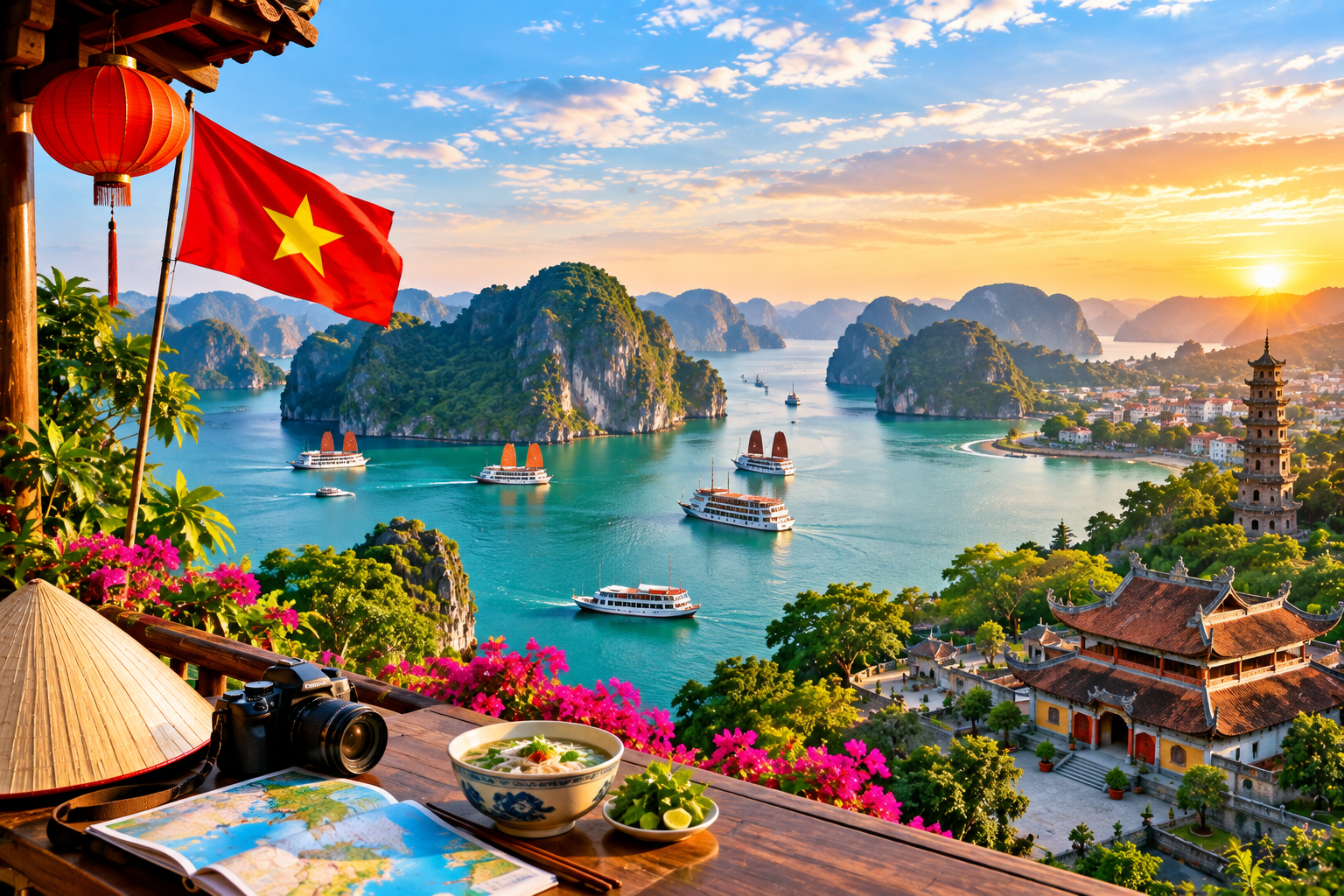
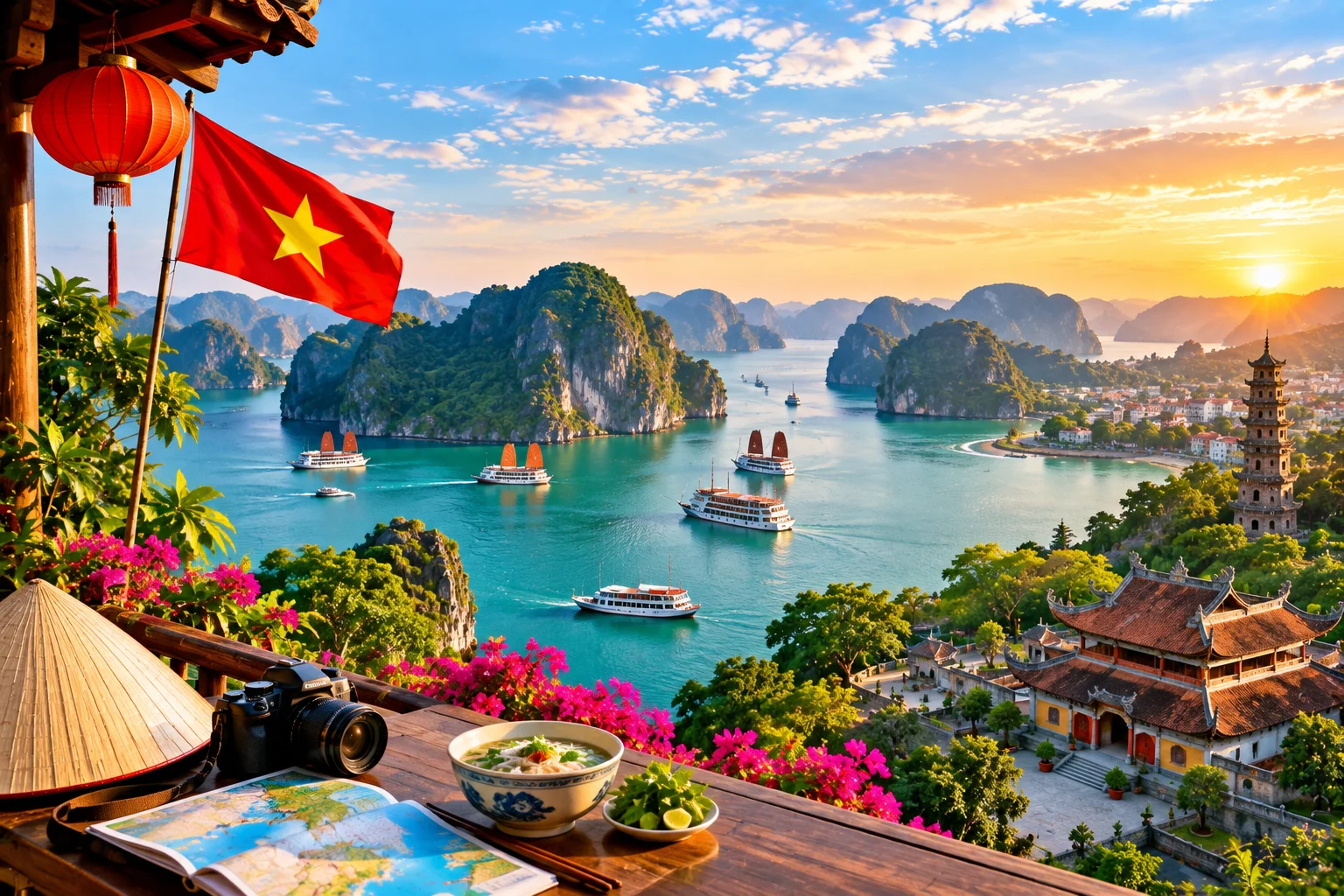
If you have scrolled through your travel feeds recently, you have likely noticed a vibrant shift. The mist-shrouded limestone karsts of Ha Long Bay, the lantern-lit yellow alleys of Hoi An, and the futuristic Golden Bridge held aloft by giant stone hands in Da Nang are no longer just bucket-list items—they are the epicenters of a global travel revolution.
In 2026, Vietnam’s tourism sector isn’t just recovering; it is rewriting the global travel playbook. Driven by a monumental 164% surge in interest from China, alongside explosive, record-breaking arrivals from India, South Korea, Russia, and neighboring Southeast Asian nations, Vietnam has officially established itself as Asia’s newest tourism superpower.
According to the latest data from the Vietnam National Authority of Tourism (VNAT), the country welcomed a staggering 12.3 million international visitors in the first six months of 2026 alone—representing a 14.9% year-on-year increase. This historic first-half performance puts Vietnam squarely on track to shatter its ambitious full-year target of attracting 25 million international travelers.
What lies behind this unprecedented boom? How did a nation once considered an “alternative” Asian destination become the absolute first choice for millions of global travelers? Let’s dive deep into the cultural shifts, strategic policy reforms, and sensory experiences driving Vietnam’s golden age of travel.

1. The Numbers Behind the Boom: A Record-Breaking Year
The sheer scale of Vietnam’s 2026 tourism expansion is best understood through the hard data. While global tourism growth struggles against economic headwinds, Vietnam’s inbound travel sector is expanding at an average rate of 22% annually—far outpacing the global average of 5% and the Asia-Pacific regional average of 8%.
Remarkably, while the broader Asia-Pacific travel market has only recovered to about 90% of its pre-pandemic baseline, Vietnam has surged to over 110% of its historical peak.
First Half of 2026: Key Inbound Markets
Air travel remains the undisputed lifeline of this boom, carrying 82.6% of all arrivals (over 10.1 million travelers). However, land crossings have also seen a massive 37.5% jump, indicating a huge rise in cross-border road trips and rail journeys from neighboring China, Laos, and Cambodia.
2. The Catalysts: Why Vietnam Is Winning the Travel Game
This global rush is no accident. It is the result of a meticulously executed national strategy that aligns modern tourist desires with structural reforms.
Direct Air Bridges: Connecting the World
In the past, traveling to Vietnam from regions like Eastern Europe, Southern India, or Northern China required exhausting multi-stop layovers. In 2026, the landscape is entirely different.
A aggressive expansion of routes by national carrier Vietnam Airlines and budget disrupter VietJet Air—along with foreign giants—has built direct corridors. Russian travelers now board direct flights straight to the sunny coastlines of Nha Trang and Phan Thiet. Indian travelers from Delhi, Mumbai, and Ahmedabad can fly directly into the pristine, visa-free island paradise of Phu Quoc in under five hours.
Revolutionary Visa Reforms
For years, bureaucratic friction was the primary bottleneck for Vietnam’s tourism. The masterstroke of the current boom is the government’s aggressive visa liberalization campaign.
- Extended E-Visas: The standard e-visa is now valid for up to 90 days with multiple entries, a massive win for slow-traveling “digital nomads” and retirees.
- Unilateral Visa Exemptions: Citizens from select European countries (such as Germany, France, the UK, Italy, and Spain) enjoy visa-free entry for up to 45 days, prompting a 56.1% surge in European arrivals during what was traditionally considered the “low season”.
Competitive Cost to High-Value Ratio
In an era of global inflation, travelers are highly protective of their budgets. Vietnam has managed to maintain an incredibly competitive cost of living while drastically elevating its service standards.
Whether it is a five-star luxury resort in Da Nang, an immersive culinary tour in Hanoi, or private yacht charters in Lan Ha Bay, international travelers are finding that their currency stretches significantly further in Vietnam than in traditional rivals like Thailand, Bali, or Japan—without sacrificing an ounce of luxury or safety.

3. Deep Dive into the Top Inbound Markets
The Chinese Reawakening (The 164% Surge)
China has historically been Vietnam’s primary tourist engine, but 2026 marks its absolute coronation. According to search trends from Agoda, accommodation searches by Chinese travelers skyrocketed by 164%.
Speaking on this phenomenal return, Fan Guangyu, Chairman of the Hotel and Accommodation Association under the China Tourism Association, points out that Vietnam’s geographical proximity and shared cultural values make it a comforting, highly intuitive choice.
Crucially, Chinese travelers are moving away from traditional “bus-tour” models. The new wave of Chinese tourists consists of younger, independent travelers seeking gastronomic and experiential depth. They are packing the cafes of Hanoi’s Old Quarter, hunting down local street food classics like phở and bún chả, and booking high-end boutique stays in Da Nang rather than insulated mega-resorts.
The Indian Outbound Wave
If China is the returning titan, India is the explosive new frontier. Indian arrivals to Vietnam grew by over 45% in the first half of 2026.
Indian travelers have developed a profound love affair with Phu Quoc. The island’s stunning white-sand beaches, coupled with its unique visa-free status for all international arrivals, have made it a preferred playground.
Furthermore, Vietnam has successfully captured the ultra-lucrative Indian destination wedding market. Coastal cities like Da Nang and Nha Trang regularly host multi-million dollar, multi-day Indian weddings, with resorts dedicating entire kitchens to authentic Indian culinary teams to cater to these massive celebrations.
The Russian Coastal Migration
Russia has secured its place as Vietnam’s third-largest source market in 2026, recording 742,700 visitors—a mind-boggling 185.8% year-on-year increase.
For Russian families and long-stay travelers fleeing harsh winters, Vietnam’s central and southern coasts offer a sanctuary. Coastal hubs like Khanh Hoa (Nha Trang) and Binh Thuan have adapted seamlessly, featuring Cyrillic signage, Russian-speaking hospitality staff, and specialized long-stay residential resort packages.
The Intra-ASEAN Connection
Seamless travel within the Association of Southeast Asian Nations (ASEAN) is keeping regional arrivals at historic highs.
- The Philippines (+67.6%) and Indonesia (+26.5%) are leading the regional charge.
- Cheap, short-haul flights have turned Vietnam into a favorite weekend getaway or “micro-trip” destination for middle-class professionals from Jakarta, Manila, and Bangkok.
4. Geographic Spotlights: The Hotspots Shaping 2026
Where are these millions of global travelers heading? The demand is split beautifully between classic urban hubs and emerging secondary destinations.
Hanoi: The Cultural Soul
The thousand-year-old capital welcomed more than 18 million total visitors (domestic and international) in the first half of 2026. Hanoi is winning because it has successfully monetized its heritage without diluting its character.
The city’s legendary train street, the bustling French Quarter, and night markets around Hoan Kiem Lake are paired with experimental art galleries, world-class cocktail bars, and Michelin-recognized street food stalls.
Da Nang: The Ultimate Coastal Gateway
Widely praised as Vietnam’s most liveable city, Da Nang is the perfect bridge between metropolitan ease and seaside relaxation.
With immediate access to the pristine beaches of My Khe, the luxury mountainside resorts of Ba Na Hills, and the ancient towns of Hue and Hoi An, Da Nang is the crown jewel of Vietnam’s resort economy.

Ho Chi Minh City: The Dynamic Metropolis
Saigon remains the energetic heartbeat of the south. In 2026, the city’s tourism board has leaned heavily into cultural product innovation.
Instead of basic city sightseeing buses, the city has launched immersive nighttime river cruises, rooftop jazz trails, and theatrical shows combining traditional indigenous instruments with high-concept modern gastronomy. These creative programs have generated massive repeat-visitor rates.
The Rise of Secondary Destinations
A critical sign of a mature tourism ecosystem is the “decentralization” of travelers. To prevent overtourism in main hubs, Vietnam has successfully promoted secondary provinces:
- Lai Chau (Northwest Mountains): Welcomed nearly 1 million visitors in early 2026. Adventurers flock here for community-based homestays, tea plantation trekking, and authentic interactions with ethnic minority groups like the H’mong and Lu.
- Phu Quy Island & Con Dao: These pristine, protected island groups are emerging as eco-friendly, quieter alternatives to the highly developed beaches of Nha Trang.
5. Experience-First: The Evolution of Vietnamese Hospitality
The definitive factor that elevates Vietnam from a “cheap holiday” to a “must-return” experience is its shift toward authentic, high-touch hospitality.
Tourism operators in 2026 have recognized that modern travelers do not want to just look at sights; they want to participate in them. This has triggered a massive wave of hands-on activities across the country:
1.The Gastronomic Deep-Dive:Day 1-2.
Move beyond eating phở. Travelers are booking farm-to-table culinary experiences—foraging for fresh herbs in the organic gardens of Tra Que village in Hoi An, harvesting rice in northern paddies, and learning the delicate art of making traditional northern-style fried dumplings (bánh gối) aboard luxury cruise liners.
2.Cultural Craft Integration:Day 3-4.
Instead of buying mass-produced souvenirs, international visitors are sitting down with local artisans. Travelers are learning to stretch silk lanterns in Hoi An, glaze ceramic bowls in the ancient kilns of Bat Trang, or weave bamboo fishing baskets in the Mekong Delta.
3.Slow Travel & Wellness Retreats:Day 5-7.
Vietnam has become a major wellness destination. Hot mineral spring resorts in Yen Bai and eco-luxury yoga sanctuaries tucked into the lush hills of Ninh Binh offer digital detox programs that cater to stressed urban professionals from Singapore, Seoul, and Europe.
Conclusion: Asia’s Next Tourism Giant Has Arrived
Vietnam’s phenomenal tourism boom in 2026 is far more than a temporary trend. It is the crowning achievement of a resilient, culturally proud, and forward-thinking nation that has masterfully aligned its ancient charm with modern global demands.
By opening its borders with progressive visa policies, building dense networks of international flights, fostering hyper-localized and immersive experiences, and offering unbeatable value, Vietnam has set a new standard for global travel.
Whether you are seeking the culinary poetry of Hanoi’s streets, the serene luxury of Da Nang’s coastlines, or the untouched majesty of the northern highlands, one thing is undeniable: there has never been a more exciting time to experience the magic of Vietnam.
“When I first read about this update, it instantly reminded me of the absolute headache of wrestling with foreign transport apps on past trips—and honestly, this feature is a total game-changer.”
Have you ever pushed through travel anxieties or flight disruptions just to take a dream trip? Drop a comment and tell me about your most unforgettable travel adventure!
About the Author: Zoey
Zoey is a passionate travel writer and researcher at VentureWibe, dedicated to bringing readers the latest global travel news, inspiring destination guides, and tourism trends from around the world. With a keen eye for uncovering unique travel stories, Zoey helps explorers stay informed and prepared for their next adventures.
- Expertise: Global Tourism, Destination Research, and Travel Insights

Discover more from venture
Subscribe to get the latest posts sent to your email.

