
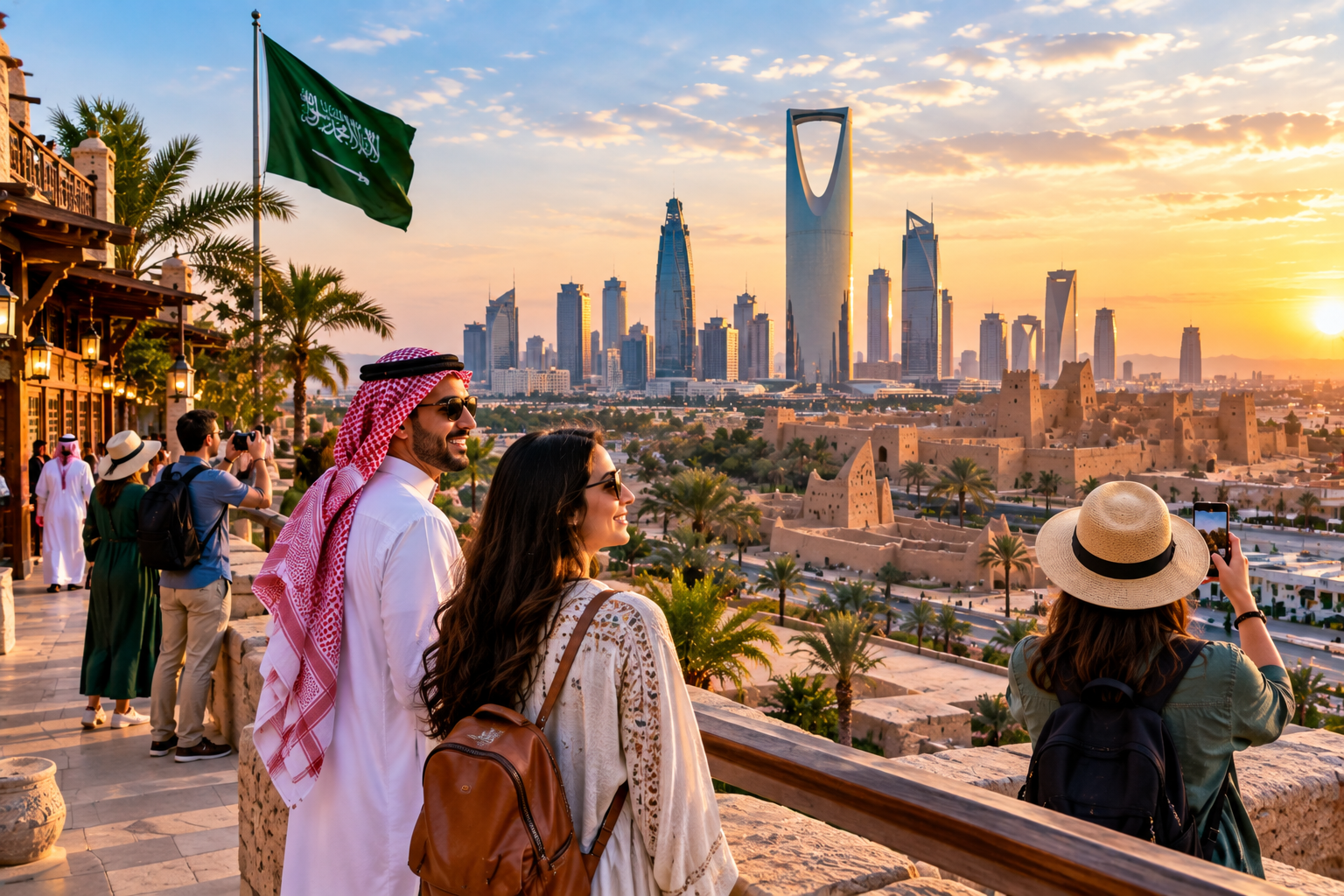
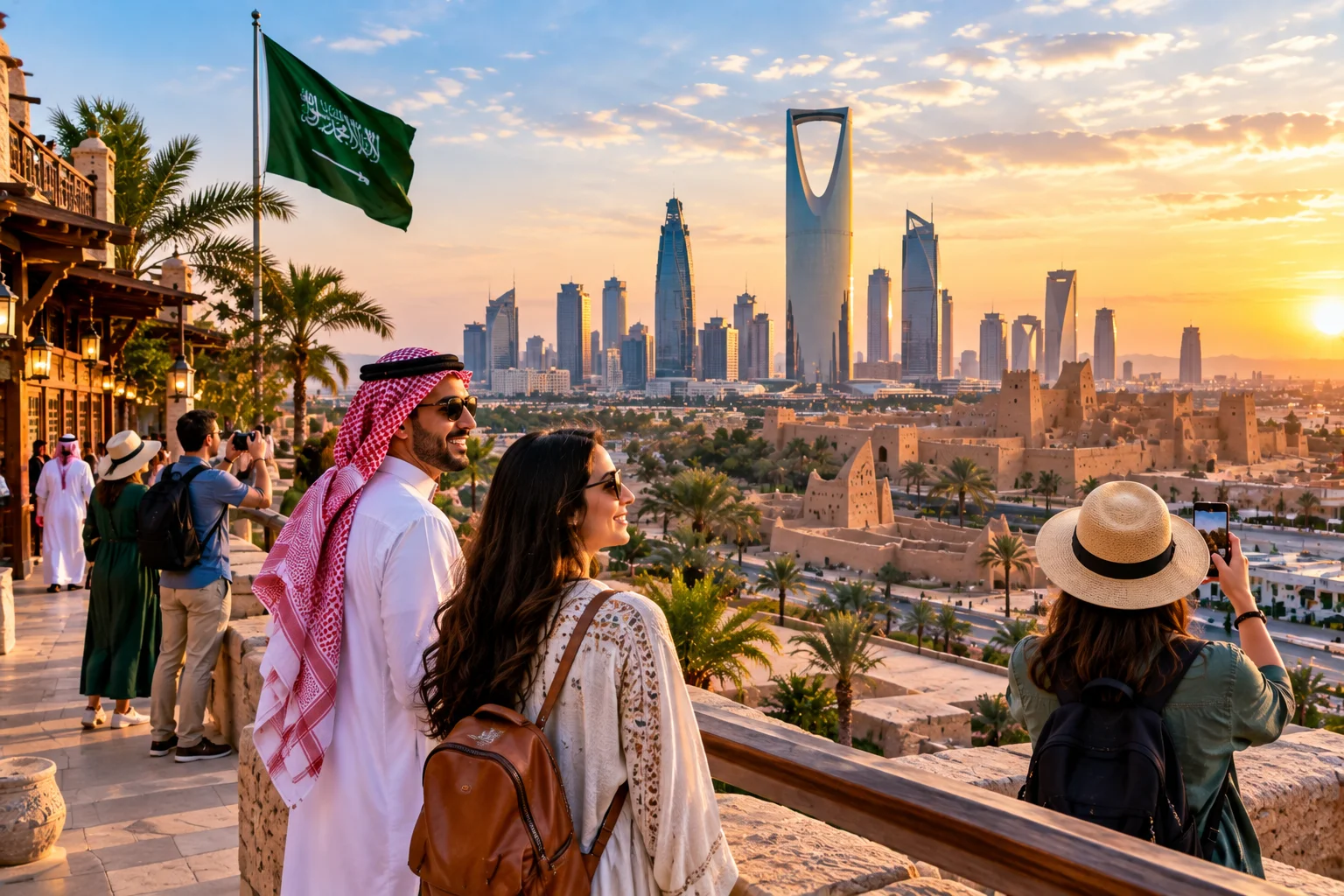
Saudi Arabia Welcomes India, China, United Kingdom, USA and European Travelers as Tourism Surge Stuns the World with 102% International Visitor Growth, Red Sea Luxury Boom and Vision 2030 Transformation Powered by Saudia, flynas and Riyadh Air
The global tourism map is undergoing a seismic realignment, and at the epicenter of this historic evolution stands the Kingdom of Saudi Arabia. Once known predominantly as the custodian of the two holy cities and a destination centered on religious pilgrimage, Saudi Arabia has rapidly emerged as one of the most dynamic, high-yielding, and closely watched travel destinations on Earth. Driven by the bold framework of Vision 2030—spearheaded by Crown Prince Mohammed bin Salman—the Kingdom has shattered international expectations by recording an unprecedented 102% surge in international visitor arrivals compared to pre-pandemic benchmarks.
International travelers from primary outbound markets—including India, China, the United Kingdom, the United States, and across the European Union—are flocking to Saudi Arabia in record numbers. From the pristine turquoise waters and pristine coral reefs of the Red Sea destination to the ancient, UNESCO-listed sandstone valleys of AlUla, the historic paved lanes of Jeddah’s Al-Balad, and the futuristic skyline of Riyadh, the Kingdom offers an unmatched blend of untouched heritage, regenerative luxury, and transformative entertainment.
Powering this travel phenomenon is a multi-billion-dollar aviation and transit overhaul. Flag carrier Saudia, fast-expanding low-cost airline flynas, and the highly anticipated launch of premium carrier Riyadh Air are expanding air corridors across six continents. Combined with revolutionary e-visa policies, “one-stop package visas,” and massive investments in regenerative luxury giga-projects, Saudi Arabia has moved from a destination opening its doors to a global tourism superpower.
1. Executive Overview: The Numbers Behind the 102% Tourism Boom
Saudi Arabia’s tourism trajectory is not merely a post-pandemic recovery; it is a structural revolution. When Vision 2030 was launched, the Kingdom set an ambitious target to welcome 100 million annual visitors by the decade’s end. That milestone was officially reached and surpassed seven years ahead of schedule. In response, the Ministry of Tourism officially raised its ambition, now targeting 150 million total annual visitors by 2030.
Core Tourism Indicators at a Glance
- 102% Growth in International Visitor Arrivals: According to international tourism monitors and official statistics, Saudi Arabia ranked first among G20 nations for international tourist arrival growth.
- SR250+ Billion ($67+ Billion USD) Visitor Spend: Total expenditure by domestic and international tourists has crossed historic thresholds, contributing over 7% to non-oil GDP.
- Economic Diversification Engine: Tourism is projected to account for 10% of total national GDP by 2030, creating over 1.6 million direct and indirect jobs for Saudi nationals.
- Record Growth in Primary Markets: Rapid expansions in direct flights have triggered surges in visitor arrivals from India (+66%), Greater China (+91% flight capacity increase), the UK, USA, and Western Europe.
2. Statistical Analysis: Saudi Arabia’s Tourism Metrics
The data below illustrates the shift in Saudi Arabia’s inbound travel sector, highlighting the expansion across visitor segments, source regions, and aviation connectivity.
3. Source Market Breakdown: Unlocking Global Travel Corridors
Saudi Arabia’s 102% international visitor growth is anchored in a well-executed strategy targeting key long-haul and regional source markets. By tailoring visa rules, cultural marketing, and air routes, the Kingdom has established robust connections with major outbound travel hubs.
India: The Rapidly Growing Outbound Partner
India has emerged as one of Saudi Arabia’s fastest-growing source markets for leisure, business, and MICE (Meetings, Incentives, Conferences, and Exhibitions) tourism.
To streamline access for Indian travelers, Saudi Arabia launched a One-Stop Package Visa pilot program. This service allows travelers to book flights, accommodations, tourist visas, and curated experiences in a single digital transaction. Coupled with direct flights from major Indian hubs like Delhi, Mumbai, Bengaluru, and Hyderabad via Saudia, flynas, and IndiGo, transit times have dropped significantly.
China: “China-Ready” Infrastructure & Approved Destination Status
The relationship between China and Saudi Arabia reached a milestone when the Kingdom received official Approved Destination Status (ADS) from the Chinese government. This designation allows Saudi Arabia to market group travel directly within mainland China and host organized tour groups.
- Airlift Expansion: Direct flight capacity between Greater China and Saudi Arabia surged by 91%, connecting Beijing, Shanghai, Guangzhou, and Shenzhen to Riyadh and Jeddah.
- Tailored Visitor Services: Airports, hotels, and major heritage sites across AlUla and Riyadh have rolled out Mandarin-language signage, Chinese payment integration (UnionPay and Alipay), and specialized culinary offerings.
- Projected Leisure Spend: According to industry forecasts, leisure spending by Chinese travelers in the Middle East is projected to increase by 130% through 2030, with Saudi Arabia capturing a leading share.
United Kingdom, USA, and Western Europe: High-Yield Culture & Adventure
Travelers from North America and Western Europe are increasingly drawn to Saudi Arabia’s blend of ancient history, modern architecture, and pristine environments.
The introduction of instant 480-minute E-Visas and Visa-on-Arrival eligibility for holders of US, UK, or Schengen visas has made spontaneous travel straightforward. European travelers are flocking to AlUla’s Hegra (Saudi Arabia’s first UNESCO World Heritage Site), hiking in the cool green highlands of Aseer, and booking high-end diving trips along the pristine reefs of the Red Sea coast.
4. The Red Sea Luxury Boom: World-Class Regenerative Tourism
At the center of Saudi Arabia’s luxury tourism strategy is Red Sea Global, an ambitious giga-project set along the Kingdom’s western coastline. Spanning over 28,000 square kilometers, an archipelago of more than 90 untouched islands, dormant volcanoes, and desert dunes, the Red Sea destination is establishing new standards for eco-conscious luxury.
Key Highlights of the Red Sea Destination
- Regenerative Environmental Design: The entire development is powered by 100% off-grid solar energy and features the world’s largest battery storage installation. The project aims to achieve a 30% net conservation benefit by 2040 by expanding mangrove habitats, protecting coral nurseries, and enforcing strict visitor caps.
- Premier Hospitality Brands: Ultra-luxury properties—including The St. Regis Red Sea Resort, Six Senses Southern Dunes, and Nujuma, a Ritz-Carlton Reserve—are fully operational, offering overwater villas, private desert sanctuaries, and Michelin-caliber dining.
- Red Sea International Airport (RSI): Equipped with a futuristic terminal design inspired by the surrounding desert landscape, RSI is receiving domestic and direct international flights, bringing luxury travelers within 30 minutes of their island resorts.
5. Landmark Destinations: From AlUla to Diriyah
Beyond the coastal resorts, Saudi Arabia offers a varied cultural and geographic landscape. The Kingdom’s destination strategy balances ancient preservation with modern urban entertainment.
AlUla: Living Museum of Civilization
Located in northwestern Saudi Arabia, AlUla stands as a global beacon for heritage and eco-luxury travel. Home to Hegra, visitors can explore remarkably preserved Nabataean tomb facades carved directly into sandstone cliffs.
AlUla features iconic venues like Maraya—the world’s largest mirrored building, hosting international performing artists—alongside wellness retreats nestled within ancient date palm oases and dramatic rock formations.
Diriyah: The City of Earth
Situated on the outskirts of Riyadh, Diriyah is a $63 billion cultural megaproject centered around the UNESCO World Heritage site of At-Turaif—the ancestral home of the House of Saud. Reconstructed using traditional Najdi mud-brick architecture, Diriyah offers fine dining at Bujairi Terrace, boutique hotels, and cultural museums celebrating Arabian history.
Historic Jeddah (Al-Balad)
On the Red Sea coast, Al-Balad features narrow alleys, multi-story coral-stone merchant houses, and intricate wooden rawasheen balconies. Restored under direct royal oversight, the district now houses boutique heritage hotels, art galleries, atmospheric cafes, and the newly opened Red Sea Museum.
6. The Tri-Carrier Aviation Strategy: Saudia, flynas, and Riyadh Air
A primary pillar of Saudi Arabia’s 102% tourist surge is a coordinated, multi-carrier aviation strategy designed to make the Kingdom one of the most accessible nations globally.
1. Saudia: Operational Overhaul and Fleet Expansion
As the national flag carrier, Saudia has undergone a extensive brand and operational refresh. Expanding its direct routes to Europe, North America, and East Asia, Saudia focuses heavily on connecting long-haul markets with Jeddah’s King Abdulaziz International Airport (JED) and regional hubs like AlUla and Medina.
2. flynas: Regional Low-Cost Leadership
The Middle East’s leading low-cost carrier, flynas, plays a vital role in democratizing travel across the region. With ambitious orders for over 120 Airbus A320neo family aircraft, flynas continues opening new point-to-point routes linking secondary European, Central Asian, and Indian cities directly to Saudi Arabia.
3. Riyadh Air: The Digital-First Mega Carrier
The most anticipated arrival in global aviation is Riyadh Air, launched by the Public Investment Fund (PIF). Operating out of King Salman International Airport in Riyadh—set to become one of the world’s largest airports—Riyadh Air aims to connect the Saudi capital to over 100 global cities. Built as a digitally native, ultra-premium carrier, Riyadh Air is engineered to capture high-yield long-haul transit and point-to-point luxury travel.
7. Strategic Travel Advice: Navigating Saudi Arabia
For international travelers planning an inaugural trip to Saudi Arabia, dynamic itineraries combining cultural heritage, urban exploration, and coastal relaxation yield the richest experiences.
Essential Insider Recommendations
- Leverage the 96-Hour Stopover Visa: Travelers flying Saudia or flynas can access a free 96-hour transit visa that includes a complimentary one-night hotel stay, perfect for a short city break in Jeddah or Riyadh.
- Respect Cultural Nuances: While Saudi Arabia has modernized rapidly—allowing women to travel independently without abayas or head coverings—modest dress covering shoulders and knees is recommended in traditional public spaces and religious sites.
- Plan Around Seasonal Events: The ideal time to visit is during the cooler months from October to April. Key events during this period include Riyadh Season, Winter at Tantora in AlUla, and the Red Sea International Film Festival in Jeddah.
- Use Integrated Rail Transit: High-speed rail networks like the Haramain High-Speed Railway seamlessly connect Jeddah, Mecca, Medina, and King Abdullah Economic City at speeds of up to 300 km/h.
8. Summary: Saudi Arabia’s Leadership in Global Tourism
Saudi Arabia’s 102% international visitor growth represents one of the most significant destination transformations in modern travel history. By combining visionary government strategy, multi-billion-dollar infrastructure investments, sustainable giga-projects, and an expanding aviation network, the Kingdom has established itself as an essential stop on the international travel circuit.
As projects like NEOM, Trojena, Qiddiya, and the Red Sea destination continue to mature, Saudi Arabia’s goal of welcoming 150 million visitors by 2030 is well within reach—reshaping global travel patterns for decades to come.
“When I first read about this update, it instantly reminded me of the absolute headache of wrestling with foreign transport apps on past trips—and honestly, this feature is a total game-changer.”
Drop a comment and tell me about your most unforgettable travel adventure!
About the Author: Zoey
Zoey is a passionate travel writer and researcher at VentureWibe, dedicated to bringing readers the latest global travel news, inspiring destination guides, and tourism trends from around the world. With a keen eye for uncovering unique travel stories, Zoey helps explorers stay informed and prepared for their next adventures.
- Expertise: Global Tourism, Destination Research, and Travel Insights

Discover more from venture
Subscribe to get the latest posts sent to your email.


Good information, Zoey!
hey