
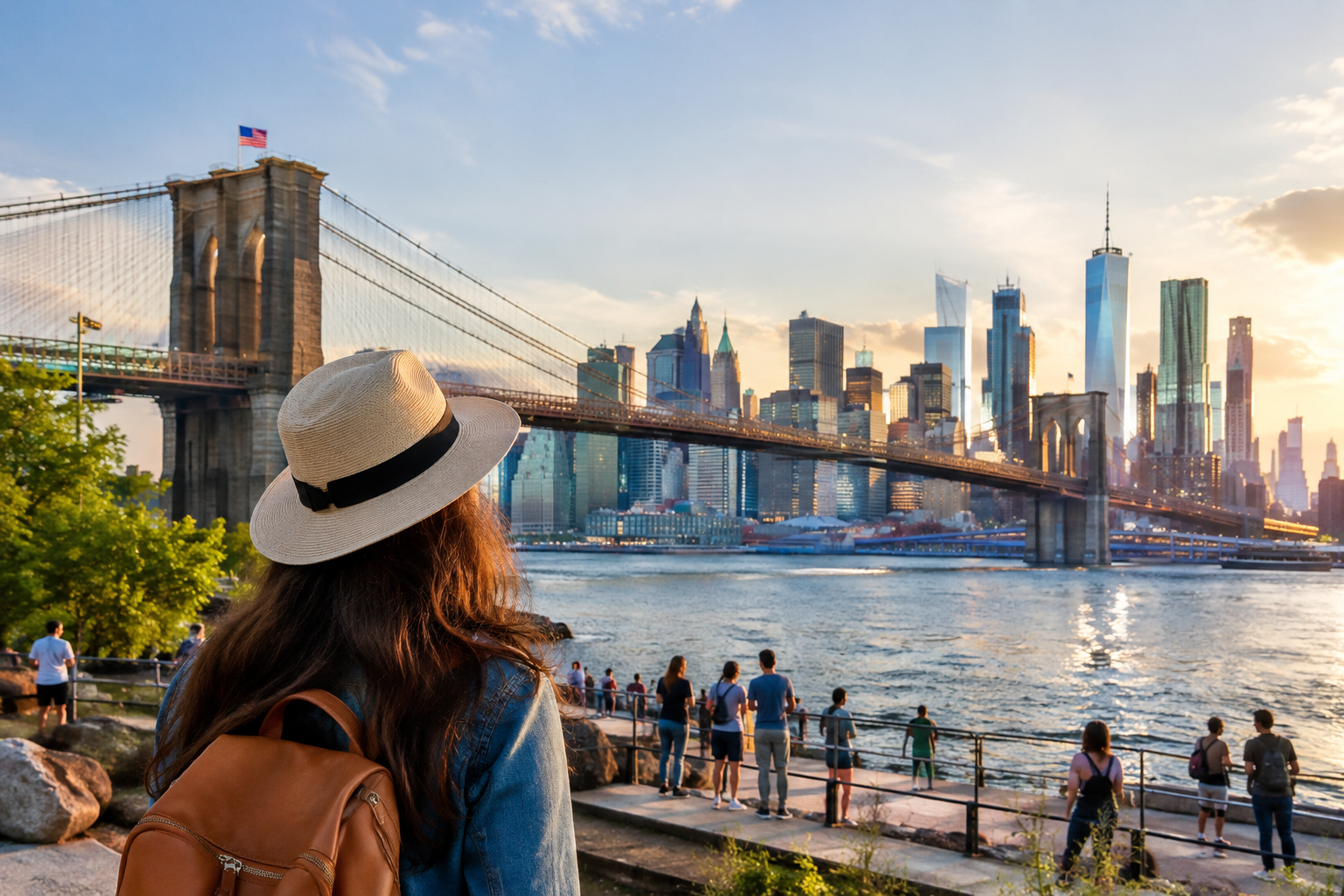

‘Cut the Nonsense’: Trump’s Tourism Envoy Challenges Travel Boycotts and Raises Questions About America’s Tourism Future
‘Cut the Nonsense’: Trump’s Tourism Envoy Challenges Travel Boycotts and Raises Questions About America’s Tourism Future
Introduction: Why the Debate Over Travel Boycotts Matters
Travel has always been about more than booking a flight, checking into a hotel, or visiting a famous landmark. It is about people meeting different cultures, discovering new places, supporting local businesses, and building connections across borders. But in a world where politics increasingly shapes public opinion, even the decision to take a holiday can become a statement.
The latest debate surrounding the United States highlights this growing connection between politics and tourism. A headline from Travel Weekly Asia, “‘Cut the nonsense’: Trump’s tourism envoy hits out at travel boycotts,” brings attention to a disagreement over whether travellers should reconsider visiting America because of political concerns.
The strong words used by President Donald Trump’s tourism envoy reflect a wider argument about the role of politics in international travel. Supporters of continued tourism often argue that visitors should not allow political disagreements to prevent them from exploring a country. Critics, however, believe that travellers have every right to choose destinations that reflect their personal values, concerns, and expectations about safety and hospitality.
Both sides raise questions that matter to airlines, hotels, travel agents, destination marketing organisations, and millions of people whose jobs depend on tourism.
For the United States, the issue is particularly important. The country is home to globally recognised attractions, including New York City, the Grand Canyon, Yellowstone National Park, Las Vegas, and the beaches of Florida and California. Its entertainment industry, national parks, shopping destinations, sporting events, and cultural experiences have long attracted visitors from around the world.
Yet having famous attractions is not always enough to guarantee that international visitors will feel comfortable travelling to a destination. Travellers also consider border procedures, visa requirements, costs, personal safety, public attitudes, and the overall experience they expect to receive.
The discussion about travel boycotts therefore goes beyond one political statement. It raises a larger question for the tourism industry: how can a country maintain international confidence when its political environment becomes a source of disagreement?
The answer will depend on more than speeches or slogans. It will depend on how visitors are treated, how clearly travel information is communicated, how effectively tourism businesses respond to concerns, and whether international travellers continue to feel welcome.
This article examines the issues raised by the reported remarks, their possible effects on the tourism industry, and the practical lessons destinations can learn from the debate. It distinguishes political arguments from established tourism facts and does not treat the existence or scale of any boycott as settled without supporting evidence.
What Is Behind the Debate Over Travel Boycotts?
Travel boycotts occur when individuals, groups, or organisations deliberately avoid visiting a country or destination because of political decisions, government policies, human rights concerns, security issues, or disagreements with its leadership.
Unlike an ordinary decision to visit somewhere else, a boycott is usually intended to communicate a message. People who support it may want to express disagreement, encourage policy changes, or demonstrate that political decisions can have economic consequences.
Tourism boycotts are not a new phenomenon. Countries and destinations have faced travel restrictions, public campaigns, and declining visitor interest for many different reasons throughout modern history. However, social media has made it easier for these discussions to spread internationally and influence conversations among potential travellers.
A single video, political announcement, or personal travel experience can quickly become part of a much larger debate. Online discussions can encourage some people to reconsider their holiday plans, while others may challenge the criticism and continue travelling as normal.
This creates a complicated situation for tourism businesses. A hotel owner may have no connection to a government decision, yet their business could still be affected if visitors decide to stay away. A restaurant may depend on international guests who are concerned about the political atmosphere. Tour operators, guides, airport workers, and small businesses can also feel the consequences of changes in visitor demand.
At the same time, travellers are not simply customers who must ignore everything happening around them. They make decisions according to their budgets, personal beliefs, travel documents, family needs, and sense of comfort.
The disagreement highlighted by the Travel Weekly Asia headline reflects these competing perspectives.
The tourism envoy’s reported call to “cut the nonsense” expresses a dismissive view of travel boycotts. It suggests that political disagreement should not become a reason to discourage people from visiting the United States. Those who support this position may argue that tourism creates jobs, encourages cultural exchange, and allows visitors to experience a country beyond its political headlines.
Opponents of that view may respond that travel is a personal choice and that nobody should be criticised for selecting a destination according to their values or concerns.
Ultimately, understanding the debate requires recognising that tourism is both an economic activity and a deeply personal experience.
Why the United States Has So Much at Stake
The United States has a broad tourism offering that appeals to different kinds of international visitors. Some come for entertainment and shopping, others for business meetings, education, national parks, family visits, sporting events, or major cultural attractions.
For many travellers, a trip to America is a long-planned experience. Families may spend months saving for a holiday in Florida. Couples may dream of exploring New York. Nature lovers may plan road trips through the national parks of the American West. Business travellers may combine conferences with visits to nearby attractions.
These trips involve a large network of services. International airlines carry passengers across oceans, airports process arrivals, hotels provide accommodation, restaurants serve meals, and transport companies move visitors between destinations.
Tourism also supports businesses that visitors may never notice directly. Food suppliers, cleaning companies, maintenance workers, local farms, event organisers, and technology providers all contribute to the visitor economy.
When international travel demand increases, these businesses may benefit from additional spending. When demand weakens, the effects can spread well beyond hotels and airlines.
This is why public debates about the attractiveness of the United States matter to the travel industry.
However, it is important not to assume that every political controversy automatically causes a decline in visitor numbers. Tourism demand is influenced by several factors, including exchange rates, airfares, hotel prices, economic conditions, flight availability, seasonal travel patterns, and the strength of competing destinations.
Some travellers may reconsider a visit because of politics, while others may continue with their plans. Some may postpone a holiday rather than cancel it. Others may choose a different American city instead of abandoning the country altogether.
The actual effect can only be understood by examining reliable visitor-arrival figures, spending data, airline bookings, cancellations, and surveys of traveller intentions.
For tourism businesses, the central challenge is to understand what potential visitors are thinking without making assumptions about every customer.
Nick Adams’ Message at the World Travel & Tourism Council Summit
The debate became more visible when Nick Adams, the US presidential envoy for American tourism, exceptionalism and values, addressed the World Travel & Tourism Council’s annual Global Summit in Valletta, Malta, in October 2026.
According to Travel Weekly Asia, Adams urged governments that were encouraging travel boycotts of the United States to stop mixing tourism with political disagreements. His message was direct: “Cut the nonsense and start doing business.”
Travel Weekly Asia
+1
Adams argued that disagreements over trade and other international matters should not automatically lead to campaigns against a country’s tourism sector. In his view, tourism workers and businesses should not suffer because governments disagree over political or economic policies.
His comments reflect a familiar argument in the travel industry: tourism can continue to build relationships between ordinary people even when relations between governments become difficult.
Consider a visitor arriving in New York for the first time. That person may spend money at a family-owned restaurant, take a sightseeing tour, visit a museum, and speak with local residents. The money spent during that trip helps support people whose daily work has little to do with international negotiations.
Adams used this wider economic impact to support his position, drawing attention to workers such as taxi drivers, restaurant employees, bar owners, and souvenir sellers. He presented boycotts as a threat to livelihoods rather than an effective way to conduct diplomacy.
Travel Weekly Asia
+1
His argument also included a competitive ambition. Adams said the United States intended to remain the world’s leading travel economy and emphasised building, investment, and hospitality as ways to achieve that goal.
Travel Weekly Asia
+1
However, the discussion at the summit also revealed that his position is not universally shared. Greg O’Hara, founder and senior managing director of travel investment firm Certares, reportedly indicated that Canadian Prime Minister Mark Carney would have disagreed with Adams’ interpretation of the issue.
Travel Weekly Asia
+1
That disagreement matters because it demonstrates that the tourism boycott debate is not simply about whether holidays are enjoyable. It is also about how governments, travellers, and businesses understand the relationship between political decisions and economic activity.
For tourism leaders, the challenge is to recognise these competing views while finding practical ways to protect jobs, encourage responsible travel, and maintain confidence in international destinations.
Why Canada Has Become Central to the Discussion
Canada is especially important to the American tourism market because of its geographical proximity, strong transport links, and long history of cross-border travel.
Millions of people have traditionally travelled between the two countries for holidays, shopping, family visits, sporting events, business meetings, and weekend breaks. Many trips are relatively easy to arrange because travellers can choose from road, rail, and air connections, depending on their location and destination.
For businesses in border communities, Canadian visitors can be a regular source of income. Hotels, restaurants, shopping centres, ski resorts, entertainment venues, and local attractions may all benefit from this movement.
However, the relationship has faced pressure amid disagreements over President Trump’s tariff policies and his rhetoric about Canada potentially becoming the 51st US state. According to the October 2026 report, some Canadian politicians have encouraged people to avoid visiting the United States in response to these issues.
Travel Weekly Asia
+1
These developments illustrate how political tension can influence everyday travel decisions.
A Canadian family considering a holiday in Florida might decide to spend its money elsewhere. A couple planning a shopping weekend in an American city might choose a Canadian destination instead. Someone who regularly crosses the border for entertainment or dining could decide to postpone the next visit.
Not every traveller will make the same choice. Some people will continue visiting the United States because they have family there, own property, attend business events, or simply want to experience its attractions. Others may feel strongly enough about political issues to change their plans.
The important point is that traveller behaviour can change without a formal government travel ban.
An individual may cancel a holiday after reading news coverage. A family may decide that another destination better suits its expectations. A company may reconsider where it holds a conference. Over time, thousands of separate decisions can affect bookings and spending.
Nevertheless, political disagreement should not be treated as the only explanation for every change in visitor numbers. Economic conditions, transport costs, currency movements, and competing destinations can also influence Canadian travel to the United States.
A careful analysis therefore needs to consider both political sentiment and the wider travel market.
What the Numbers Tell Us About US Inbound Tourism
The figures reported by the travel industry provide important context for the discussion.
According to the US Travel Association’s Spring 2026 forecast, international visitor arrivals to the United States fell by 5.5% in 2025, to approximately 68.3 million. The association attributed much of the decline to reduced travel from Canada. It forecast a recovery in international visits during 2026, although the return to 2019 visitor levels was not expected until 2029.
U.S. Travel Association
+1
These figures show why the tourism industry is paying close attention to international perceptions of the United States.
However, the figures also require careful interpretation. A fall in international arrivals does not prove that every traveller who stayed away was participating in a boycott. It does not establish that one political decision caused the entire decline. Instead, it identifies a market trend that businesses and policymakers need to investigate.
The same forecast projected that international visitor spending would rise to approximately US$178 billion in 2026, an increase of 1.6% in inflation-adjusted terms. It also expected international visits to increase by 3.4%, reaching around 70.6 million. These were forecasts, not confirmed final results for the year.
U.S. Travel Association
+1
This distinction between a forecast and an actual result is important for readers and tourism businesses alike.
A projected recovery indicates that growth is possible, but it does not guarantee that every destination, hotel, or airline will benefit equally. Changes in visitor spending, trip duration, and destination choice can produce very different results across the industry.
For example, a city that attracts international business travellers may experience different demand patterns from a beach destination that depends heavily on Canadian families. Similarly, a major attraction may continue to receive strong domestic visitor numbers even if international arrivals weaken.
The broader lesson is that tourism performance needs to be measured with reliable data rather than political statements alone.
The Economic Cost of a Tourism Boycott
Tourism is one of those industries whose economic importance becomes especially clear when visitor numbers change.
An international traveller does not usually spend money in just one place. A typical trip may involve flights, airport transport, accommodation, food, attractions, shopping, local tours, and travel insurance.
Each payment can support a different business, and those businesses may then spend part of their income on employees, suppliers, rent, maintenance, and other services.
When visitors stay away, the impact can therefore extend across a local economy.
The US Travel Association’s national economic impact data for 2025 estimated that travel generated US$1.4 trillion in spending and US$3 trillion in total economic output, supporting approximately 15 million American workers. These figures cover the broader travel economy, not just international tourism.
impact.ustravel.org
+1
The distinction is important. Domestic travel remains a major part of the American market, so a decline in international visits does not mean the entire tourism industry will fall at the same rate.
Nevertheless, international visitors are particularly valuable to many businesses because they often spend money across several categories during a longer trip.
The US Travel Association reported that international visitors spent approximately US$176 billion in the United States in 2025 and supported nearly one million jobs. Its figures also put average spending by overseas visitors at about US$4,000 per trip, although individual spending varies considerably by country, purpose of travel, and length of stay.
U.S. Travel Association
+1
These numbers help explain why the tourism boycott debate has attracted attention from industry leaders.
Imagine a small hotel that relies on guests from Canada during the summer season. If fewer rooms are booked, the owner may have less money available to pay staff, improve the property, or purchase supplies from local businesses.
A restaurant that usually serves visitors before and after sightseeing tours could experience fewer customers. A local guide might receive fewer bookings. A taxi driver could complete fewer airport journeys.
None of these businesses needs to be involved in international politics to feel its economic consequences.
At the same time, the argument should not be reduced to the idea that every boycott necessarily destroys jobs or that every traveller has a duty to visit a country. Businesses face many sources of uncertainty, and individual decisions to travel elsewhere do not automatically produce measurable economic harm.
The scale of any effect depends on how many people change their plans, how much they would otherwise have spent, whether other visitors replace them, and how quickly businesses can adapt.
A boycott may have a small effect in one market but a more visible effect in another. Its impact may also vary by season, city, and type of visitor.
For tourism planners, the most useful approach is to identify where demand is changing and respond before temporary uncertainty becomes a longer-term business problem.
Can Tourism Really Be Separated From Politics?
One of the central questions raised by Adams’ remarks is whether tourism can realistically be kept separate from politics.
There is a strong case for maintaining connections between people even when governments disagree. Travellers can learn about another society through food, music, museums, nature, local businesses, and conversations with residents. These experiences may challenge stereotypes and create a better understanding of other cultures.
Tourism can also support relationships that continue beyond a particular political disagreement. Family visits, educational exchanges, international conferences, and cultural festivals bring people together for reasons that extend beyond government policy.
From this perspective, boycotts can appear counterproductive because they may reduce opportunities for ordinary people to meet and understand one another.
But the opposite argument also deserves consideration.
Travel is a choice, not an obligation. People may decide that a destination’s political climate, entry procedures, public policies, or treatment of particular groups makes them uncomfortable. Others may want to express opposition through peaceful economic choices.
For these travellers, the decision not to visit is itself a form of personal expression.
There is also a practical distinction between a government’s diplomatic strategy and an individual’s holiday plans. A government may encourage citizens to avoid a destination as part of a wider political campaign, while an individual may simply choose another country because it offers better value or a more comfortable experience.
These decisions may look similar in visitor statistics, but their motivations can be very different.
Tourism authorities therefore need to avoid assuming that all declining demand is political or that all travellers share the same concerns.
The most productive response is to listen, examine evidence, and identify which aspects of the travel experience can be improved.
If visitors are worried about costs, destinations can communicate prices more clearly. If they are concerned about entry procedures, authorities can provide accurate and accessible information. If they feel unwelcome, tourism businesses can demonstrate through their service that international guests are valued.
Political arguments may not be resolved by tourism officials, but many practical barriers to travel can be addressed.
That is where the industry has an opportunity to make a real difference.
The Importance of Making International Visitors Feel Welcome
A destination’s reputation is built through more than advertising campaigns. It develops through the experiences people have before, during, and after their journeys.
A traveller may first discover a destination through a photograph or travel video. Later, they may compare hotel prices, check visa requirements, read reviews, and ask friends about their experiences. After arriving, they judge the destination through everything from airport procedures to the friendliness of local staff.
These experiences can influence whether they recommend the country to others or return for another holiday.
For the United States, maintaining a welcoming image is especially important because it competes with many destinations offering beaches, cities, cultural attractions, entertainment, and outdoor adventures.
A visitor who is uncertain about travelling to America may compare it with Canada, Japan, Australia, the United Kingdom, or European destinations. Their decision will depend on more than political news. They will also consider convenience, safety, affordability, available activities, and the quality of the overall experience.
This means that tourism promotion must be supported by practical improvements.
1. Clear and Reliable Travel Information
International visitors want to know what to expect before they leave home.
They need reliable information about entry requirements, documentation, customs procedures, local laws, transport, accommodation, and any additional costs that could affect their trip.
Confusing information can make travellers hesitate, particularly when they are visiting a country for the first time.
Tourism authorities and travel companies can help by providing clear guidance through official websites, travel agents, airlines, and destination information services. Information should be regularly updated and written in language that international visitors can understand.
For a family planning a holiday, knowing what documents are required and how much the trip is likely to cost can make the difference between booking with confidence and choosing another destination.
2. A Better Arrival Experience
The visitor experience often begins at the airport, long before a traveller reaches a hotel or tourist attraction.
Long queues, unclear directions, unexpected delays, and confusing transport arrangements can create frustration after an exhausting international flight.
Although border and security procedures must meet legal and safety requirements, authorities can still work to make the process easier to understand and navigate.
Airports, airlines, immigration agencies, and tourism organisations all have roles to play in improving communication and helping visitors find the services they need.
A smooth arrival cannot resolve every concern about a destination, but it gives visitors a positive first impression.
3. Hospitality That Goes Beyond Marketing
A country can spend millions promoting its attractions, but the everyday experiences of visitors remain important.
A hotel receptionist who offers helpful directions, a restaurant worker who patiently explains a menu, or a tour guide who shares local stories can leave a lasting impression.
These interactions may seem small, yet they form a large part of how people remember a destination.
International visitors should be treated with respect regardless of their nationality, language, background, or political opinions. Tourism businesses can build trust by training staff to communicate clearly, respond professionally to complaints, and provide consistent service.
This is particularly important during periods of political tension, when some visitors may already be uncertain about how they will be received.
A welcoming attitude cannot be manufactured through slogans alone. It must be visible in everyday service.
What Travel Companies Can Learn From This Debate
The disagreement over travel boycotts offers practical lessons for airlines, hotels, tour operators, travel advisers, and destination management companies.
Businesses cannot control every political development, but they can prepare for changes in customer sentiment.
The first step is to monitor demand carefully. A travel company that notices fewer bookings from one country should investigate possible explanations before making major decisions. The cause might be political concerns, higher airfares, changing exchange rates, visa delays, or a competing destination offering a better package.
Understanding the reason for a decline helps businesses choose a suitable response.
For example, a hotel that sees weaker demand from one international market might work with travel agents to promote different experiences, introduce flexible booking options, or reach visitors from other countries. A tour operator could develop packages for domestic travellers during periods when international demand is uncertain.
Airlines and travel companies may also benefit from maintaining a diverse customer base rather than relying too heavily on a single market.
However, diversification takes time and investment. A business cannot always replace a large number of international customers overnight, particularly when those customers normally travel during a specific season.
The goal is not to abandon important markets whenever difficulties appear. It is to build enough flexibility to withstand changes without damaging long-term relationships.
Protecting Trust During a Political Dispute
Communication is another important lesson.
When a political controversy becomes part of the travel conversation, companies should avoid making unsupported promises or dismissing legitimate customer concerns.
If travellers ask whether they should visit a destination, travel advisers can provide relevant official information, explain booking conditions, and help customers understand their available options.
They should not pressure people into travelling simply to support a destination’s economy. Nor should they assume that every person who changes plans is participating in a political campaign.
A professional response recognises that different customers have different priorities.
Some may want reassurance about practical travel arrangements. Others may need flexibility because they are uncertain about their plans. Some may decide to travel as scheduled, while others may choose a different destination.
Respecting those decisions can help protect customer relationships, even when a booking does not proceed.
In the long run, trust is a valuable business asset. Customers are more likely to return to companies that provide honest information and treat their concerns seriously.
Why Destination Marketing Needs More Than Strong Slogans
Nick Adams’ remarks emphasised the ambition to keep the United States at the top of the global travel economy. The ambition is understandable in a competitive international market, but maintaining a leading position requires more than a strong public message.
Destinations must offer visitors a convincing reason to come.
For the United States, that reason could include its extraordinary variety of experiences. Visitors can explore the cultural attractions of New York, enjoy the music and food of New Orleans, discover national parks in the western states, experience entertainment in Los Angeles, or attend major sporting events in cities across the country.
These experiences provide a strong foundation for tourism promotion.
However, travellers also need to feel that the journey is worth the cost, time, and effort. Attractive destinations can lose potential visitors if flights are expensive, entry procedures are difficult, accommodation is unaffordable, or travel information is unclear.
The US Travel Association has identified visa delays, transport infrastructure, and other barriers as challenges to international visitor growth. Its published analysis argues that improving the travel experience could help the country strengthen its international competitiveness.
U.S. Travel Association
+1
This highlights an important point: tourism competitiveness is shaped by both the destination itself and the process of getting there.
A country may possess famous attractions, excellent hotels, and world-class entertainment, but visitors still need a manageable journey from the moment they begin planning until they return home.
For tourism marketers, the strongest message is therefore one supported by action.
Advertising can introduce a destination. Good service, clear information, reliable transport, and positive visitor experiences can help turn that introduction into a booking and, eventually, a repeat visit.
The 2026 FIFA World Cup Creates a Major Opportunity
The United States has an important opportunity to strengthen its international tourism profile through major sporting events.
The 2026 FIFA World Cup, hosted across the United States, Canada, and Mexico, brings global attention to North America and creates opportunities for visitors to combine football with sightseeing, food, shopping, and cultural experiences.
For the United States, the tournament offers a chance to welcome international fans who might not otherwise have planned a visit.
A supporter travelling to watch a match could spend several days exploring the host city. Another might visit multiple destinations, creating demand for hotels, restaurants, local transport, museums, and attractions.
The benefits can extend to smaller businesses that serve visitors before and after matches.
The US Travel Association has identified the World Cup and the 2028 Summer Olympics as important opportunities for future international travel growth. Its 2026 forecast also points to the role of major events in supporting the recovery of inbound tourism.
U.S. Travel Association
+1
Nevertheless, major events do not guarantee lasting tourism success.
Cities must prepare for visitor demand, provide clear transport information, coordinate accommodation capacity, manage crowds, and ensure that guests can move around safely and conveniently.
Prices also matter. If accommodation and transport become excessively expensive, some visitors may shorten their stays or decide not to attend.
The experience after the event is equally important. Visitors who enjoy their trip may return later or recommend the destination to friends and family. Those who face avoidable difficulties may share a very different story.
For the American tourism industry, the World Cup should therefore be viewed not simply as a sporting competition but as an opportunity to demonstrate the country’s hospitality and travel infrastructure to a global audience.
A successful event could help strengthen the country’s image. However, the lasting impact will depend on the quality of the visitor experience and the industry’s ability to convert temporary interest into future travel.
Could Travel Boycotts Change the Global Tourism Map?
International tourism is highly competitive. When travellers decide not to visit one destination, they may choose another country, stay closer to home, or postpone their journey.
This creates opportunities for competing destinations, although the benefits are not automatic.
For example, a traveller who decides against a US city break might consider a Canadian city, a European capital, or a destination in Asia. Another person might simply use the money for a shorter domestic holiday.
A competing destination can benefit when it offers the right combination of price, convenience, attractions, and visitor confidence. But it must still persuade travellers to book.
Tourism authorities around the world can learn from this situation without treating political tension as an opportunity to exploit another country’s difficulties.
Destinations that invest in efficient transport, straightforward visitor information, welcoming service, and attractive cultural experiences are better positioned to compete when travellers reconsider their plans.
The same principle applies to established tourism markets. A destination that assumes visitors will return automatically may overlook the importance of maintaining service quality and adapting to changing expectations.
Travellers have more choices than ever before. Online booking platforms allow them to compare destinations, accommodation, reviews, and travel costs in a short time.
This makes reputation especially important. A country may remain popular because of its attractions, but sustained success depends on how visitors perceive the complete experience.
For the United States, the challenge is not only to convince people that its destinations are worth seeing. It is also to ensure that potential visitors believe the journey will be convenient, enjoyable, and welcoming.
For other countries, the lesson is similar: international tourism is a competitive industry in which confidence can be as important as natural beauty or famous landmarks.
The Role of Social Media in Shaping Travel Decisions
Social media has changed the way people discover destinations and decide where to spend their money.
In the past, travellers often relied on guidebooks, travel agents, newspaper reports, and recommendations from friends. Today, they can watch videos from visitors who have recently arrived, read online reviews, and join discussions about destinations before making a booking.
This makes travel information more immediate, but it also creates challenges.
A positive travel video can encourage thousands of people to consider a destination. A negative experience can spread just as quickly, particularly when it touches on subjects that already attract public attention.
Political disagreements can become part of these discussions, influencing how people interpret a country’s image.
However, social media reactions should not automatically be treated as proof of actual travel behaviour. A large online discussion does not necessarily mean that a significant number of people have cancelled their holidays. Likewise, positive comments do not guarantee that bookings are increasing.
Tourism businesses need to distinguish between online attention and measurable changes in demand.
Useful indicators include booking patterns, cancellation rates, search interest, visitor arrivals, customer surveys, and spending data. Together, these can provide a clearer understanding of whether a debate is having a lasting effect.
There is also an opportunity for destinations to communicate more effectively online. Tourism organisations can provide practical information, highlight authentic local experiences, and respond to common questions without becoming defensive.
They should also avoid dismissing travellers’ concerns simply because those concerns are expressed on social media.
People increasingly expect destinations and travel companies to communicate honestly. A thoughtful response can help build confidence, while an aggressive or dismissive message may deepen existing disagreements.
The most effective tourism communication combines useful facts with genuine hospitality.
What Governments Can Do to Support Tourism
Governments play an important role in creating the conditions that allow tourism to grow.
They influence transport infrastructure, border procedures, visa policies, public safety, international relations, and the broader environment in which tourism businesses operate.
Although no government can guarantee that every international traveller will feel comfortable visiting its country, policymakers can take practical steps to reduce unnecessary barriers.
First, they can improve the travel process. Clearer visa information, efficient application systems, reliable transport, and better coordination between agencies can make travel easier to plan.
Second, they can maintain open communication with international markets. Tourism organisations should explain relevant changes in entry procedures and travel requirements in ways that are easy for visitors to understand.
Third, they can support small tourism businesses. Local hotels, restaurants, tour operators, and attractions may have fewer resources to manage sudden changes in demand. Training, business support, and access to market information can help them respond more effectively.
Fourth, they can encourage people-to-people connections. Cultural exchanges, educational visits, sporting events, and international conferences create opportunities for visitors to experience a country through direct contact with its residents.
Finally, governments can recognise that tourism and diplomacy are connected, even when policymakers want to keep them separate.
A political disagreement may influence how visitors perceive a destination. That perception can affect travel decisions, and those decisions can have economic consequences.
Acknowledging this relationship does not mean that governments must agree on every issue. It means understanding that public statements and policy choices can influence international confidence.
For tourism leaders, the goal should be to maintain constructive relationships, communicate clearly, and ensure that visitors receive a high standard of service.
Why the Human Side of Tourism Should Never Be Forgotten
Discussions about international tourism often focus on visitor numbers, revenue, rankings, and economic forecasts. These figures are important, but they do not tell the entire story.
Behind every hotel booking is a business trying to attract customers. Behind every restaurant bill is a worker earning a living. Behind every guided tour is someone sharing local knowledge and helping visitors understand a place.
Tourism supports people in cities, small towns, coastal communities, and rural areas. It provides employment opportunities for young people, supports family-owned businesses, and creates markets for local food, crafts, entertainment, and cultural activities.
This is the human argument behind Adams’ criticism of travel boycotts.
When visitors stay away, local workers may feel the impact even if they have no influence over the political decisions being criticised.
Yet the human side of tourism also includes the travellers themselves.
A holiday may be a family’s first opportunity to visit relatives overseas. A business trip may help someone develop a career. A student exchange can introduce a young person to a new culture. A journey to a national park may create memories that last a lifetime.
Travel has the ability to bring people together, but that value depends on visitors being able to make informed choices and feel comfortable during their journeys.
The industry should therefore avoid treating tourism as a simple argument between economic interests and political principles.
Both matter to different people in different ways.
A healthy tourism sector needs profitable businesses, responsible policies, respectful relationships, and travellers who feel that their decisions are understood.
When these elements work together, tourism can remain a valuable connection between countries even during difficult periods.
What Should Travellers Consider Before Changing Their Plans?
For people planning a trip to the United States, the debate over boycotts does not automatically mean that they should cancel or continue their journey.
The decision depends on individual circumstances, travel requirements, personal priorities, and the practical details of the trip.
Travellers can begin by checking official entry requirements and relevant travel advisories for their nationality. They should review passport and visa requirements, confirm their flight and accommodation arrangements, and understand the terms of their bookings.
It is also sensible to consider the overall cost of the trip, the activities planned, and whether any concerns can be addressed through better information or alternative arrangements.
People who are uncertain about travelling may want to review cancellation policies before making a decision. Those who have already booked non-refundable travel should understand the financial consequences of cancelling.
Most importantly, travellers should avoid relying entirely on dramatic headlines or unverified social media claims.
A political controversy may be relevant to a travel decision, but it does not necessarily describe the experience every visitor will have. Equally, an attractive tourism advertisement cannot answer every question a traveller may have about visiting a country.
Reliable information, personal judgement, and careful planning remain essential.
For travel advisers, the responsibility is to help customers understand their options without pressuring them toward a particular political position.
The Future of American Tourism: Challenges and Opportunities
The United States remains a major international destination with an enormous range of attractions, established tourism businesses, and extensive domestic travel demand.
However, its future international performance will depend on how effectively it addresses the challenges facing inbound tourism.
The US Travel Association’s Spring 2026 forecast projected that international visitor numbers would begin recovering in 2026 following the previous year’s decline. It also identified ongoing risks related to economic pressures, international perceptions, and barriers to entry.
U.S. Travel Association
+1
This creates a mixed picture rather than a simple story of either success or failure.
The United States has considerable strengths. Its cities, national parks, entertainment industry, sporting events, universities, and cultural attractions provide many reasons for international visitors to come.
At the same time, the country must compete for travellers who can choose among destinations worldwide. It must also recognise that international demand can respond to political developments, travel costs, administrative barriers, and changing customer expectations.
The debate over boycotts adds another challenge because it brings the relationship between politics and tourism into public discussion.
Adams’ message reflects the view that tourism should not be used as a weapon in disagreements over trade and international relations. His emphasis on jobs and business partnerships highlights the economic connections that tourism creates.
But the wider lesson is not simply that people should ignore politics when choosing where to travel.
It is that destinations need to understand why visitors make their decisions and respond to their concerns through practical improvements.
A country that wants to attract more international visitors must offer more than a famous name. It needs clear travel information, an efficient arrival experience, competitive prices, reliable services, and a genuine welcome.
These are the foundations that can help a destination remain attractive even when the international environment becomes uncertain.
Conclusion: Tourism Needs Trust, Not Just Strong Words
The controversy surrounding Trump’s tourism envoy and his criticism of travel boycotts highlights an important question for the global travel industry: can tourism continue to bring people together when politics pushes countries apart?
Nick Adams has argued that governments should stop using tourism as a tool in wider political disputes and focus on business, jobs, and international connections. His remarks at the World Travel & Tourism Council’s Global Summit have brought renewed attention to the economic consequences that changing visitor behaviour can create.
Travel Weekly Asia
+1
There is a powerful argument for protecting the people whose livelihoods depend on tourism. Hotel employees, taxi drivers, restaurant workers, guides, and small business owners should not be overlooked when international disagreements affect travel demand.
However, travellers also have the right to decide where they spend their money and what factors matter to them when choosing a destination.
Neither political statements nor tourism campaigns can remove that reality.
For the United States, the way forward involves more than asking international visitors to keep coming. It means making the journey easier to plan, improving the visitor experience, communicating clearly, and demonstrating through everyday hospitality that guests are valued.
For the wider tourism industry, the lesson is equally important. Political tensions may influence travel decisions, but destinations can still strengthen their position by building trust, offering reliable services, and listening to customers.
Tourism cannot solve every international disagreement. Yet it can create opportunities for people to meet, learn from one another, support local communities, and experience places beyond the headlines.
In the end, the strongest tourism message is not simply to stop boycotting or to ignore political concerns. It is to recognise that travel decisions are personal, tourism livelihoods are real, and lasting success depends on trust between destinations and the people who visit them.
For the American tourism industry, the challenge is clear: winning the argument about boycotts is less important than giving international visitors good reasons to come, feel welcome, and return.
Frequently Asked Questions (FAQs)
1. What did Trump’s tourism envoy say about travel boycotts?
Nick Adams, the US presidential envoy for American tourism, exceptionalism and values, urged governments encouraging boycotts of the United States to stop mixing political disagreements with tourism. Speaking at the World Travel & Tourism Council’s Global Summit in October 2026, he called on them to “cut the nonsense and start doing business.”
Travel Weekly Asia
+1
2. Why are some travellers reconsidering trips to the United States?
The discussion has been linked to political disagreements involving the Trump administration, including tariffs and rhetoric concerning Canada. However, individual travel decisions can also reflect prices, visa requirements, exchange rates, safety concerns, and personal preferences.
Travel Weekly Asia
+1
3. How important is international tourism to the US economy?
The US Travel Association reported that international visitors spent approximately US$176 billion in the United States in 2025 and supported nearly one million jobs. International tourism is an important part of the wider travel economy, which also includes substantial domestic travel spending.
U.S. Travel Association
+1
4. Did international tourism to the United States decline in 2025?
Yes. The US Travel Association’s 2026 forecast reported that inbound international visits declined by approximately 5.5% in 2025, to around 68.3 million. This decline should not be attributed entirely to boycotts, because several economic and travel-related factors can affect visitor numbers.
5. Can travel boycotts hurt local businesses?
They can, particularly when a destination depends heavily on visitors from the affected market. Fewer bookings may mean reduced revenue for hotels, restaurants, transport operators, guides, and attractions. The actual effect depends on the scale of the boycott and whether other visitors replace the lost demand.
6. What can the US tourism industry do to attract more visitors?
The industry can improve travel information, support an efficient arrival experience, provide welcoming customer service, maintain competitive prices, and promote the country’s varied attractions. Major international events, including the 2026 FIFA World Cup, also offer opportunities to showcase destinations to global audiences.
7. Should travellers cancel their US holidays because of the boycott debate?
There is no single answer for everyone. Travellers should consider their personal priorities, official travel advice, entry requirements, booking conditions, budget, and intended activities before making a decision.
Discover more from venture
Subscribe to get the latest posts sent to your email.

